Thick plate joints often need material removed from both faces to reduce weld volume, balance access, or meet an approved X- or K-groove detail. A double-sided beveling machine can machine the upper and lower preparations while controlling the land that remains between them. The equipment choice matters, but the result still depends on the drawing, datum strategy, handling method, tooling, and inspection plan.
This guide explains how to evaluate a double-sided beveling machine for heavy fabrication without treating angle range as the only specification. It focuses on practical questions buyers, welding engineers, production managers, and quality teams should resolve before selecting equipment or releasing a new groove to production.
For related fundamentals, review our guides to weld bevel angle and root face control. Both dimensions remain critical when two machined preparations meet at a controlled central land.
Table of Contents
What a Double-Sided Beveling Machine Does
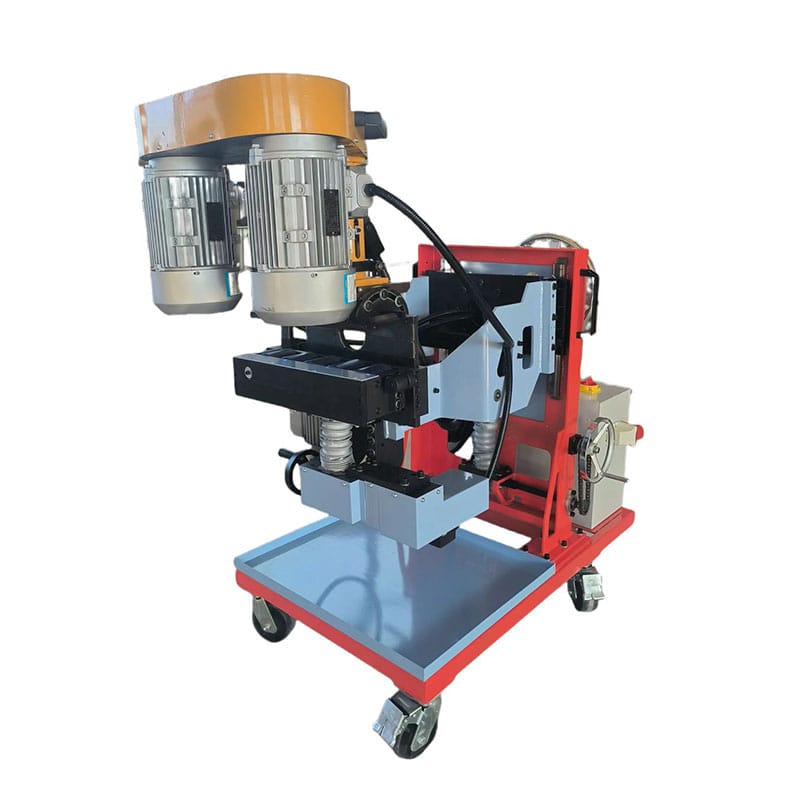
A double-sided beveling machine removes material from both sides of a plate edge to create symmetrical or asymmetrical joint preparations. Depending on the machine and tooling, this can include X grooves, K grooves, double-V details, upper and lower bevels with different angles, or stepped preparations. “Double-sided” does not automatically mean both sides are cut simultaneously; confirm the actual processing sequence.
The main production advantage is controlled machining from defined reference surfaces. Compared with manually repositioning portable tools, a correctly configured double-sided beveling machine can improve repeatability on long or heavy plates. It can also reduce unplanned grinding, although final acceptance must still follow the drawing and welding procedure.
When Double-Sided Preparation Makes Sense
A double-sided beveling machine is most relevant when the approved joint requires preparation on both faces, the plate is difficult to flip repeatedly, or production needs a controlled relationship between upper and lower grooves. It may also help when a double-sided joint reduces deposited weld metal compared with a deep single-sided groove, subject to engineering approval.
Do not redesign a joint simply to suit a double-sided beveling machine. Access for welding, back gouging, inspection, distortion control, and the qualified procedure may favor one geometry over another. TWI’s overview of butt-weld design provides useful context on joint access and preparation choices.
Start with the Joint Drawing and WPS
Before setting a double-sided beveling machine, obtain the current drawing, welding procedure specification, material grade, plate thickness range, tolerances, and inspection requirements. The joint detail should identify both angles, groove depths or widths, the central root face, and any offset. Ambiguous dimensions require engineering clarification.
Standards describe preparation types, but the contract controls the job. ISO 9692-1 covers several steel joint-preparation types, while AWS D1.1 is widely referenced in structural steel work. A double-sided beveling machine must reproduce the project’s approved detail rather than a convenient generic profile.
Control Both Grooves and the Central Land
The critical output of a double-sided beveling machine is not two independent bevels. The upper angle, lower angle, bevel widths, groove depths, and remaining land form one geometry. If both cuts are slightly too deep, the central land can disappear. If both are too shallow, the land can become too large and restrict the intended root condition.
| Feature | Control question | Typical verification |
|---|---|---|
| Upper groove | Is the angle and depth referenced from the correct face? | Angle gauge and depth or width measurement |
| Lower groove | Is the second datum clean and stable? | Independent lower-side measurements |
| Central land | Is its size and position within tolerance? | Root face measurement at several stations |
| Alignment | Do upper and lower preparations track along the edge? | Section checks and straightness review |
| Surface | Are chatter and local damage acceptable? | Visual and specified surface inspection |
For an asymmetrical K groove, the double-sided beveling machine may need different tooling positions or passes on each face. Record the accepted settings separately. Do not assume that equal bevel widths prove equal angles, because plate thickness and groove depth influence the visible width.

Plan Plate Handling and Datum Control
Plate handling can decide whether a double-sided beveling machine produces repeatable work. Heavy plates may sag, carry scale, or have local curvature. Supports should keep the datum stable without creating a new distortion. Guides and rollers must contact clean, representative surfaces, and clamps must prevent movement without damaging the plate.
Map material flow before purchasing a double-sided beveling machine. Consider crane or roller-table access, loading height, maximum plate width and thickness, turning space, chip removal, inspection stations, and the route to fit-up. Removing one plate flip has little value if the new arrangement creates unsafe or slow handling elsewhere.
Choose a Stable Machining Sequence
A stable double-sided beveling machine sequence begins with a representative test section. Confirm the incoming edge condition, select approved tooling, set the first face, machine conservatively, and measure before committing to the second face. This protects the central land when the actual plate thickness differs from nominal.
- Verify drawing revision, WPS, material, thickness, and required groove orientation.
- Clean the plate datum and inspect scale, curvature, and edge damage.
- Confirm tool position, angle, guide contact, clamping, and feed direction.
- Machine the first preparation and measure angle, width, depth, and straightness.
- Set the opposite preparation using the approved datum and recorded offset.
- Machine a short section, then verify both grooves and the central land.
- Release the batch only after first-piece approval and documented settings.
Feed rate and depth per pass should remain inside the manual and tooling limits. Forcing a double-sided beveling machine to remove excessive material in one pass can increase heat, vibration, insert damage, or surface irregularity. A planned multipass method is preferable to an improvised correction after the land is already undersize.
Inspect the First Piece and the Completed Edge
Inspect a double-sided beveling machine result at the start, along the length, and after any tool change or abnormal event. Measure the two faces independently, then evaluate their relationship. A section template, appropriate bevel gauges, calibrated dimensional tools, and a defined sampling plan help make the inspection repeatable.
Fit-up provides an additional check. Correct loose-plate geometry can still become unsuitable after tack welding, high-low, angular distortion, or an incorrect root opening. Our overview of weld edge preparation explains why machining and assembly controls should be connected. A double-sided beveling machine controls the edge, not every later fit-up variable.
Machine Selection Questions
When comparing a double-sided beveling machine, provide suppliers with actual drawings and the full thickness range. Ask for supported groove types, upper and lower angle ranges, maximum practical bevel width, controllable land range, material limits, feed method, cutter arrangement, required passes, plate support needs, and dimensional verification.
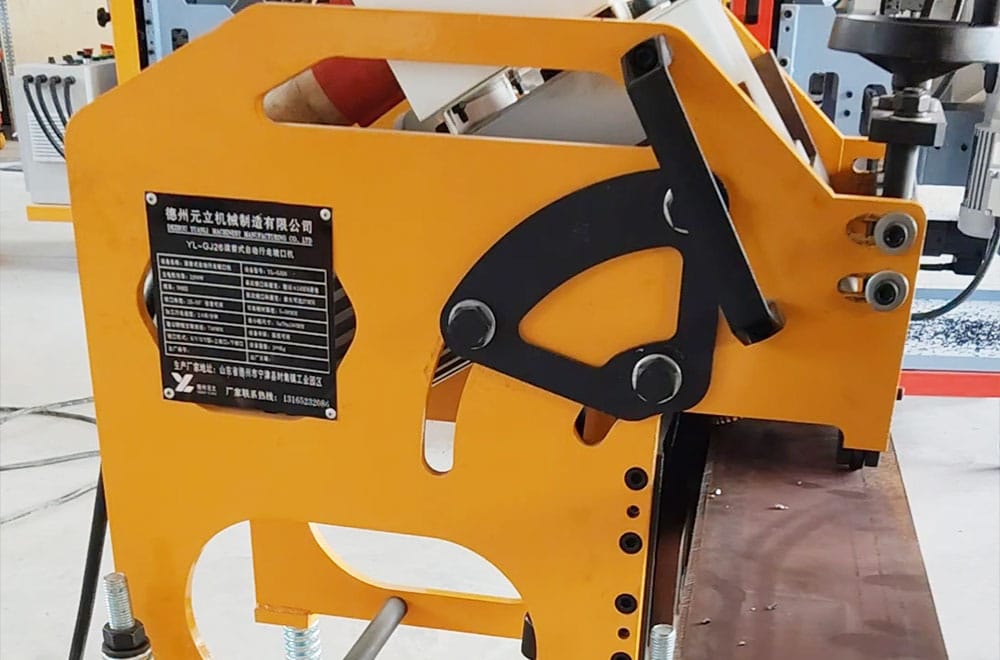
Also review changeover time, insert access, chip management, operator visibility, guarding, maintenance points, utilities, and available training. Yuanli’s YL-FZ900 beveling machine is designed for double-sided and step-groove work, but a double-sided beveling machine should be matched to the actual geometry and handling conditions rather than selected by model name alone.
Common Process Problems
An off-center land from a double-sided beveling machine can come from unequal groove depths, incorrect thickness input, a contaminated datum, plate movement, or a setup copied from a different thickness. Taper along the travel direction often points to guide contact, plate curvature, looseness, progressive tool wear, or changing support.
Chatter or poor finish may reflect worn inserts, excessive feed, insufficient rigidity, intermittent contact, or an irregular flame-cut edge. When a double-sided beveling machine result drifts, separate incoming material, setup, tooling, machine condition, and inspection method. Correct the verified cause instead of grinding every plate to hide the symptom.
Safety and Operator Controls
A double-sided beveling machine combines rotating cutters, heavy workpieces, sharp chips, pinch points, and potentially suspended loads. Follow the machine manual, site lifting plan, guarding rules, personal protective equipment requirements, and documented energy isolation. OSHA’s machinery standards are one reference; local requirements govern the facility.
Keep hands and tools away from the cutting zone, never bypass guards, and stop the double-sided beveling machine before clearing a jam or making an adjustment. Only qualified personnel should service electrical, hydraulic, pneumatic, or drive systems. A safe process also defines where operators stand while a long plate or self-travelling unit moves.
Frequently Asked Questions
Does a double-sided beveling machine cut both faces at once?
Not necessarily. A double-sided beveling machine may use a coordinated sequence or separate cutting positions. Confirm the specific machine’s method and how it controls the relationship between faces.
Can the same machine produce X and K grooves?
Some configurations can, within their angle, width, land, tooling, and access limits. Submit the actual drawings so the double-sided beveling machine can be evaluated against both geometries.
Does double-sided machining eliminate plate flipping?
It can reduce or eliminate flipping for the beveling operation, depending on machine design. Other process steps may still require repositioning, so review total material flow.
How is the central land protected?
The double-sided beveling machine setup should reference actual thickness, control the depth of each preparation, and verify a short first piece before full-length cutting. Measure at multiple positions.
Can upper and lower angles be different?
An appropriate double-sided beveling machine may support asymmetrical grooves, but the exact angle combination, bevel width, and pass sequence must be confirmed against machine capacity.
Plan the Complete Beveling Process
A double-sided beveling machine delivers value when machine capability, joint design, plate handling, datum control, tooling, inspection, and safety are planned together. Start with approved documents, protect the central land, validate the complete geometry on a first piece, and preserve settings that operators can repeat.
To evaluate a specific X, K, double-V, or stepped preparation, contact Yuanli with the plate material, thickness range, joint drawing, tolerances, plate dimensions, and expected output. Those details allow a practical double-sided beveling machine configuration to be assessed without changing the engineering intent.