Table of Contents
Introduction
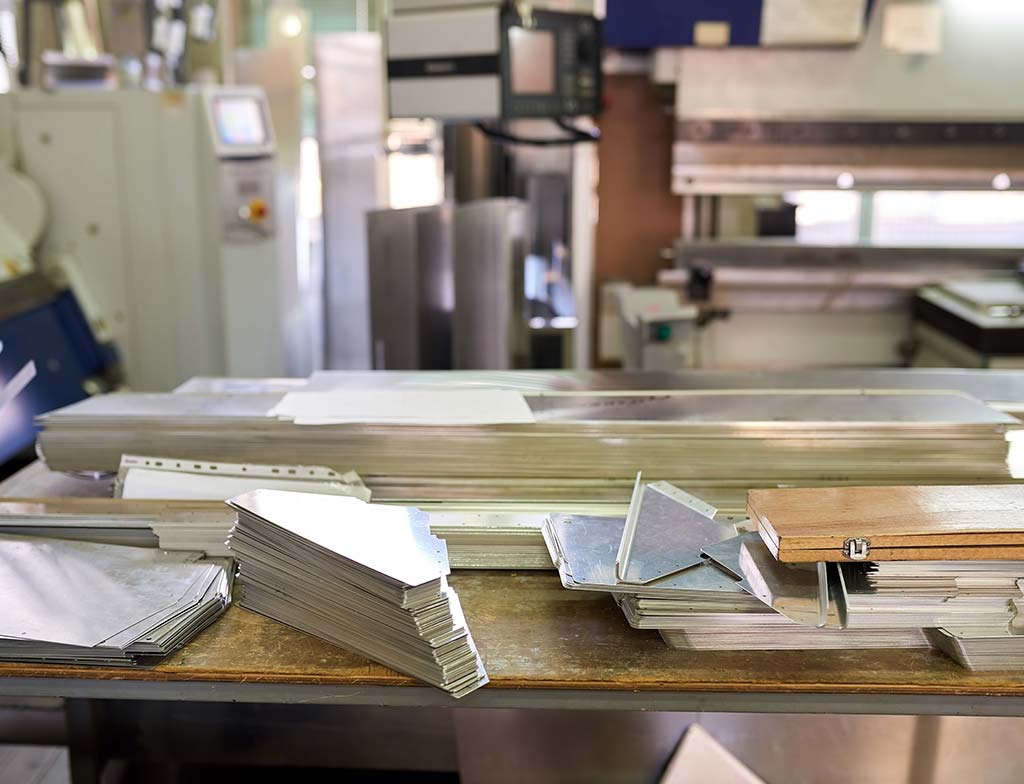
Weld edge preparation is one of the most important steps before welding begins. A welding machine can be stable, the operator can be experienced, and the consumables can be suitable, but if the plate edge is poorly prepared, the final weld may still face problems.
Uneven bevel angles, rough surfaces, inconsistent groove width, excessive heat damage, and poor fit-up can all create extra grinding, unstable penetration, and more inspection pressure. In heavy fabrication, these problems are even more serious because steel plates are thicker, weld seams are longer, and correction work is more difficult.
For workshops processing steel structures, shipbuilding plates, pressure vessels, storage tanks, bridges, and heavy machinery frames, weld edge preparation should not be treated as a simple manual task. It should be controlled as part of the full welding workflow.
Yuanli provides industrial beveling machine solutions for metal plate edge preparation, helping workshops create cleaner bevels, more consistent grooves, and more predictable welding conditions.
Why Weld Edge Preparation Matters
Weld edge preparation directly affects how two metal parts fit together before welding. If the groove is too narrow, too wide, uneven, or rough, the welding process becomes harder to control.
A good prepared edge helps improve:
Fit-up accuracy
Weld access
Groove consistency
Root control
Penetration stability
Filler metal control
Visual inspection quality
Overall production rhythm
A poorly prepared edge often creates hidden problems. The welding team may need to compensate during welding, which increases the chance of irregular weld quality. In some cases, the problem only becomes obvious during inspection or after rework has already consumed time.
For general background on weld joint forms, the welding joint overview explains common joint concepts such as butt joints, groove welding, and edge preparation.
What Good Weld Edge Preparation Looks Like
Good weld edge preparation is not only about cutting an angle on the plate. It is about creating a controlled joint condition that supports the welding process.
| Preparation Factor | What It Should Achieve |
|---|---|
| Bevel angle | Provide proper welding access |
| Groove width | Support stable weld filling |
| Root face | Help control penetration |
| Edge straightness | Improve alignment before welding |
| Surface finish | Reduce unnecessary cleaning and grinding |
| Heat control | Avoid excessive deformation or scale |
| Repeatability | Keep similar workpieces consistent |
In heavy fabrication, repeatability is especially important. A single good bevel is not enough. The workshop needs the same bevel quality across many plates, shifts, and projects.
This is why many metal fabrication workshops use a plate beveling machine instead of relying only on manual grinding.
Manual Grinding vs Machine-Based Weld Edge Preparation
Manual grinding is common in many workshops because it is flexible and easy to start. It works well for repair work, touch-up, and small adjustments. However, it becomes less efficient when used for long plate edges, thick steel plates, or repeated weld preparation.
Machine-based weld edge preparation provides stronger process control.
| Item | Manual Grinding | Machine Beveling |
| Bevel consistency | Depends heavily on operator skill | More repeatable after setup |
| Labor intensity | High for long edges | Lower manual burden |
| Groove accuracy | Harder to standardize | Easier to control |
| Production rhythm | Variable | More stable |
| Surface quality | May require correction | More predictable |
| Batch work | Difficult to keep uniform | Better for repeated parts |
Manual grinding still has value, but for industrial plate welding, machine preparation often gives better consistency and reduces unnecessary manual correction.
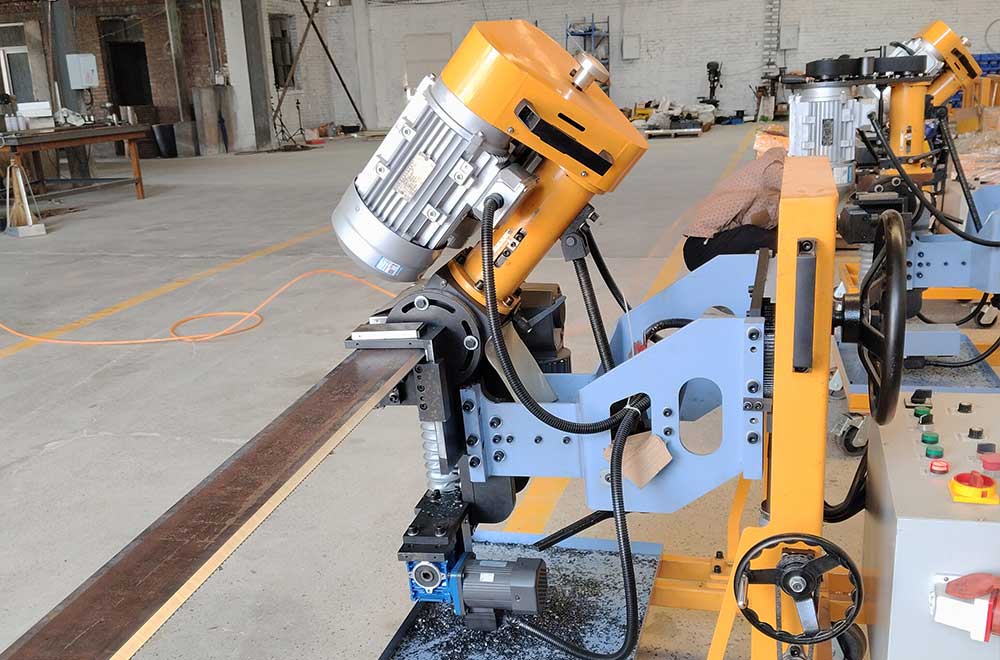
Yuanli’s YL-GJF26 beveling machine is suitable for automatic walking beveling applications where long plate edges need efficient preparation.
Common Weld Edge Preparation Problems
Many welding issues are not caused by the welding process itself. They start at the edge preparation stage.
Inconsistent Bevel Angle
If the bevel angle changes along the plate edge, the groove shape also changes. This makes welding access and filler control less stable.
Rough or Burned Edge Surface
A rough or overheated edge may require extra grinding before welding. This adds labor and delays the next process.
Uneven Root Face
The root face helps control weld penetration. If it is too large, too small, or inconsistent, the welding result may become unstable.
Poor Edge Straightness
If the edge is not straight, fit-up becomes harder. Operators may need more time to align plates before welding.
Too Much Manual Variation
Different operators may prepare edges differently. Even when the drawing is the same, the actual groove may vary if there is no controlled process.
How Beveling Machines Improve Weld Edge Preparation
A beveling machine improves weld edge preparation by making the process more repeatable. Instead of relying completely on hand grinding, the machine removes material according to a controlled setup.
The main benefits include:
More consistent bevel angles
Cleaner groove surfaces
Reduced manual grinding
Better fit-up before welding
Less operator fatigue
More stable production flow
Better preparation for inspection
A machine does not replace welding skill, but it gives the welding team a better starting point.
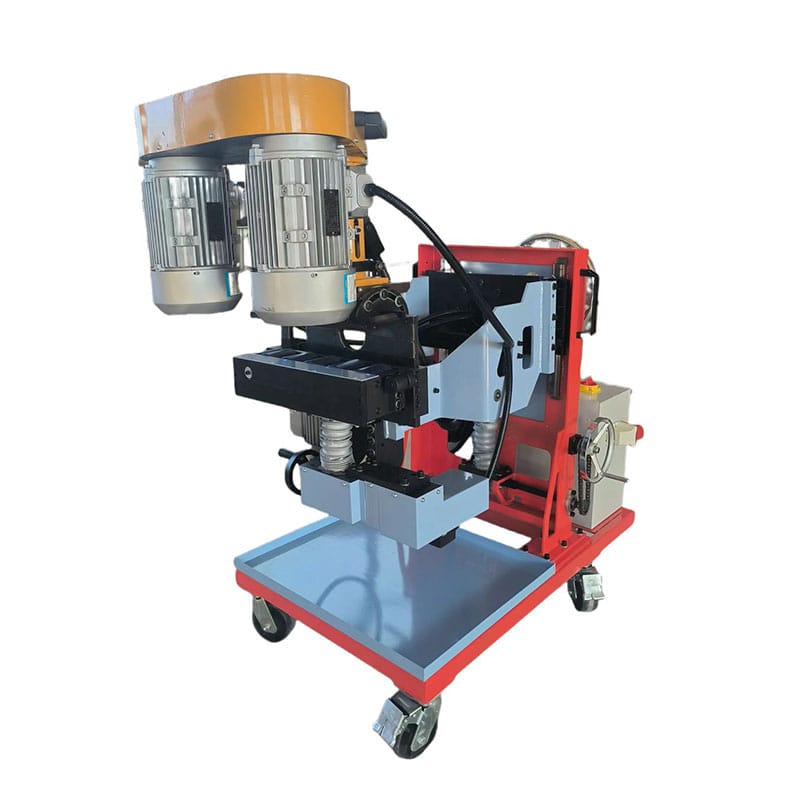
For workshops requiring more complex groove forms, Yuanli’s YL-FZ900 beveling machine is relevant for double-sided grooves, side and end grooves, upper and lower bevels, and stepped groove processing.
Cold Cutting and Heat Control in Edge Preparation
Heat control is an important part of weld edge preparation. Thermal cutting methods can be useful in many metalworking tasks, but when the edge must be prepared for welding, excessive heat may create additional cleaning, grinding, or deformation concerns.
Mechanical beveling removes material without relying on melting the edge. This can help reduce heat influence and keep the groove condition more stable.
Cold mechanical preparation is useful when working with:
Thick carbon steel plates
Stainless steel plates
Pressure vessel components
Long steel structure plates
Shipbuilding panels
Heavy machinery frames
Inspection-sensitive welded parts
The goal is not only to prepare an angle. The goal is to deliver an edge that is ready for controlled welding.
Weld Edge Preparation for Different Industries
Different industries have different welding requirements, but the need for consistent edge preparation is common.
Steel Structure Fabrication
Steel structures often include beams, columns, base plates, box sections, and welded frames. Good edge preparation helps improve fit-up and reduce welding preparation time.
Shipbuilding
Shipbuilding involves large plates and long weld seams. A stable beveling process helps prepare plate edges efficiently and improves welding consistency across large structures.
Pressure Vessel Manufacturing
Pressure vessels require careful weld joint preparation. Groove consistency supports welding quality and inspection confidence.
Tank Fabrication
Storage tanks often require long seams and repeated plate joining. Controlled edge preparation helps improve assembly and welding rhythm.
Heavy Machinery Manufacturing
Machinery frames, equipment bases, and structural parts often use thick steel plates. Better beveling helps reduce correction work before welding.
Bridge and Infrastructure Work
Infrastructure components need strong welded joints and repeatable preparation. Machine beveling helps standardize weld edge quality across large components.
How to Choose the Right Edge Preparation Method
Not every workshop needs the same weld edge preparation method. The correct choice depends on material, plate thickness, groove type, and production volume.
Before selecting equipment, confirm:
Material type
Plate thickness range
Plate length and width
Bevel angle
Bevel width
Groove type
Single-sided or double-sided preparation
Production volume
Work location
Power supply
Inspection requirements
If the work involves long steel plate edges, repeated beveling, or heavy plate welding, a beveling machine is usually more efficient than manual grinding.
For heavy-duty processing, Yuanli’s YL-PKFZ95 beveling machine can be reviewed when large plate processing and double-sided beveling are part of the application.
Groove Types Used in Weld Edge Preparation
Weld edge preparation may require different groove forms depending on the welding process, plate thickness, and structural requirement.
Common groove types include:
V groove
K groove
X groove
Y groove
U groove
J groove
Double-sided groove
Step groove
Upper bevel
Lower bevel
The ISO 9692-1 standard page provides useful background on joint preparation types for welding and allied processes. For real projects, the final groove form should always follow the drawing, welding procedure, and application requirement.
A Practical Workflow for Better Weld Edge Preparation
A standardized workflow helps workshops reduce random quality variation.
A practical weld edge preparation workflow may include:
Review the drawing and welding groove requirement.
Confirm material type and plate thickness.
Check the plate edge condition.
Select the correct beveling machine and tooling.
Set bevel angle and bevel width.
Run a short test pass for new jobs.
Inspect the first prepared edge.
Record confirmed machine settings.
Clean chips and check tool condition.
Move the plate to fit-up or welding.
This workflow helps operators repeat successful settings instead of relying only on experience. Over time, it also helps supervisors identify what works best for repeated materials and groove types.
Safety Considerations During Weld Edge Preparation
Weld edge preparation involves sharp metal edges, cutting tools, moving parts, chips, and heavy plates. Safety should be included in the process design.
Workshops should pay attention to:
Machine guarding
Emergency stop access
Stable plate support
Chip direction
Operator hand position
Tool inspection
Electrical safety
Clear operating procedures
Training before independent operation
The OSHA 1910.212 machine guarding requirement is a useful safety reference for point-of-operation hazards, rotating parts, flying chips, and sparks.
A safer preparation process also supports better productivity because operators can work with more confidence and fewer interruptions.
Maintenance Tips for Stable Edge Quality
Even a good beveling machine cannot maintain consistent weld edge preparation without proper maintenance.
Recommended maintenance habits include:
Clean chips after each shift.
Inspect cutting tools before use.
Replace worn tools promptly.
Check bolts and adjustment parts.
Keep guide surfaces clean.
Lubricate moving components as required.
Avoid overload operation.
Watch for abnormal vibration or noise.
Protect electrical parts from dust and moisture.
Record common settings for repeated jobs.
Maintenance should be treated as part of quality control. Worn tools or loose components can cause poor bevel surfaces, inaccurate angles, and unstable groove quality.
How to Communicate Your Edge Preparation Requirements
A clear technical request helps the supplier recommend the correct machine faster.
Prepare the following information before sending an inquiry:
| Information to Prepare | Why It Matters |
| Material type | Confirms tool and machine suitability |
| Plate thickness | Determines capacity requirements |
| Plate size | Affects machine structure and handling |
| Bevel angle | Confirms adjustment range |
| Bevel width | Affects cutting load |
| Groove type | Determines machine capability |
| Production volume | Helps match efficiency needs |
| Work location | Workshop and site use may need different solutions |
| Power supply | Ensures electrical compatibility |
| Drawings or photos | Reduces misunderstanding |
These details can be submitted through Yuanli’s contact page for a technical recommendation based on real workpieces.
When Weld Edge Preparation Should Be Upgraded
A workshop should consider upgrading its weld edge preparation process when manual grinding becomes a bottleneck or weld groove quality becomes difficult to control.
Signs that an upgrade may be needed include:
Long preparation time before welding
Different bevel results between operators
Too much grinding after cutting
Frequent fit-up correction
Irregular groove width
Inspection pressure caused by preparation issues
Heavy labor burden on operators
Difficulty handling repeated plate work
When these issues appear repeatedly, the problem is often not only operator skill. It may be the lack of a controlled edge preparation process.
For workshops that also require surface finishing after fabrication, Yuanli’s polishing machine category may support downstream metal surface processing.
Conclusion
Weld edge preparation is a critical step in metal fabrication. It affects fit-up, groove consistency, welding stability, inspection confidence, and overall production efficiency. A clean and repeatable prepared edge gives the welding team a better starting point and reduces unnecessary correction later.
For steel structures, shipbuilding, pressure vessels, tanks, bridges, and heavy machinery manufacturing, weld edge preparation should be managed as a controlled process rather than a last-minute grinding task.
A suitable beveling machine can help create consistent bevel angles, cleaner groove surfaces, better repeatability, and more stable production flow. The right equipment should be selected based on material, plate thickness, bevel angle, bevel width, groove type, workpiece size, production volume, and working environment.
To compare suitable equipment, visit Yuanli’s beveling machine category or submit your project details through the contact page for a technical recommendation.
FAQ
What is weld edge preparation?
Weld edge preparation is the process of preparing metal plate edges before welding. It may include beveling, groove forming, cleaning, and edge conditioning to support proper fit-up and welding quality.
Why is weld edge preparation important?
It helps control groove geometry, weld access, fit-up, penetration, and repeatability. Poor edge preparation can lead to extra grinding, unstable welding, and more rework.
Is a beveling machine better than manual grinding?
For repeated or heavy plate welding, a beveling machine is usually more consistent and efficient. Manual grinding is still useful for repair work, touch-up, and small corrections.
What groove types are used in weld edge preparation?
Common groove types include V groove, K groove, X groove, Y groove, U groove, J groove, step groove, and double-sided groove. The correct type depends on the welding requirement.
Can weld edge preparation reduce welding defects?
It can reduce preparation-related problems such as poor fit-up, inconsistent groove shape, and unstable weld access. It does not replace proper welding practice, but it improves the starting condition.
What materials need weld edge preparation?
Carbon steel, stainless steel, alloy steel, and other industrial metal plates often require edge preparation before welding, especially when the plates are thick or the joint is structural.
How do I choose equipment for weld edge preparation?
Confirm material type, plate thickness, bevel angle, bevel width, groove type, plate size, workload, work location, and power supply before selecting equipment.
Where can I get a weld edge preparation machine recommendation?
You can submit your drawings, plate details, and groove requirements through Yuanli’s contact page for a suitable machine recommendation.