Table of Contents
Introduction
In heavy metal fabrication, welding problems often begin before welding starts. A plate may be cut correctly, the welding operator may be experienced, and the welding equipment may be stable, yet the final weld can still suffer from uneven penetration, excessive grinding, poor fit-up, distortion, or inspection delays.
One common reason is inconsistent edge preparation.
A plate beveling machine is designed to solve this problem by preparing metal plate edges with controlled bevel angles, stable groove geometry, and repeatable edge quality. For workshops processing steel structures, pressure vessels, tanks, shipbuilding plates, heavy machinery frames, and large welded components, beveling is not just a small preparation step. It is a process that directly affects welding efficiency, quality control, and production stability.
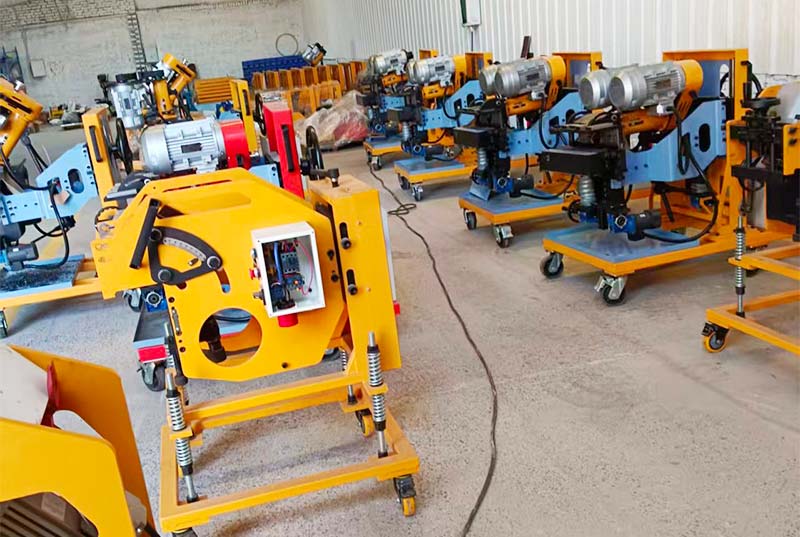
Yuanli provides industrial beveling machine solutions for metal plate edge preparation, including automatic walking and rolling shear beveling equipment for different fabrication needs. This article explains how a plate beveling machine helps heavy fabrication workshops reduce hidden rework and build a more reliable weld preparation workflow.
Why Plate Edge Preparation Has a Bigger Impact Than Many Workshops Realize
A weld joint is only as stable as the preparation behind it. If the plate edge angle changes along the length of the workpiece, the welding gap becomes inconsistent. If the bevel surface is too rough, operators may need additional grinding before fit-up. If the groove shape does not match the welding process, the weld may require more correction after inspection.
For heavy fabrication, these small problems become larger because plates are thicker, parts are heavier, and weld seams are longer.
Common edge preparation problems include:
| Problem | What It Causes in Production |
|---|---|
| Inconsistent bevel angle | Unstable weld groove and difficult fit-up |
| Uneven bevel width | Irregular filler metal deposition |
| Rough edge surface | More grinding before welding |
| Heat-affected edge | Potential deformation or extra cleaning |
| Manual variation | Different results between operators |
| Poor repeatability | Harder quality control across batches |
A plate beveling machine helps standardize this early stage. Instead of treating beveling as a manual correction task, it turns edge preparation into a controlled production process.
For general background on weld joint forms and groove preparation, readers can refer to this overview of welding joints. For technical reference, the ISO 9692-1 joint preparation document provides useful context on joint preparation types for welding and allied processes.
What a Plate Beveling Machine Actually Does
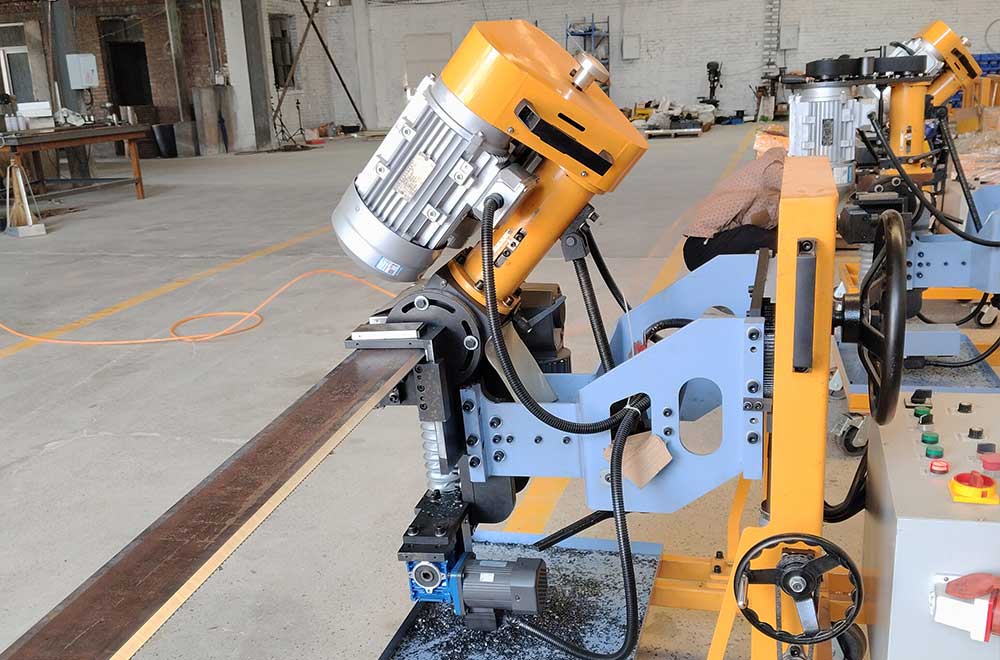
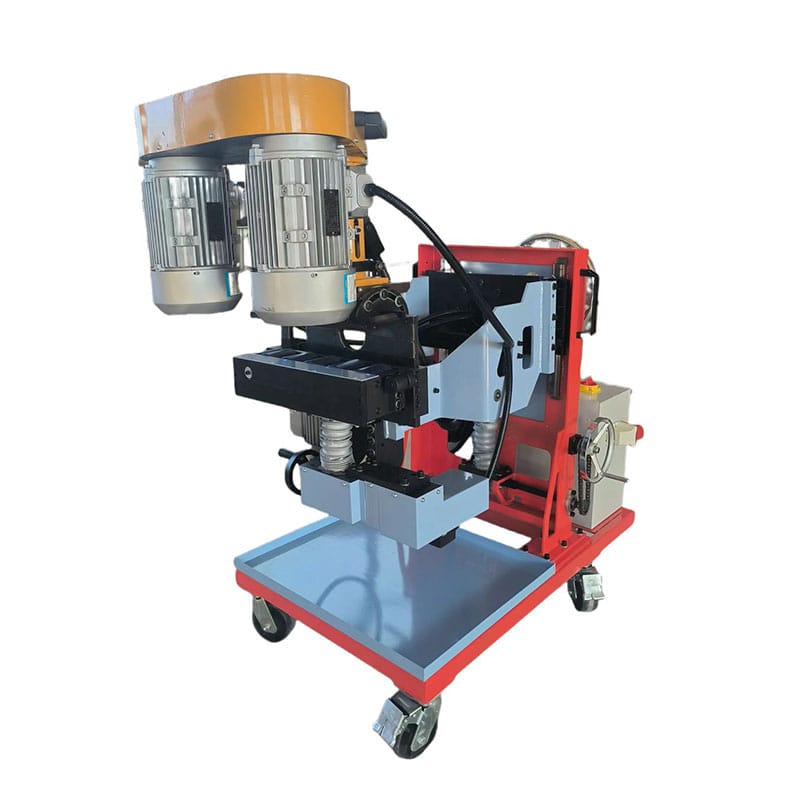
A plate beveling machine removes material from the edge of a metal plate to create a specific bevel angle or groove form before welding. Depending on the machine type, it may use milling, rolling shear cutting, or other mechanical cutting methods.
The purpose is not only to “make an angle.” The real goal is to create a weld-ready edge that supports stable assembly and welding.
A plate beveling machine can help prepare:
V grooves
K grooves
X grooves
Y grooves
Upper bevels
Lower bevels
Double-sided bevels
Side and end face grooves
Step grooves in specific applications
For workshops that process various plate sizes and thicknesses, a machine such as the YL-FZ900 beveling machine may be relevant when double-sided groove preparation or multiple groove forms are required. For faster automatic walking beveling on sheet metal and plate edges, buyers can also review the YL-GJF26 beveling machine.
The Hidden Rework Chain Caused by Poor Beveling
Many fabrication managers see rework only at the welding or inspection stage. In reality, rework often starts at the beveling stage.
A poorly prepared edge can trigger a chain reaction:
The plate edge is uneven.
Fit-up takes longer.
The welding gap changes along the seam.
Operators compensate manually.
Grinding increases before and after welding.
Inspection finds inconsistent weld quality.
The part returns for correction.
Delivery becomes harder to control.
This is why a plate beveling machine should be evaluated as a workflow improvement tool, not just as another machine in the workshop. When edge preparation becomes repeatable, the welding team can work with more predictable joint geometry.
That predictability matters in industries where welds must support load, pressure, vibration, or long service life.
Plate Beveling Machine vs Manual Grinding
Manual grinding is flexible and useful for repairs, small workpieces, and final touch-up. However, relying on grinding as the main beveling method for heavy plate production can create several problems.
| Factor | Manual Grinding | Plate Beveling Machine |
| Bevel consistency | Depends heavily on operator skill | More repeatable after setup |
| Long plate edges | Labor-intensive | Better for continuous edge preparation |
| Operator fatigue | High during heavy work | Lower manual burden |
| Groove control | Harder to standardize | Easier to control angle and width |
| Batch production | Difficult to keep uniform | More suitable for repeatable work |
| Weld preparation quality | Variable | More predictable |
The key difference is repeatability. A skilled operator can produce a good bevel manually, but it is difficult to keep the same result across many plates, shifts, and projects. A plate beveling machine reduces that variation.
For occasional small repairs, manual grinding still has value. But for steel structures, tanks, vessels, shipbuilding sections, and heavy machinery frames, machine beveling can be a more reliable foundation for welding.
Cold Mechanical Beveling and Heat Control
Some workshops use thermal methods for edge preparation because they are fast and familiar. However, heat-based edge preparation may create additional cleaning, grinding, or distortion concerns, especially when the bevel surface must be ready for demanding weld preparation.
Mechanical beveling removes material without relying on melting the edge. This can help reduce heat-related influence on the plate and support cleaner bevel geometry.
For many fabrication shops, this matters because:
Large plates are difficult to correct after deformation.
Long weld seams need consistent groove geometry.
Inspection-sensitive work requires cleaner preparation.
Stainless steel and alloy materials may need better edge control.
Secondary grinding can slow down production.
Yuanli’s beveling machine category highlights cold cutting as one of the advantages of its beveling equipment for weld preparation. When buyers compare processes, they should consider not only beveling speed, but also the condition of the edge after beveling.
Where Plate Beveling Machines Create the Most Value
A plate beveling machine is especially useful when beveling is frequent, repetitive, or connected to strict weld quality requirements.
Steel Structure Fabrication
Steel structure workshops often process large plates, box beams, columns, and welded frames. A consistent bevel helps improve fit-up and makes welding preparation more predictable.
Shipbuilding and Marine Repair
Shipbuilding involves long seams, heavy plates, and large workpieces that are not always easy to move. Automatic walking beveling machines can support plate edge preparation without forcing the workshop to move every large plate to a fixed processing station.
Storage Tanks and Pressure Vessels
Tanks and pressure vessels require controlled joint preparation because weld quality directly affects reliability and inspection confidence. A stable bevel angle and groove form help support more consistent welding procedures.
Heavy Machinery Manufacturing
Equipment frames, bases, brackets, and structural parts often require thick plate welding. Mechanical beveling can reduce manual preparation time and improve repeatability across welded components.
Stainless Steel Fabrication
Stainless steel projects often require cleaner preparation and careful control of edge condition. A suitable plate beveling machine can reduce excessive manual grinding and support a more consistent bevel surface.
For projects that also require surface finishing after fabrication, Yuanli’s polishing machine category may be useful for downstream finishing workflows.
How to Match a Plate Beveling Machine to Your Workpiece
Choosing a plate beveling machine should begin with the workpiece, not with the machine model.
Before requesting a recommendation, prepare the following details:
| Selection Item | Why It Matters |
| Material type | Carbon steel, stainless steel, alloy steel, aluminum, or mixed materials affect tool selection |
| Plate thickness | Determines whether the machine can process the workpiece safely and efficiently |
| Bevel angle | Must match the welding joint requirement |
| Bevel width | Affects groove volume and welding preparation |
| Groove type | V, K, X, Y, J, U, or step grooves may require different machine capability |
| Plate size | Large plates, narrow strips, and small plates may need different feeding or walking methods |
| Production volume | Occasional use and batch production require different machine priorities |
| Work location | Workshop production and on-site work may need different machine structures |
| Power supply | Must match local workshop conditions |
| Operator skill level | Affects control interface and training needs |
For broad machine comparison, Yuanli’s guide on choosing the right metal bevel machine can be used as supporting reading. For a direct recommendation, buyers can send workpiece drawings or photos through the contact page.
A Practical Workflow: From Raw Plate to Weld-Ready Edge
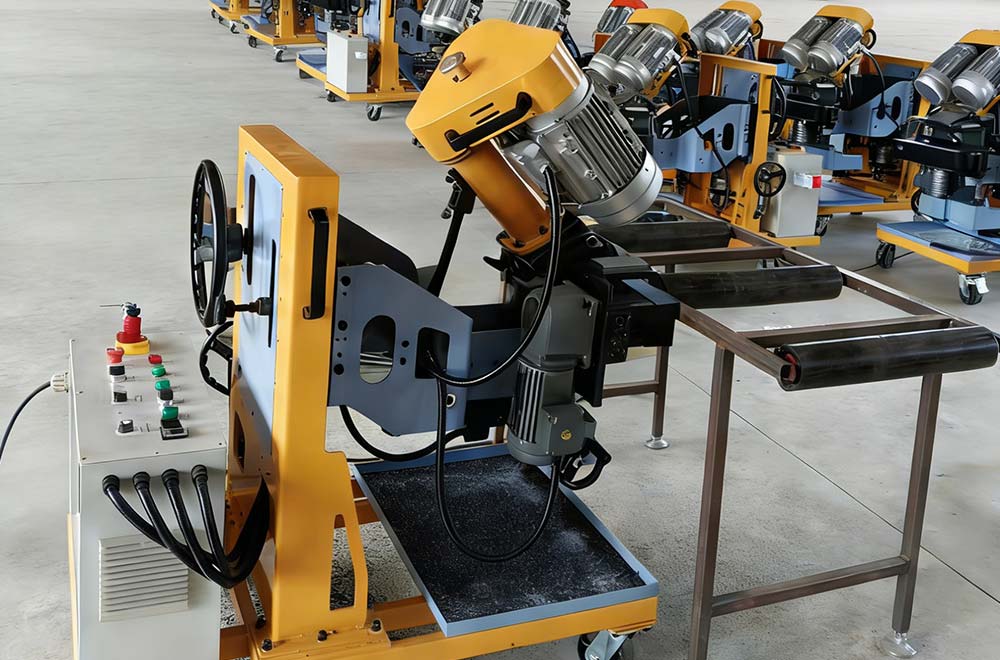
A good beveling process should be simple enough for operators to repeat and controlled enough for supervisors to inspect.
A practical workflow may look like this:
Confirm the drawing and welding groove requirement.
Check material type, thickness, and plate condition.
Select the proper beveling machine and cutting setup.
Set bevel angle, bevel width, and feeding or walking parameters.
Run a test section when changing material or groove requirements.
Inspect the bevel surface and geometry.
Clean chips and prepare the plate for fit-up.
Record useful settings for repeated production.
This process helps workshops avoid relying on memory or operator habit. Once settings are confirmed, repeated jobs can be completed with better consistency.
A plate beveling machine becomes more valuable when it is integrated into a documented workflow rather than used only as a standalone tool.
Machine Features That Matter in Heavy Fabrication
Not every plate beveling machine is built for the same kind of work. Heavy fabrication buyers should look beyond basic specifications and evaluate practical machine behavior.
Important features include:
Stable frame structure
Adjustable bevel angle
Reliable plate clamping or guiding
Smooth automatic walking or feeding
Suitable tool structure for the material
Easy tool replacement
Clear operation controls
Consistent bevel finish
Simple cleaning and maintenance
Strong support for spare parts and technical guidance
For thicker plates or more complex groove requirements, buyers may consider machines such as the YL-PKFZ95 beveling machine when double-sided beveling and large plate processing are part of the application.
The best choice depends on the workpiece. A machine that is excellent for one workshop may not be ideal for another if the material thickness, groove type, or production method is different.
Safety and Operator Training Should Not Be Treated as Optional
A plate beveling machine is powerful metalworking equipment. It may involve rotating tools, moving workpieces, chips, sharp edges, and heavy plates. Safety planning must be part of the purchase and operation process.
Workshops should pay attention to:
Machine guarding
Emergency stop access
Chip direction and cleaning
Operator hand position
Plate support stability
Tool inspection
Electrical safety
Clear operating procedures
Training before independent operation
The general machine guarding requirements published by OSHA provide useful safety context for machine hazards such as point of operation, rotating parts, flying chips, and related risks. Buyers can also review OSHA’s machine guarding standards for broader reference.
A productive beveling process should improve efficiency without increasing operator risk.
Maintenance Habits That Protect Bevel Quality
Even a well-selected plate beveling machine can produce poor results if maintenance is ignored. Bevel quality depends on tool condition, machine stability, and correct adjustment.
Recommended maintenance habits include:
Clean chips after each work shift.
Inspect cutting tools before operation.
Replace worn or damaged tools promptly.
Check clamping and guiding components.
Confirm bolts and adjustment parts are secure.
Lubricate moving parts according to instructions.
Avoid pushing the machine beyond its rated capacity.
Listen for abnormal vibration or noise.
Keep records of tool replacement and common settings.
Store the machine in a dry and stable environment.
Maintenance is not just about machine life. It directly affects bevel consistency, surface finish, and operator confidence.
Common Buying Mistakes to Avoid
Many buyers know they need a plate beveling machine, but they may not provide enough technical information when contacting suppliers. This can lead to poor model matching.
Avoid these common mistakes:
Choosing Only by Plate Thickness
Plate thickness is important, but it is not the only factor. Bevel angle, bevel width, material type, groove form, and production volume are just as important.
Ignoring the Welding Requirement
The bevel must support the actual welding process. If the groove does not match the welding procedure, the machine may create a clean bevel that still does not solve the production problem.
Overlooking Small Plate or Narrow Plate Processing
Some workshops process both large plates and narrow strips. Buyers should confirm whether the machine can handle their smallest and largest workpieces.
Forgetting About Tool Consumption
Cutting tools are part of the long-term operation. Ask about tool replacement, availability, and maintenance procedures before ordering.
Not Testing Real Workpieces
Whenever possible, provide actual material details or samples. Real workpiece testing is more useful than comparing catalog information alone.
How a Better Inquiry Leads to a Better Machine Recommendation
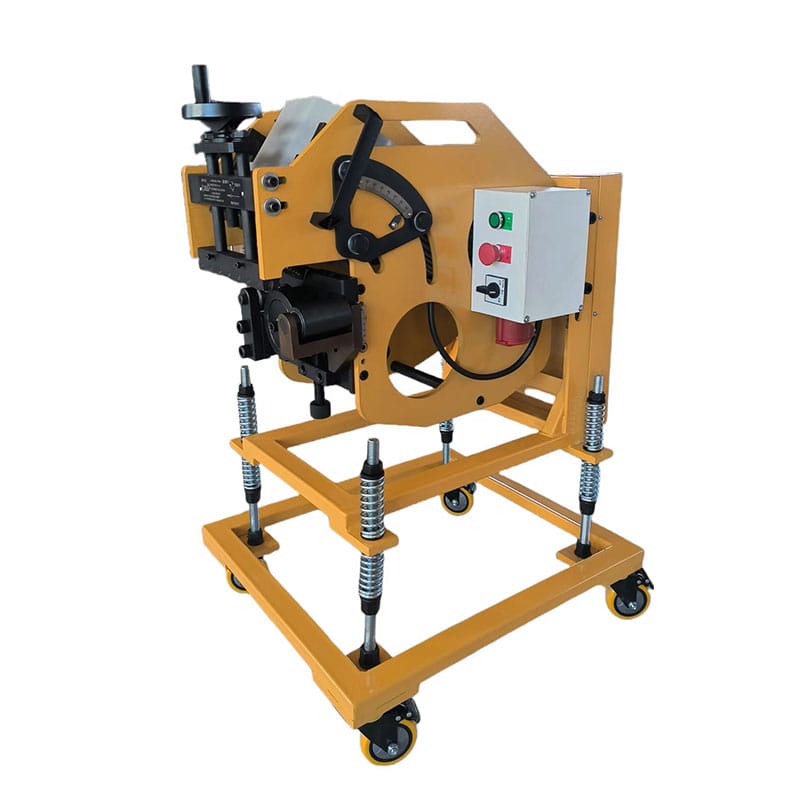
A strong inquiry helps the supplier recommend the right plate beveling machine faster.
When contacting Yuanli, include:
Material type
Plate thickness range
Plate length and width
Required bevel angle
Required bevel width
Groove type
Daily or monthly workload
Working environment
Power supply
Photos or drawings of typical workpieces
Any inspection or welding requirements
This information helps avoid vague recommendations. A clear inquiry allows the supplier to check whether a standard machine is suitable or whether a customized configuration should be discussed.
You can review Yuanli’s complete industrial equipment products or send your workpiece information through the contact page for a technical discussion.
Useful External References for Weld Preparation and Safety
For readers who want to understand the technical background behind beveling and welding preparation, these non-commercial references may be helpful:
ISO 9692-1 joint preparation reference
Machine guarding safety requirements
Non-destructive testing overview
Conclusion
A plate beveling machine does more than prepare an angled edge. In heavy fabrication, it helps control one of the most important stages before welding begins. Better beveling can reduce manual grinding, improve groove consistency, support more stable fit-up, and make welding preparation easier to manage across repeated projects.
For workshops processing steel plates, stainless steel components, shipbuilding sections, pressure vessel parts, tanks, and heavy machinery frames, bevel quality has a direct influence on production rhythm and weld preparation reliability.
The right machine should be selected based on material, thickness, bevel angle, bevel width, groove type, plate size, production volume, and working environment. Buyers who provide clear workpiece information can receive more accurate recommendations and avoid machine mismatch.
To compare available options, visit Yuanli’s beveling machine category or submit your project details through the contact page.
FAQ
What is a plate beveling machine used for?
A plate beveling machine is used to prepare metal plate edges before welding. It creates a controlled bevel angle or groove form to improve fit-up and weld preparation consistency.
Why is beveling important before welding thick plates?
Thick plates often require groove preparation so the weld can achieve proper access and penetration. Consistent beveling helps reduce welding defects, grinding, and fit-up problems.
Can a plate beveling machine process stainless steel?
Yes, many plate beveling machines can process stainless steel when suitable tools and machine settings are used. Buyers should confirm material type and thickness before selecting a model.
Is machine beveling better than manual grinding?
For repeated plate preparation, machine beveling is usually more consistent than manual grinding. Manual grinding is still useful for repair, correction, and small finishing tasks.
What information should I provide before buying a plate beveling machine?
Provide material type, plate thickness, bevel angle, bevel width, groove type, plate size, production volume, power supply, and workpiece drawings or photos.
Can one machine make different groove types?
Some beveling machines can support multiple groove forms, but capability depends on the model. Always confirm the required V, K, X, Y, J, U, or step groove before ordering.
How can I reduce beveling rework in my workshop?
Standardize beveling settings, train operators, inspect the bevel surface regularly, maintain cutting tools, and choose a plate beveling machine that matches your real workpieces.
Where can I request a machine recommendation?
You can send your plate details, groove requirements, and production conditions through Yuanli’s contact page for a suitable plate beveling machine recommendation.