Table of Contents
Introduction
In metal fabrication, weld quality does not start when the arc is struck. It starts much earlier, at the edge of the plate.
A rough, overheated, inconsistent, or poorly angled edge can create problems that follow the entire welding process: unstable fit-up, extra grinding, irregular penetration, rework, and inspection pressure. This is why many fabrication shops, shipyards, machinery manufacturers, and structural steel workshops are paying closer attention to how they prepare weld edges before welding.
For thick plates and industrial metal components, a cold cutting beveling machine offers a practical alternative to manual grinding or thermal cutting. Instead of burning the edge with flame, plasma, or other heat-based methods, it mechanically removes material to create a controlled bevel angle. The result is a cleaner edge, more predictable groove geometry, and less risk of heat-related deformation.
If your workshop handles carbon steel, stainless steel, alloy steel, or heavy plate components, choosing the right beveling machine can improve more than the bevel itself. It can support better welding preparation, reduce operator fatigue, improve production rhythm, and make downstream inspection easier.
Why Weld Edge Preparation Deserves More Attention
Many buyers focus first on welding machines, welding wire, shielding gas, or operator skill. These are important, but they do not solve every welding problem. If the groove is not prepared correctly, even a skilled welder may struggle to produce a stable joint.
Weld edge preparation affects several critical factors:
| Edge Preparation Factor | Why It Matters in Welding |
|---|---|
| Bevel angle | Controls weld access and groove shape |
| Root face | Helps maintain fit-up and penetration control |
| Groove consistency | Supports repeatable welding quality |
| Surface cleanliness | Reduces unnecessary grinding and correction |
| Heat impact | Affects distortion, hardness, and inspection risk |
| Edge straightness | Improves assembly accuracy before welding |
A cold cutting beveling machine is designed to make this preparation more controlled. Instead of depending mainly on hand skill, it uses a mechanical cutting action to form the bevel. For workshops that process repeated plate thicknesses or long plate edges, this can bring a more stable process.
For a general understanding of welding and joint preparation concepts, readers can also refer to the welding overview on Wikipedia and the ISO 9692 joint preparation standard, which is commonly referenced in discussions about weld joint geometry.
What Is a Cold Cutting Beveling Machine?
A cold cutting beveling machine is a metal edge preparation machine that creates a bevel without relying on thermal cutting. It removes material through mechanical cutting, milling, shearing, or rolling cutting, depending on the machine design.
The term “cold cutting” does not mean the process creates no heat at all. Any metal cutting process generates some friction. The key difference is that it avoids the high heat input associated with flame or plasma cutting. This helps protect the material edge from excessive heat-affected changes.
In practical fabrication work, a cold cutting beveling machine is often used for:
Steel plate edge beveling before welding
Stainless steel plate preparation
Carbon steel structural components
Pressure vessel plate preparation
Shipbuilding plate beveling
Heavy machinery frame welding
Bridge and steel structure fabrication
Tank and large plate assembly
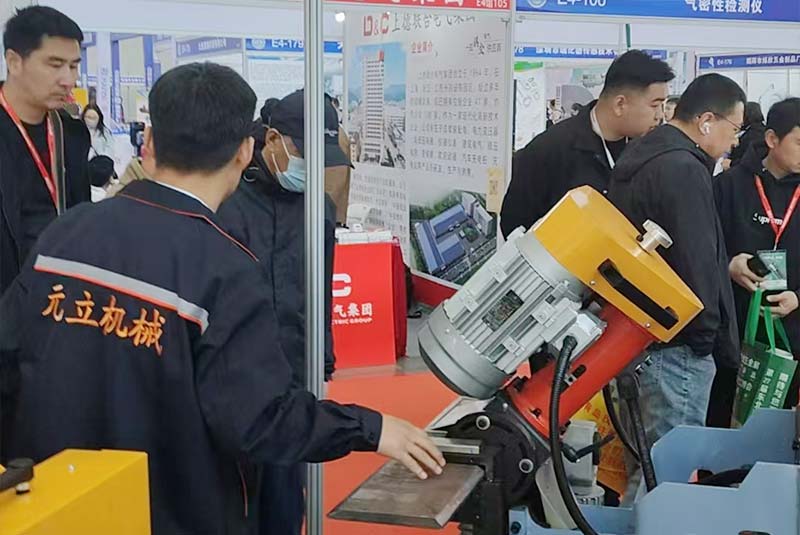
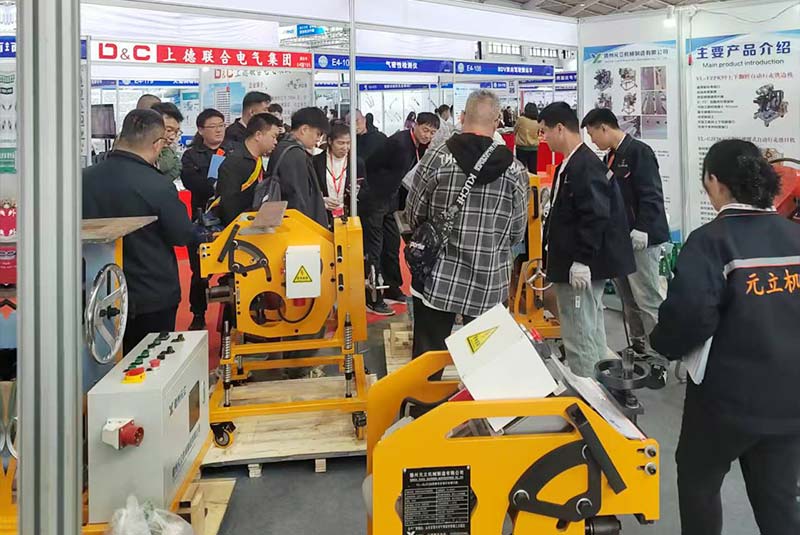
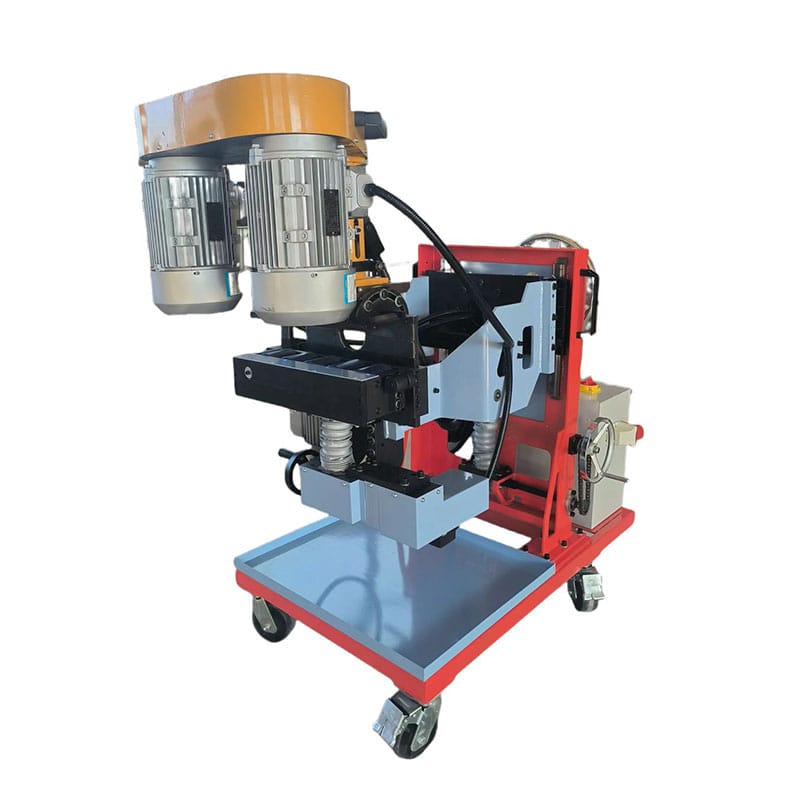
Yuanli’s industrial beveling machine series includes automatic walking and rolling shear beveling equipment designed for metal plate edge preparation. For buyers comparing different equipment directions, the full product range can help clarify which machine type matches the application.
Cold Cutting vs Thermal Cutting: What Actually Changes?
Thermal cutting methods are useful in many fabrication operations. However, when the purpose is weld edge preparation, buyers need to consider what happens to the edge after heat is applied.
A cold cutting beveling machine changes the process in three main ways.
First, it reduces the risk of heat-related distortion. Large plates and long weld seams are already difficult to control. Adding unnecessary heat during edge preparation can create extra problems before welding begins.
Second, it helps keep the bevel surface more suitable for direct welding preparation. A mechanically cut bevel is often easier to inspect, clean, and fit than an edge that requires heavy correction after thermal cutting.
Third, it supports more repeatable groove geometry. Manual grinding and thermal cutting can vary depending on operator technique, plate condition, and working environment. A machine-guided beveling process is easier to standardize.
| Method | Main Advantage | Main Limitation | Suitable Use |
| Manual grinding | Flexible and simple | Labor-intensive and inconsistent on long edges | Small repairs, touch-up work |
| Thermal cutting | Fast for rough cutting | Heat impact and secondary grinding may be needed | Cutting shapes or rough preparation |
| Cold cutting beveling machine | Controlled bevel angle and cleaner edge | Requires proper machine selection and setup | Weld preparation for plates and repeated fabrication |
| Large edge milling system | High precision for heavy production | Less flexible for smaller workshops or mixed workpieces | Specialized production lines |
A cold cutting beveling machine is not meant to replace every cutting process. Its strength is controlled edge preparation where welding quality, repeatability, and fit-up matter.
Why Cold Cutting Helps Reduce Heat Damage
When metal is cut with high heat, the edge can experience changes that are not always visible at first glance. The surface may require additional grinding, the geometry may become less predictable, and the edge may need closer inspection before welding.
Cold cutting helps reduce these problems because the material is removed mechanically. The bevel edge is formed by controlled cutting rather than melting. For industrial buyers, this can bring several practical benefits:
Less risk of heat deformation on long plate edges
More stable bevel dimensions
Reduced need for heavy secondary grinding
Better preparation for inspection-sensitive welding work
Cleaner fit-up before assembly
More predictable production flow
This is especially important in industries where welded structures must perform under load, vibration, pressure, or harsh environments. Shipbuilding, pressure vessel manufacturing, steel structures, bridge fabrication, and heavy machinery production all benefit from repeatable weld preparation.
The OSHA machine guarding standards also remind workshops that machinery selection and operation should be connected with safe guarding and controlled work practices. A productive beveling process should not ignore operator safety, chip control, moving parts, or training.
Where a Cold Cutting Beveling Machine Works Best
A cold cutting beveling machine is most valuable when bevel preparation is frequent, repetitive, or quality-sensitive. It is especially suitable when the workshop needs more consistency than manual grinding can provide.
Steel Structure Fabrication
Steel structure workshops often process long plates, beams, frames, and welded components. When these parts require stable groove preparation, mechanical beveling can reduce dependence on manual grinding and improve fit-up before welding.
Shipbuilding and Marine Fabrication
Shipyards often deal with large plates, long seams, and heavy structural sections. Moving large workpieces is difficult, so automatic walking beveling equipment can be useful when the machine can travel along the plate edge.
Pressure Vessels and Storage Tanks
Pressure vessel and tank production requires controlled joint preparation. Groove geometry must be repeatable because welding quality is closely tied to structural reliability and inspection requirements.
Heavy Machinery Manufacturing
Machinery frames, equipment bases, welded brackets, and load-bearing parts often require strong weld joints. A cold cutting beveling machine helps prepare edges consistently before assembly and welding.
Stainless Steel Fabrication
Stainless steel can be sensitive to surface quality and heat input. Cold mechanical beveling can reduce unnecessary thermal influence and help preserve a cleaner edge for subsequent welding and finishing.
If your application also involves polishing or final surface improvement after fabrication, Yuanli’s polishing machine series may be relevant for the downstream finishing stage.
Practical Case Scenario: A Heavy Plate Workshop With Rework Pressure
Consider a fabrication workshop producing welded frames for industrial equipment. The shop processes medium and thick carbon steel plates. The previous edge preparation method relies heavily on manual grinding after rough cutting.
The problems are familiar:
Different operators produce slightly different bevel angles.
Long plate edges take too much manual labor.
Some edges require correction before fit-up.
Welding supervisors spend extra time checking groove consistency.
Delivery schedules become harder to control when rework increases.
In this situation, introducing a cold cutting beveling machine does not only change one process. It changes the workflow around weld preparation.
The workshop can prepare bevels with a more controlled angle, reduce repeated manual correction, and make fit-up easier for the welding team. Operators still need training, and the machine must be matched to material thickness, bevel width, and plate size. But once the process is standardized, bevel preparation becomes less dependent on individual grinding skill.
This is the kind of application where a model such as the YL-GJF26 beveling machine may be considered, especially when buyers need automatic walking beveling for sheet metal and plate edge processing.
How to Choose the Right Cold Cutting Beveling Machine
Choosing a cold cutting beveling machine should not start with the model name. It should start with the workpiece.
Before contacting a supplier, prepare these details:
| Selection Factor | What to Confirm |
| Material type | Carbon steel, stainless steel, alloy steel, aluminum, or mixed materials |
| Plate thickness | Minimum and maximum thickness used in daily production |
| Bevel angle | Required angle range for welding preparation |
| Bevel width | Width of the bevel face or groove requirement |
| Groove type | V, K, X, Y, or other project-specific preparation |
| Plate size | Long plate, narrow plate, small workpiece, or large structure |
| Production volume | Occasional use, batch production, or continuous processing |
| Working location | Workshop, site work, shipyard, or production line |
| Power supply | Voltage and frequency available in the workshop |
| Inspection needs | Whether the prepared edge must support strict inspection requirements |
A professional supplier should ask these questions before recommending a machine. If a buyer only provides a general request such as “send me a beveling machine,” the recommendation may be inaccurate.
For more general machine selection guidance, buyers can also read Yuanli’s article on how to choose the right metal bevel machine.
Key Machine Features Buyers Should Compare
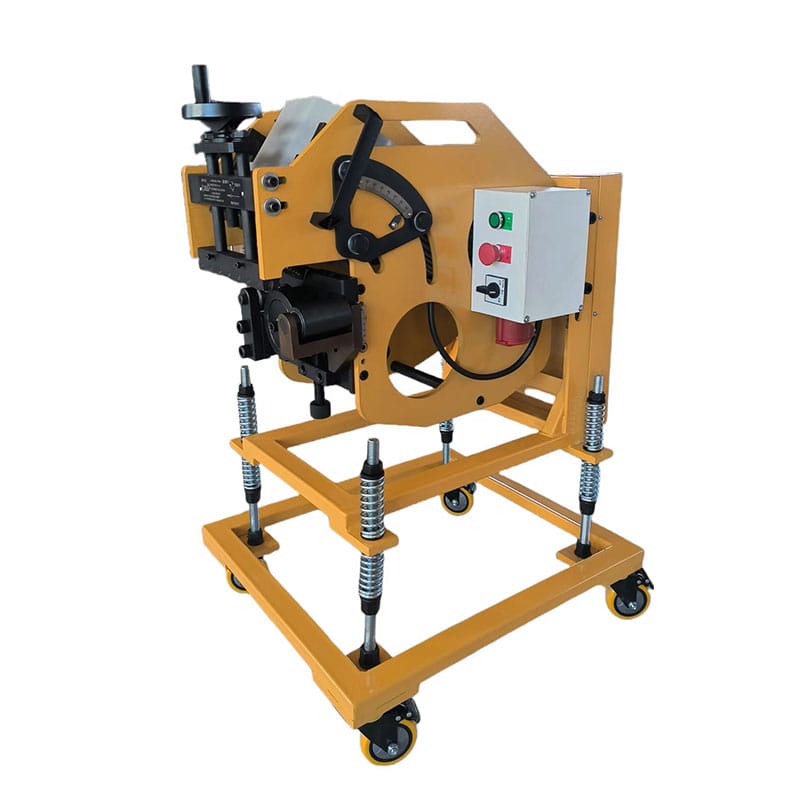
Not every cold cutting beveling machine is designed for the same workload. Some are better for flexible workshop use, while others are intended for heavier or more repetitive processing.
Important features include:
Stable machine frame
Adjustable bevel angle
Suitable cutting tool structure
Consistent walking or feeding speed
Easy tool replacement
Clear operation controls
Reliable clamping or guiding method
Maintenance-friendly design
Compatibility with plate thickness range
Stable performance on long edges
For automatic walking beveling machines, the walking system matters because uneven travel can affect bevel consistency. For rolling shear or cutterhead designs, tool quality and adjustment convenience are especially important. For milling-type beveling equipment, rigidity and cutting stability should be reviewed carefully.
Buyers should also ask whether sample testing is available. A machine that performs well on a catalog sheet may still need to be confirmed with the buyer’s actual plate thickness, material type, and bevel requirement.
Common Mistakes When Buying a Cold Cutting Beveling Machine
Many procurement problems come from incomplete technical communication. Avoid these mistakes before placing an order.
Choosing Only by Plate Thickness
Plate thickness is important, but it is not the only factor. Bevel angle, bevel width, material hardness, production volume, and plate size also matter.
Ignoring the Final Welding Process
The bevel should match the welding process. If the welding team needs a specific root face, groove shape, or fit-up condition, the beveling machine must support that requirement.
Comparing Machines Only by Motor Power
Motor power is useful information, but it does not define the whole machine. Cutting structure, frame rigidity, tool design, walking stability, and operator control are equally important.
Forgetting Spare Parts and Cutting Tools
Cutting tools are consumable parts. Buyers should ask about tool replacement, spare parts availability, maintenance routines, and expected support after delivery.
Not Training Operators
A cold cutting beveling machine can make edge preparation more consistent, but it still requires correct setup. Operators should understand angle adjustment, feeding speed, tool inspection, chip cleaning, and safe operation.
Maintenance Tips for Stable Bevel Quality
A beveling machine works close to metal chips, vibration, cutting resistance, and repeated adjustment. Regular maintenance helps protect both bevel quality and machine life.
Practical maintenance points include:
Inspect cutting tools before operation.
Replace worn or damaged tools promptly.
Keep guide surfaces and moving parts clean.
Check bolts, adjustment parts, and protective covers.
Lubricate moving components according to the supplier’s guidance.
Avoid forcing the machine beyond its rated capacity.
Clean chips after use to prevent buildup.
Train operators to recognize abnormal vibration or noise.
Store the machine in a dry, stable environment when not in use.
Maintenance should be treated as part of production control, not an afterthought. A poorly maintained machine can produce inconsistent bevels even if the original equipment is well designed.
How Cold Cutting Supports Better Inquiries and Faster Supplier Matching
For overseas buyers, the inquiry stage is often where time is lost. Many suppliers cannot provide a useful recommendation without real working conditions.
A strong inquiry for a cold cutting beveling machine should include:
Material type
Plate thickness range
Plate length and width
Required bevel angle
Required bevel width
Groove type
Daily or monthly workload
Workshop power supply
Photos or drawings of typical workpieces
Whether the machine is for workshop use or site use
Any inspection or welding standard requirements
When this information is clear, the supplier can recommend a suitable model, explain limitations, and advise whether customization is needed. Yuanli provides beveling and finishing equipment for industrial applications, and buyers can use the contact page to discuss machine selection based on actual workpieces.
When a Cold Cutting Beveling Machine May Not Be the Best Fit
A cold cutting beveling machine is valuable, but it is not always the only answer.
It may not be the best choice when the workshop only performs occasional small repairs, when the bevel requirement is extremely irregular, or when the main need is rough cutting rather than controlled weld preparation. In those cases, handheld tools, manual grinding, or another cutting process may still be used.
However, when the goal is repeatable weld edge preparation, reduced manual correction, and better control over bevel geometry, cold cutting becomes much more attractive.
The best decision is not based on one method being universally superior. It is based on matching the method to the production reality.
Why Work With a Manufacturer That Understands the Whole Fabrication Process
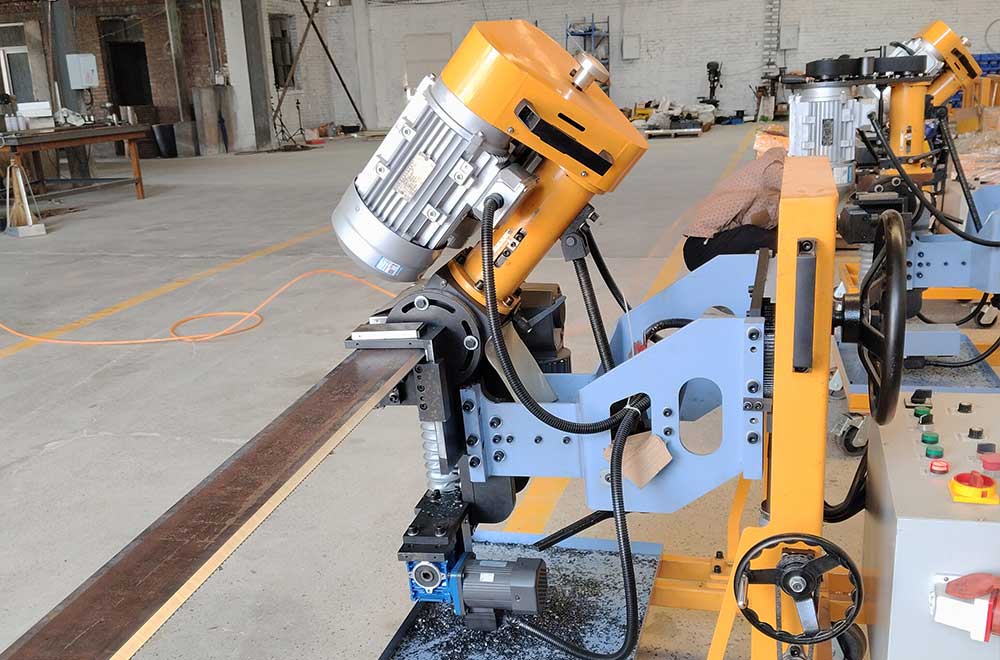
A beveling machine is not an isolated purchase. It affects cutting, fit-up, welding, inspection, finishing, and delivery schedules.
A professional manufacturer should be able to discuss:
Material behavior during beveling
Suitable bevel angle range
Tool selection and replacement
Machine setup for different plate sizes
Maintenance requirements
Operator training
Customization possibilities
Long-term spare parts support
Yuanli’s beveling and polishing equipment products are positioned for industrial metalworking applications where edge preparation and surface finishing quality matter. For buyers evaluating suppliers, it is worth working with a manufacturer that can discuss both the machine and the production problem behind it.
Conclusion
A cold cutting beveling machine helps metal fabrication workshops prepare weld edges with better control and less heat-related risk. By mechanically forming the bevel instead of relying on thermal cutting or heavy manual grinding, it supports cleaner groove geometry, more stable fit-up, and a more predictable welding workflow.
For workshops processing steel plates, stainless steel components, shipbuilding structures, pressure vessels, storage tanks, or heavy machinery frames, bevel quality can directly affect downstream welding efficiency and inspection confidence.
The right machine should be selected based on material, thickness, bevel angle, bevel width, production volume, working environment, and welding requirements. Buyers who provide clear technical details can receive more accurate recommendations and avoid machine mismatch.
If your project requires consistent weld edge preparation, start by reviewing Yuanli’s beveling machine series or send your workpiece details through the contact page for a technical recommendation.
FAQ
What is a cold cutting beveling machine used for?
A cold cutting beveling machine is used to prepare metal plate edges before welding. It creates a controlled bevel angle through mechanical cutting, helping improve groove consistency and weld preparation quality.
Why is cold cutting better than thermal cutting for weld preparation?
Cold cutting reduces heat impact on the plate edge. This helps lower the risk of deformation, rough edges, and extra grinding before welding.
What materials can a cold cutting beveling machine process?
Most industrial beveling machines can process carbon steel, stainless steel, alloy steel, and other metal plates. The exact capacity depends on the machine model, cutting tool, and plate thickness.
How do I choose the right beveling machine for thick plates?
Confirm the plate thickness, material type, bevel angle, bevel width, groove type, production volume, and workshop power supply. These details help the supplier recommend a suitable machine.
Is a cold cutting beveling machine suitable for stainless steel?
Yes, it can be suitable for stainless steel when the correct cutting tools and parameters are used. Cold mechanical beveling helps reduce unnecessary heat influence on the edge.
Can one beveling machine handle different bevel angles?
Many industrial beveling machines support adjustable bevel angles, but the available range depends on the machine design. Buyers should confirm the required angle range before ordering.
Where can I get a machine recommendation for my workpiece?
You can send material, thickness, bevel angle, and workpiece details through Yuanli’s contact page to request a technical recommendation.