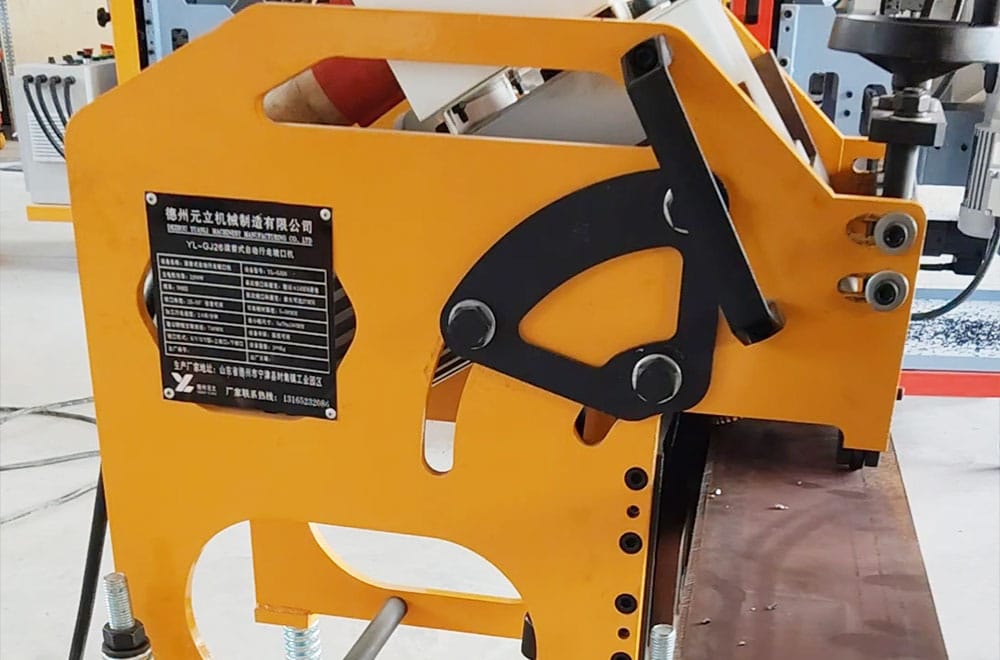
In heavy fabrication environments, the quality of edge preparation often decides everything that follows. Weld strength, assembly accuracy, and even downstream production speed are all tied to how consistently a plate edge is beveled.
This is exactly why sourcing from the right plate beveling machine suppliers has become a serious engineering decision rather than a routine procurement task.
What many buyers discover over time is simple: machines may look similar on paper, but performance stability, machining consistency, and long-term usability vary widely depending on who designed and manufactured them.
Table of Contents
How Plate Beveling Machines Quietly Shape Fabrication Quality
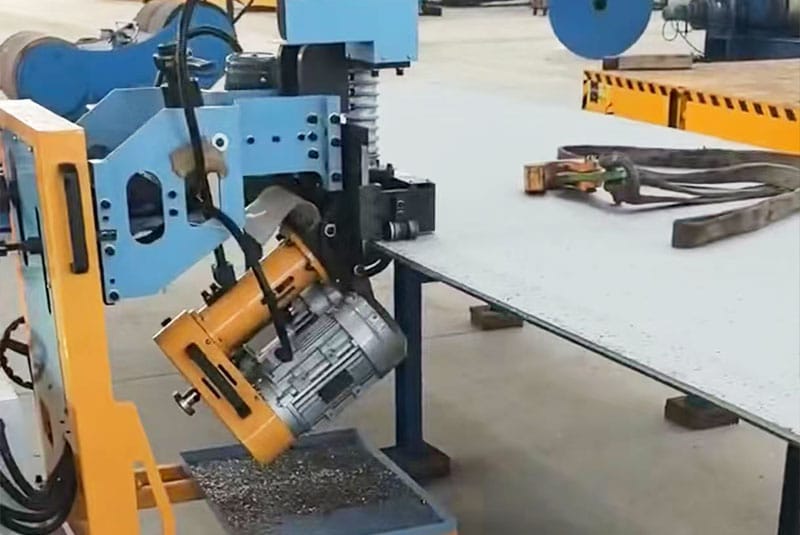
In most production lines, beveling is not the “main event,” but it influences nearly every critical weld joint.
A properly designed machine doesn’t just cut edges. It stabilizes geometry, controls heat impact on the material, and ensures repeatable weld preparation across long production cycles.
Industries such as shipbuilding, pressure vessels, structural steel, and pipeline fabrication all depend on this consistency. A small deviation in bevel angle or surface finish can affect alignment during welding and increase rework later.
This is where experienced plate beveling machine suppliers make a measurable difference—they design for stability, not just function.
Understanding What Actually Happens During Plate Beveling
Although the process may appear straightforward, edge beveling involves a combination of mechanical precision, cutting force control, and material response.
In practical operation, the workflow generally follows this sequence:
- The steel plate is positioned and stabilized on a support frame
- The beveling head aligns with the required angle
- Material removal begins along a controlled path
- Edge geometry is shaped into a weld-ready profile
Behind this simplicity is a coordinated system of mechanical rigidity, tooling accuracy, and control calibration.
Different machines handle this process differently, especially when plate thickness increases or when high-volume production is involved.
Why Machine Type Matters More Than Most Buyers Expect
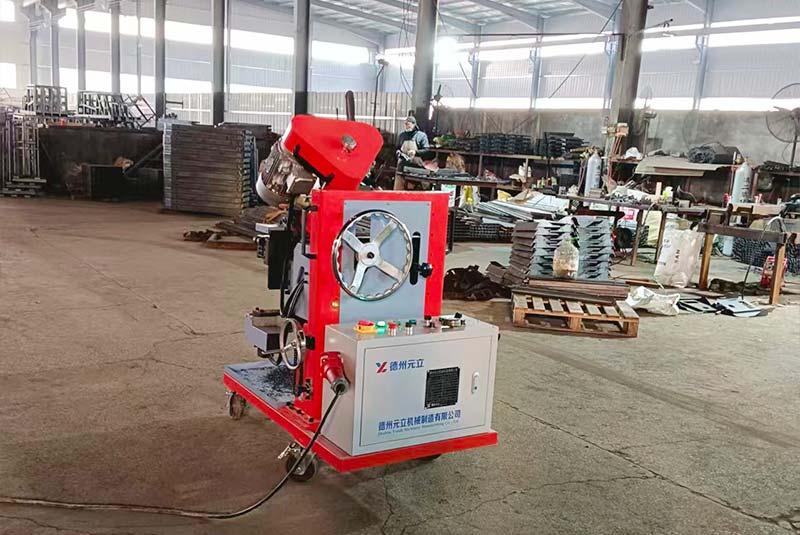
One common mistake in procurement is assuming all beveling machines serve the same purpose. In reality, design differences significantly impact output stability.
Portable systems are often used for flexible site operations or small fabrication tasks. They offer convenience but are not designed for continuous heavy-duty processing.
Industrial-grade systems, on the other hand, are built for sustained workloads. These are commonly found in large fabrication plants where steel plates are thick and production is continuous.
Then there are CNC-controlled configurations. These systems integrate precision control logic, making them suitable for operations where consistency across thousands of identical parts is required.
Some manufacturers also develop custom-engineered systems when standard models cannot meet project-specific requirements.
The ability of plate beveling machine suppliers to provide multiple configurations often reflects their actual engineering depth.
What Separates Manufacturers from Trading Channels
In global procurement, buyers often encounter both direct manufacturers and trading intermediaries.
At first glance, the difference may not be obvious. However, it becomes clear during customization discussions, technical adjustments, and after-sales support.
Working directly with a manufacturing source typically brings:
- Better control over mechanical design adjustments
- More stable production timelines
- Clearer technical communication during customization
- Greater consistency in quality verification processes
Intermediary channels may offer accessibility, but they rarely influence the engineering behind the machine itself.
For industrial users, this distinction becomes critical when equipment is integrated into continuous production lines.
How Serious Buyers Evaluate Plate Beveling Machine Suppliers
Selecting a supplier is rarely about a single specification. It is a layered evaluation process that involves engineering reliability, production capacity, and long-term support capability.
Experienced buyers usually focus on:
- Engineering design capability and machining accuracy
- Manufacturing consistency across multiple production batches
- Quality control procedures during assembly and testing
- Ability to support long-term maintenance requirements
- Responsiveness during technical adjustment phases
Another often overlooked factor is documentation quality. Clear technical drawings, operational guidance, and maintenance structure often reflect how mature the supplier really is.
Strong plate beveling machine suppliers usually demonstrate consistency not only in machines but also in technical communication.
Where Plate Beveling Machines Are Actually Making the Biggest Impact
Across heavy industry, beveling equipment has quietly become part of core production infrastructure.
In shipbuilding, it supports large structural panel preparation where weld continuity is critical. In energy-related fabrication, especially pipelines, edge consistency directly affects joint reliability under pressure conditions.
Steel structure manufacturing relies on beveling systems to maintain alignment accuracy across large assemblies. Pressure vessel fabrication introduces even stricter requirements where welding quality must remain stable under long-term load conditions.
These applications share one requirement: predictable edge geometry at scale.
Why Factory-Based Suppliers Remain the Preferred Choice
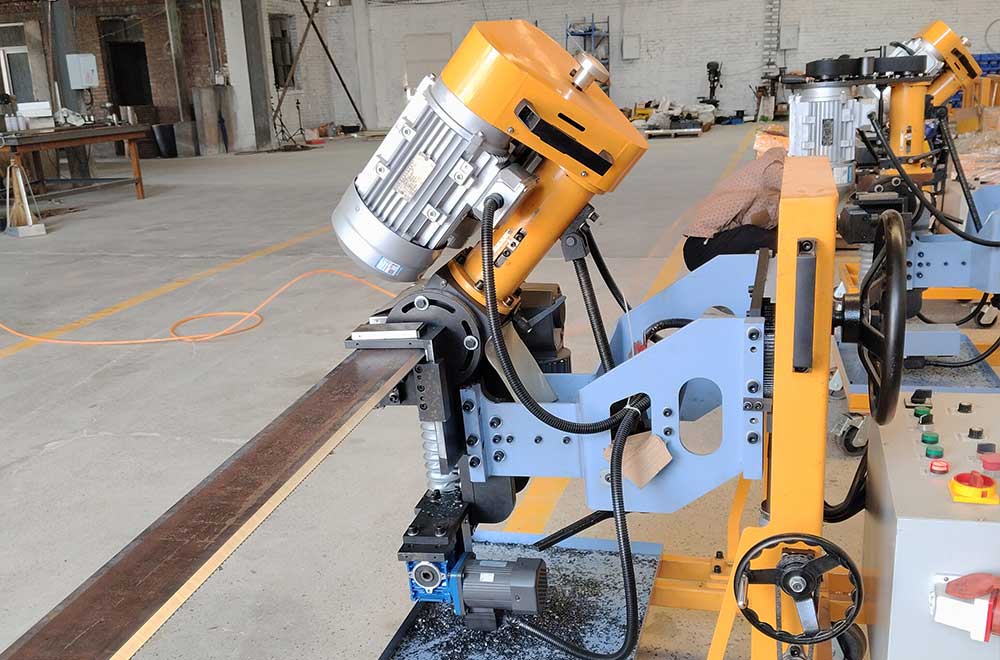
Industrial buyers increasingly lean toward factory-based sourcing because it reduces uncertainty in production performance.
A direct manufacturing source is typically able to:
- Maintain stable machining standards across production cycles
- Adapt designs to non-standard engineering requirements
- Provide structured technical support when issues arise
- Ensure better alignment between design intent and final output
This becomes especially important when beveling machines are integrated into automated production environments where downtime has a cascading effect.
Common Mistakes That Quietly Increase Long-Term Operational Cost
In many real procurement cases, issues do not appear immediately. They emerge after equipment enters continuous use.
Some of the most frequent mistakes include:
- Choosing equipment based only on short-term considerations
- Underestimating the importance of structural rigidity
- Ignoring long-term tooling wear behavior
- Overlooking supplier technical support capability
- Skipping verification of manufacturing background
These issues often lead to inconsistent machining results, increased maintenance cycles, or reduced operational stability.
How Manufacturing Quality Is Actually Controlled in Professional Production
Reliable manufacturers don’t rely on a single inspection step. Quality is built across multiple stages.
It starts with material selection, where structural components must meet mechanical strength requirements. During machining, dimensional accuracy is maintained through controlled processes and calibrated equipment.
Before delivery, machines typically undergo functional testing to verify operational stability under working conditions.
Beyond production, continuous improvement cycles refine design efficiency based on real application feedback.
This layered approach is what differentiates experienced plate beveling machine suppliers from general equipment assemblers.
Oem and Customized Engineering in Real Industrial Environments
Not every fabrication line operates under the same conditions. Plate thickness, production volume, and welding standards vary widely.
For this reason, customization has become a core requirement rather than an optional feature.
Manufacturers often adjust:
- Bevel angles based on welding specifications
- Machine structure for heavy-load stability
- Integration compatibility with automated lines
- Control system configurations for production workflow alignment
In many cases, the equipment becomes part of a larger engineered system rather than a standalone machine.
Where the Market Is Moving Next
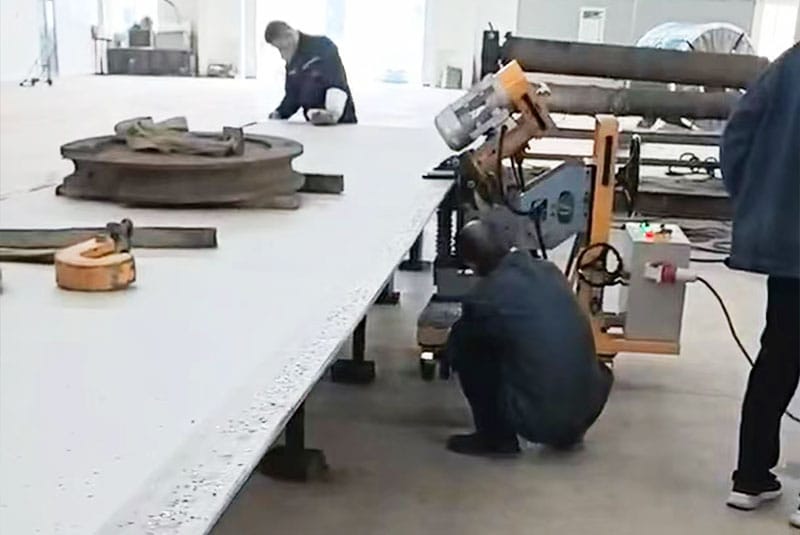
The evolution of plate beveling technology is closely tied to automation and precision manufacturing trends.
Across global industries, several shifts are becoming more visible:
- Increased reliance on CNC-based machining systems
- Greater emphasis on production consistency over manual flexibility
- Expansion of automated steel fabrication lines
- Stronger demand for integrated welding preparation systems
At the same time, manufacturers are expected to deliver not just machines, but process reliability.
This is reshaping how buyers evaluate plate beveling machine suppliers, with engineering capability becoming more important than product catalog size.
Closing Perspective
Choosing a plate beveling machine supplier is ultimately about understanding long-term production stability. Equipment performance is not defined by a single specification, but by how consistently it behaves under real industrial conditions.
Manufacturers that focus on engineering depth, structural stability, and application-driven design tend to deliver more predictable results over time.
For buyers in shipbuilding, steel fabrication, and heavy engineering industries, the real value lies in working with suppliers who understand not just machines, but the production environments those machines operate in.
FAQ
What does a plate beveling machine do in metal fabrication?
A plate beveling machine prepares steel plate edges by cutting them into specific angles, improving weld penetration and ensuring stronger joint performance in fabrication processes.
Why is it better to work with direct plate beveling machine suppliers?
Direct suppliers usually provide more stable engineering support, better customization options, and consistent production quality compared to intermediaries or trading companies.
What industries commonly use plate beveling machines?
They are widely used in shipbuilding, steel structure engineering, oil and gas pipeline fabrication, pressure vessel manufacturing, and heavy machinery production.
How to evaluate reliable plate beveling machine suppliers?
Key factors include manufacturing capability, quality control systems, technical support, export experience, and the ability to provide customized solutions for different production needs.
Can plate beveling machines be customized for specific production requirements?
Yes, many manufacturers offer customized designs including adjustable bevel angles, automation integration, and special configurations for different plate thicknesses and industrial applications.