Table of Contents
Introduction
What is a Steel Plate Beveling Machine?
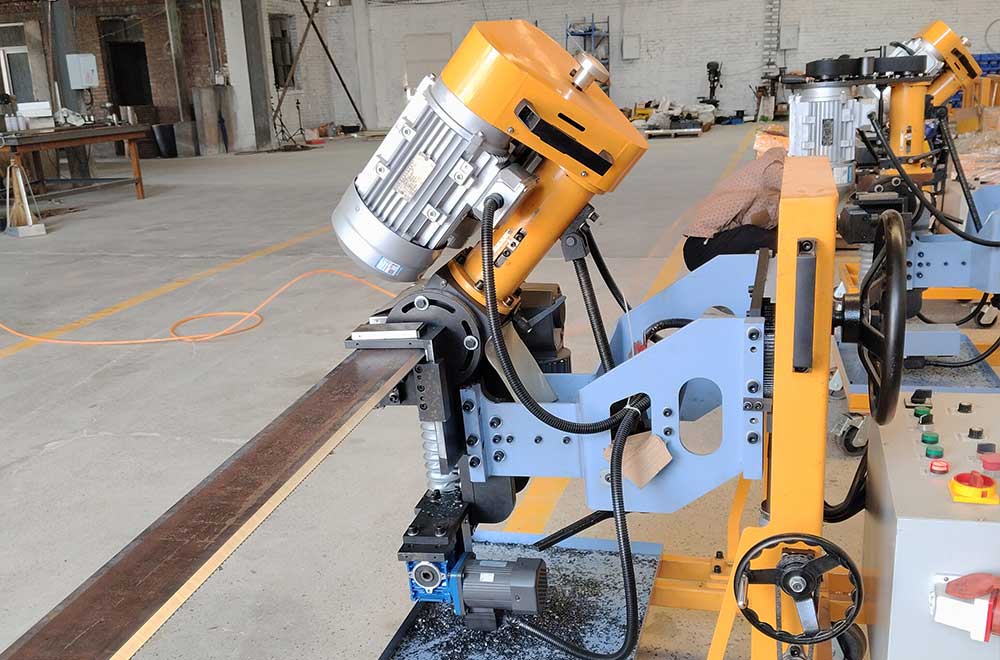
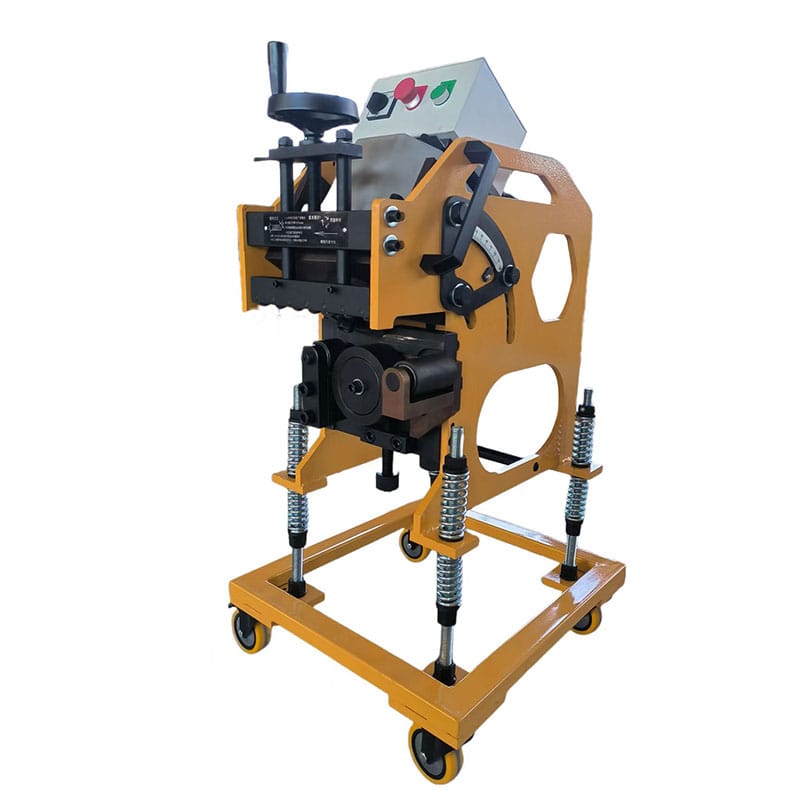
A steel plate beveling machine is specialized industrial equipment designed to create angled edges or bevels on metal plates before welding. By removing material along the plate edge, it forms a precise slope that improves weld penetration and joint strength. Modern plate beveling machines use milling heads with indexable inserts to deliver clean, burr-free edges without heat-affected zones—critical for high-quality welding in fabrication.
Importance of Beveling in Metal Fabrication
Beveling is a critical pre-welding step that directly impacts weld quality and structural integrity. A properly beveled edge:
- Increases surface area for weld material, ensuring deeper penetration
- Reduces stress concentrations at the joint
- Minimizes welding defects such as porosity or incomplete fusion
- Enables better fit-up between mating plates
In shipbuilding, pressure vessel fabrication, and structural steel projects, where weld failures can have catastrophic consequences, consistent bevel quality is non-negotiable.
Applications in Industrial and Workshop Settings
Plate beveling machines serve diverse industries:
- Shipbuilding: Preparing hull plates and structural components
- Construction: Processing steel beams and plates for bridges and buildings
- Oil & Gas: Pipeline section preparation and pressure vessel fabrication
- Heavy Machinery: Creating edges for welded assemblies in equipment manufacturing
Portable models enable on-site work in confined spaces, while stationary machines integrate seamlessly into automated production lines for high-volume fabrication.
Types of Steel Plate Beveling Machines
Manual vs Automatic Beveling Machines
Manual beveling machines rely on operator skill to feed the tool along the plate edge. They offer flexibility for small batches and field repairs but suffer from inconsistent quality and high labor intensity.
Automatic beveling machines use powered feed systems to maintain constant cutting speed and pressure. Key advantages:
- Consistent bevel angles and surface finish
- Reduced operator fatigue and error
- Higher productivity for repetitive tasks
- Suitable for longer production runs
| Feature | Manual Bevelers | Automatic Bevelers |
|---|---|---|
| Setup Time | 0.5-2 hours | 2-8 hours (programming required) |
| First Part Speed | Faster for simple jobs | Slower initially (setup + testing) |
| Production Speed | Linear increase per part | 4x faster after setup |
| Operator Skill | Highly skilled required | Moderate skill sufficient |
| Consistency | Variable (±0.005″ tolerance) | High (±0.001″ tolerance) |
| Best For | 1-10 parts, prototypes | 10+ parts, complex geometry |
CNC Steel Plate Beveling Machines – Features and Advantages
CNC (Computer Numerical Control) beveling machines represent the pinnacle of automation in edge preparation. They program cutting paths through software, executing precise, repeatable bevels with minimal human intervention.
Key Features:
- Programmable bevel angles (typically 0° to 60° or wider)
- Automated tool changes and parameter adjustments
- Integration with plasma, laser, or waterjet cutting systems
- Real-time monitoring and error correction
Advantages Over Manual Methods:
- 75-300% faster production speeds
- Tolerances as tight as ±0.001 inches
- One operator can supervise multiple machines
- Reduced material waste (5-10% vs. 15-25% for manual)
- Lower long-term labor costs despite higher initial investment
CNC systems excel at complex bevel profiles—compound angles, J-preps, and variable-depth cuts—that challenge even skilled manual operators.
Hydraulic Steel Plate Beveling Machines – Benefits and Use Cases
Hydraulic beveling machines leverage hydraulic power for clamping, feeding, and cutting operations. They are particularly suited for heavy-duty applications where high torque and stable cutting forces are required.
Benefits:
- Powerful cutting performance for thick materials (up to 4 inches in some models)
- Consistent clamping force reduces vibration and improves edge quality
- Suitable for harsh environments where electric power is limited
- Long service life with minimal maintenance requirements
Typical Use Cases:
- Thick steel plate fabrication in shipyards
- Heavy structural steel processing
- Field operations in construction sites
- Applications requiring high cutting forces on tough materials like Hardox or armor plate
Key Features to Look for in a Steel Plate Beveling Machine
Precision and Cutting Accuracy
Precision is paramount for weld preparation. Look for machines with:
- Angle adjustment mechanisms readable to 0.5° or finer
- Stable cutting heads that minimize vibration
- Digital displays for bevel depth and angle settings
- Consistent performance across multiple passes
High-quality beveling machines achieve surface finishes of Ra 3.2-6.3 μm, often eliminating the need for secondary grinding operations.
Maximum Plate Thickness Capacity
Consider the range of materials you’ll process:
- Light-duty models: Handle up to 10-15 mm (3/8″-5/8″)
- Medium-duty models: Process 15-40 mm (5/8″-1-9/16″)
- Heavy-duty models: Capable of 40-100 mm (1-9/16″-4″) or more
Ensure the machine matches your typical plate thickness. Using a machine beyond its rated capacity compromises both quality and tool life.
Adjustable Beveling Angles
Versatility in angle adjustment increases machine utility. Common ranges:
- Standard models: 22.5°, 30°, 37.5°, 45° (fixed or via changeover devices)
- CNC models: Continuously variable 0° to 60° or wider
- Specialized machines: Extended ranges up to 70°+ for specific applications
Quick-change angle adjustment systems reduce downtime when switching between different joint designs—a valuable feature in mixed-production environments.
Safety Features and User-Friendly Controls
Modern beveling machines incorporate multiple safety mechanisms:
- Emergency stop buttons within easy reach
- Guards and shields around cutting areas
- Spark-free cold cutting to eliminate fire hazards
- Noise reduction (some models operate below 70 dB)
- Magnetic collision protection on CNC torches
User-friendly controls include:
- Clear digital displays for settings
- Intuitive adjustment knobs and levers
- Quick-change tooling systems
- Remote controls on portable models
- Memory functions for frequently used parameters
How Steel Plate Beveling Machines Work
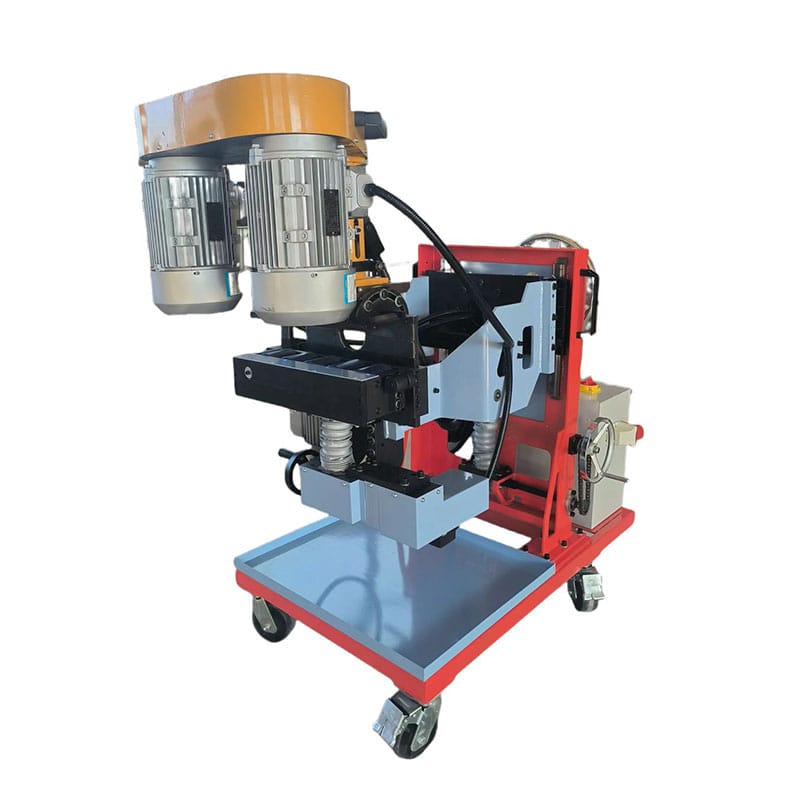
Step-by-Step Operation Process
- Workpiece Preparation: Clean the plate surface to remove rust, oil, or coatings that could interfere with cutting or clamping.
- Machine Setup: Mount the beveling machine and adjust guide rollers to maintain proper alignment along the plate edge.
- Parameter Setting: Set the desired bevel angle, depth, and feed rate according to material type and welding requirements.
- Tool Engagement: Position the cutting tool at the starting point. For manual machines, align by eye or using a guide. For CNC models, the system automatically positions the tool.
- Beveling Process: Initiate cutting. For self-propelled machines, the unit moves along the edge at controlled speed. For portable manual models, the operator maintains consistent feed rate.
- Quality Check: Inspect the beveled edge for angle accuracy, surface finish, and absence of burrs. Make adjustments as needed.
Common Techniques for Plate Beveling
- Single-Pass Beveling: Removing the full bevel depth in one operation. Suitable for moderate thicknesses and materials with good machinability.
- Multi-Pass Beveling: Making several lighter passes to achieve the final bevel depth. Reduces tool load and extends cutter life, especially on tough materials.
- Top vs. Bottom Beveling: Some machines can bevel the top edge only, while others can invert to bevel the bottom edge without flipping the plate—a major advantage for heavy workpieces.
- Double-Sided Beveling: Processing both edges simultaneously on symmetrical joints, halving the time compared to sequential beveling.
Factors Affecting Performance and Efficiency
- Material Properties: Harder materials (stainless, alloy steels) require slower feed rates and more frequent tool changes than mild steel.
- Plate Condition: Warped or uneven plates challenge beveling quality. Proper support and clamping are essential.
- Tool Condition: Sharp cutting inserts deliver cleaner cuts and lower loads. Regular inspection and rotation/replacement of inserts is critical.
- Feed Rate: Too fast causes poor surface finish and tool wear; too slow reduces productivity without improving quality.
- Machine Maintenance: Regular lubrication, cleaning, and calibration prevent downtime and maintain precision.
Benefits of Using a Steel Plate Beveling Machine
Improved Production Efficiency
Beveling machines dramatically accelerate edge preparation:
- Processing speeds of 5-8 feet per minute on portable models
- CNC systems beveling 3-4x faster than manual methods
- Reduced rework due to consistent quality
- Parallel processing: one operator manages multiple CNC machines
Fabricators report productivity increases of 200-300% when switching from manual grinding to mechanized beveling, with lead time reductions from weeks to days on complex projects.
Consistent Bevel Quality
Mechanized beveling eliminates human variability:
- Angles repeatable within ±0.5°
- Surface finish quality meets welding standards without additional work
- Uniform land (root face) dimensions for predictable weld penetration
- Reduced scrap from inconsistent joints
CNC systems store programs for each joint type, ensuring identical results across hundreds or thousands of parts—a critical advantage for quality-controlled industries.
Cost Savings Compared to Manual Beveling
While initial investment is higher, beveling machines deliver compelling ROI:
| Cost Factor | Manual Beveling | Machine Beveling |
|---|---|---|
| Labor Cost | High (skilled operators, slow) | Lower (less skill, faster) |
| Tooling Cost | Low (grinding wheels) | Higher (indexable inserts) |
| Material Waste | High (over-grinding) | Low (precise material removal) |
| Rework Rate | High (inconsistent quality) | Low (repeatable accuracy) |
| Production Rate | Slow | Fast (2-4x faster) |
Studies show breakeven points as low as 10-50 identical parts, with substantial savings on larger runs. Eliminating rework alone often justifies the investment.
Enhanced Safety for Operators
Beveling machines improve workplace safety by:
- Eliminating sparks, dust, and noise from grinding
- Reducing hand-arm vibration syndrome
- Minimizing operator exposure to sharp edges
- Enclosing cutting mechanisms in guarded housings
- Reducing physical fatigue from repetitive grinding motions
In hazardous environments (oil refineries, shipyards, offshore platforms), spark-free cold cutting from beveling machines is not just preferable—it’s often mandated.
Choosing the Right Steel Plate Beveling Machine
Determining Your Workshop Needs
Start by answering these questions:
- What materials do you process? (mild steel, stainless, aluminum?)
- What’s your typical plate thickness range?
- What’s your daily/weekly beveling volume?
- Do you need portability for field work or a stationary setup?
- What bevel angles and profiles do you use most?
- What’s your budget and expected ROI timeline?
Small shops doing occasional beveling may benefit from portable manual or automatic models. High-volume fabricators achieve maximum ROI with CNC systems integrated into production lines.
Comparing Manual, CNC, and Hydraulic Models
Manual Bevelers:
- Pros: Low cost, simple operation, high portability
- Cons: Inconsistent quality, labor-intensive, limited to simpler profiles
- Best for: Field repairs, small batches, prototypes
CNC Bevelers:
- Pros: Highest precision, complex bevels, automated production
- Cons: Highest initial cost, requires programming knowledge
- Best for: High-volume production, complex geometries, quality-critical applications
Hydraulic Bevelers:
- Pros: High cutting force, stable clamping, rugged durability
- Cons: Limited CNC features, heavier than electric models
- Best for: Thick materials, harsh environments, heavy fabrication
Hybrid configurations exist—CNC-controlled hydraulic machines combine precision with power for the most demanding applications.
Selecting a Reliable Beveling Machine Supplier
When choosing a manufacturer, evaluate:
- Industry Experience: How long have they been building beveling equipment?
- Support Network: Do they offer local service, parts availability, and training?
- Application Expertise: Have they solved challenges similar to yours?
- Product Range: Do they offer models from entry to advanced levels?
- Customer References: Can they provide case studies or testimonials?
Leading manufacturers offer comprehensive support including installation, training, preventive maintenance programs, and rapid spare parts delivery—critical factors in minimizing downtime.
Budget Considerations and ROI
Beveling machine prices span thousands to hundreds of thousands of dollars. To justify the investment:
- Calculate your current manual beveling costs (labor hours, consumables, rework)
- Estimate machine productivity gains (e.g., 3x faster production)
- Factor in quality improvements (less rework, fewer weld defects)
- Include safety benefits (reduced injuries, insurance costs)
- Consider capacity expansion opportunities (winning more work with faster turnaround)
Most fabricators achieve ROI within 6-18 months, with equipment often paying for itself in two years or less through direct cost savings and increased competitive bidding capability.
Maintenance and Care Tips for Longevity
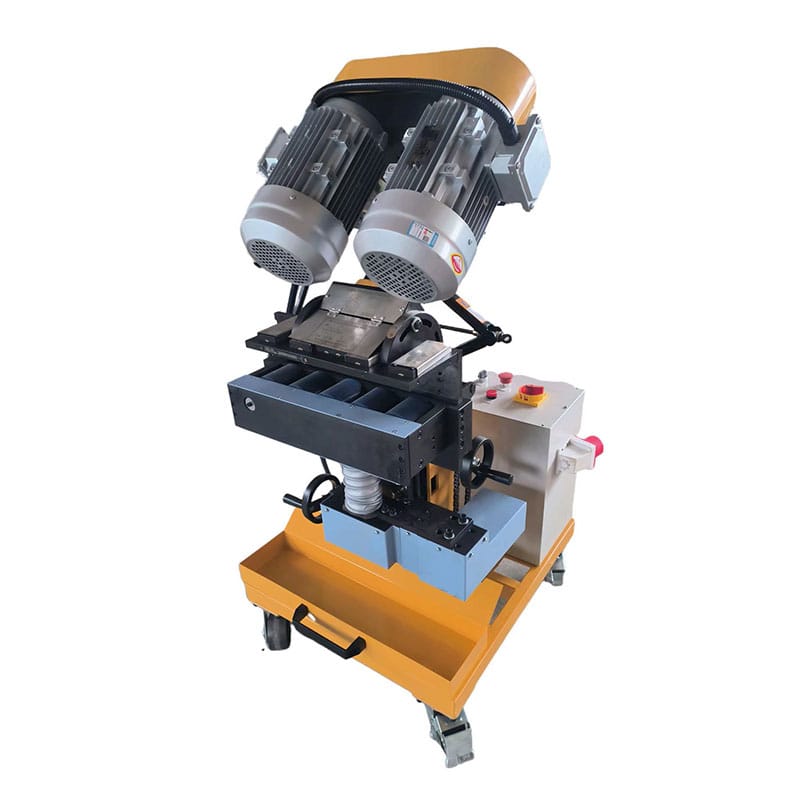
Routine Cleaning and Lubrication
Daily maintenance after each use:
- Remove metal chips and debris from cutting area, guide rollers, and undercarriage
- Wipe down exposed surfaces to prevent corrosion
- Inspect and clean air filters on pneumatic models
Lubrication per manufacturer specifications:
- Apply grease to guide rollers and moving parts at recommended intervals
- Check gearbox oil levels on hydraulic models; change after first 300 hours, then annually
- Lubricate spindle bearings according to schedule (typically every 3-6 months)
Inspection of Cutting Tools and Blades
Cutting inserts are wear items requiring regular attention:
- Daily: Visual inspection for chipping, excessive wear, or uneven wear patterns
- Weekly: Rotate inserts to use fresh cutting edges (most have 4-8 usable edges)
- Monthly: Replace inserts when all edges are worn or damaged
- Quarterly: Inspect milling head for wear, runout, or damage
Always use manufacturer-recommended inserts. Substituting cheaper alternatives may save money initially but often compromises cut quality and machine life.
Troubleshooting Common Issues
Problem: Uneven bevel or inconsistent depth
- Causes: Worn inserts, loose clamping, warped plate, incorrect feed rate
- Solutions: Replace/rotate inserts, verify plate flatness, adjust clamping pressure, reduce feed rate
Problem: Excessive vibration or noise
- Causes: Dull tools, loose components, unbalanced cutter, plate not secured
- Solutions: Sharpen or replace inserts, tighten all fasteners, inspect cutter balance, improve plate support
Problem: Poor surface finish
- Causes: Worn tools, inappropriate feed rate, material issues
- Solutions: Fresh inserts, adjust feed for material, verify material specification
Problem: Machine stalls or overload trips
- Causes: Taking too deep a cut, dull tool, insufficient power for material
- Solutions: Reduce depth per pass, change inserts, verify machine capacity for material
Manufacturer-Recommended Service Intervals
Follow the maintenance schedule in your operator’s manual. Typical intervals:
| Maintenance Task | Frequency |
|---|---|
| General cleaning and chip removal | Daily (after each use) |
| Visual inspection of safety devices | Daily |
| Lubrication of moving parts | Weekly or per lubrication chart |
| Insert rotation/replacement | As needed (typically weekly inspection) |
| Comprehensive inspection | Monthly |
| Gearbox oil change | After first 300 hours, then annually |
| Major service/calibration | Annually or per machine hours |
Keep detailed maintenance logs to track component life and predict failures before they cause downtime.
Industry Applications of Steel Plate Beveling Machines
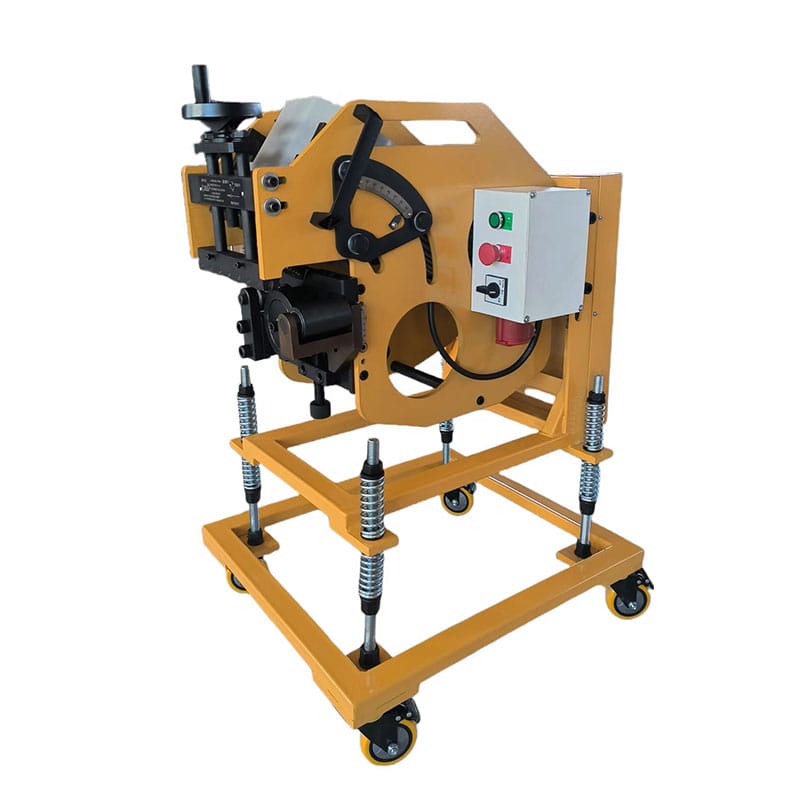
Shipbuilding and Heavy Industry
Shipyards depend on plate beveling machines for:
- Hull plate preparation for full-penetration welds
- Structural component fabrication (decks, bulkheads, superstructures)
- Pipe and fitting end preparation
- Repair and retrofit work on vessels
In shipbuilding, where weld defects can compromise vessel integrity and lead to costly rework or failures at sea, mechanized beveling delivers the quality and reliability demanded by classification societies and naval standards.
Construction and Structural Fabrication
Structural steel fabricators use beveling machines for:
- Column and beam preparation for welded connections
- Brace and gusset plate edge preparation
- Bridge girder fabrication
- Heavy equipment frame welding
The consistency achieved by beveling machines reduces fit-up problems during steel erection, accelerating project schedules and improving joint quality in critical infrastructure.
Oil, Gas, and Pipeline Projects
Oil and gas applications include:
- Pipeline section end preparation for girth welds
- Pressure vessel and storage tank fabrication
- Offshore platform component manufacturing
- Refinery and petrochemical plant construction
In pipeline construction, portable beveling machines enable on-site preparation without transporting pipes to shops, dramatically reducing project timelines. Cold-cutting bevelers are essential in explosive environments where spark-producing methods are prohibited.
Automotive and Machinery Manufacturing
Transportation and equipment sectors utilize beveling for:
- Frame and chassis component preparation
- Heavy equipment structural welding
- Agricultural machinery fabrication
- Rail car and locomotive component manufacturing
High-volume production in these industries favors CNC beveling systems integrated into automated lines, delivering the throughput and consistency required for competitive manufacturing.
Conclusion
Steel plate beveling machines have become indispensable tools in modern metal fabrication, delivering significant improvements in weld quality, production efficiency, and workplace safety. Whether you’re a small shop processing occasional bevels or a high-volume fabricator running automated lines, selecting the right beveling equipment—and maintaining it properly—directly impacts your competitiveness and profitability.
Investing in a high-quality beveling machine isn’t just about faster edge preparation—it’s about building stronger welds, reducing rework, expanding capability, and winning more business through superior quality and turnaround. The manufacturers who thrive today are those who recognize beveling not as a secondary operation, but as a strategic advantage in their production process.
Ready to enhance your fabrication capabilities? Contact us for expert advice on selecting the ideal beveling solution for your applications or to request a quote tailored to your specific needs. Our experienced team can help you navigate the options and find the perfect balance of performance, productivity, and value for your operation.
FAQ
Can a beveling machine handle stainless steel plates?
Yes, most modern beveling machines can process stainless steel. However, stainless work-hardens during machining, so:
- Use lower feed rates than for mild steel
- Select appropriate cutting inserts (special grades for stainless)
- Ensure adequate machine power for the material
- Consider dedicated stainless steel tooling for frequent use
Some manufacturers offer optional stainless-specific cutting heads and inserts optimized for this challenging material.
What is the typical lifespan of a steel plate beveling machine?
With proper maintenance, beveling machines typically last 10-20 years or more. Factors affecting lifespan include:
- Usage intensity (shifts per day)
- Maintenance quality and regularity
- Material types processed (abrasive materials wear components faster)
- Operating environment (dusty, harsh conditions reduce life)
- Build quality of the machine (heavy-duty models last longer)
Rotating and wearing parts (gearboxes, bearings, cutting heads) will need periodic replacement, but major structural components often last decades in well-maintained equipment.
Are CNC beveling machines more cost-effective than manual ones?
CNC beveling machines have higher upfront costs but offer superior cost-effectiveness for appropriate applications:
Cost-Effective When:
- Production volume exceeds 10-50 identical parts
- Complex bevel profiles are required
- Labor rates are high
- Quality consistency is critical
- Production speed impacts competitiveness
Less Cost-Effective When:
- Processing one-off or low-volume jobs
- Simple bevels only are needed
- Labor costs are low
- Budget constraints are severe
Calculate your specific scenario—many shops find CNC machines pay for themselves in 6-18 months through direct labor savings and indirect benefits like reduced rework and increased quoting competitiveness.
How to choose between hydraulic and electric beveling machines?
Consider these factors:
Choose Electric When:
- Shop has adequate electrical infrastructure
- Operating in clean indoor environments
- Need variable speed and precise control
- Prefer simpler maintenance
- Processing thinner to moderate thicknesses
Choose Hydraulic When:
- Need maximum cutting power for thick or tough materials
- Working in harsh or outdoor environments
- Electric power is unreliable or unavailable
- Prioritize durability and ruggedness
- Processing very thick plates (over 40 mm)
Some hybrid machines offer electric cutting heads with hydraulic clamping systems, combining the benefits of both technologies for versatile performance.