Table of Contents
Introduction
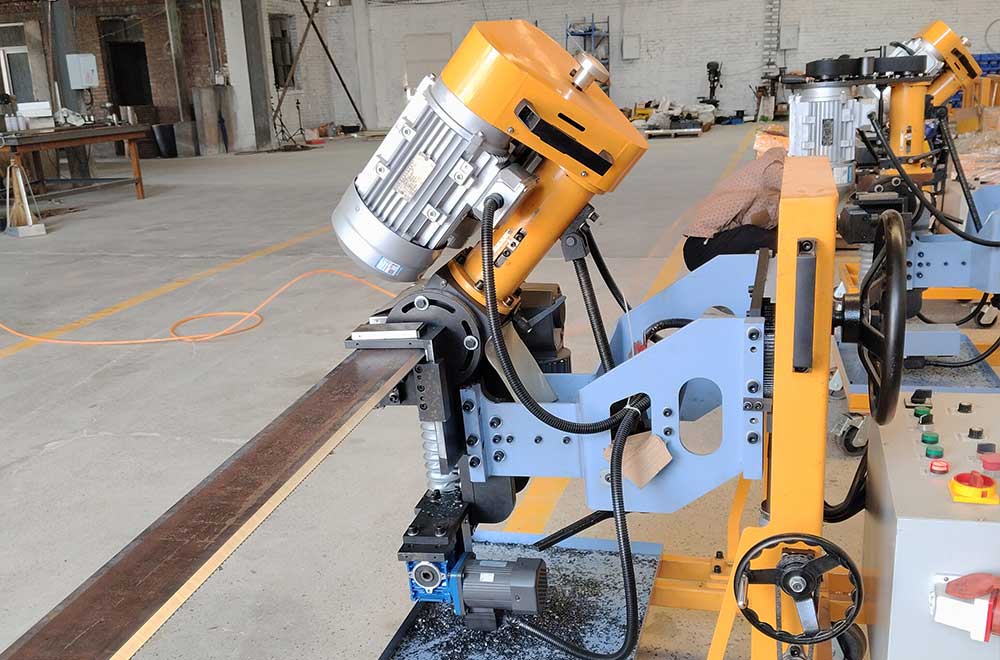
Steel beveling plays a critical role in modern metal fabrication, especially in welding preparation for industrial structures. A steel beveling machine is designed to process metal edges into precise angles, ensuring stronger weld joints, better penetration, and higher structural integrity across different industrial applications such as shipbuilding, pipeline welding, and steel structure manufacturing.
As a steel beveling machine manufacturer, we regularly observe that many buyers struggle when choosing between manual and automatic solutions. This decision directly affects production efficiency, labor cost, and final welding quality. Understanding the differences is essential for selecting the right equipment for long-term production needs, especially in industries where precision and consistency are critical.
What Is a Steel Beveling Machine?
A steel beveling machine is industrial equipment used to shape and prepare metal edges before welding. It is widely applied in steel plate processing, pipe fabrication, construction engineering, and heavy manufacturing industries where precise edge preparation is required to ensure high-quality welding performance.
Definition and Core Function
The main function of a steel beveling machine is to create accurate bevel angles on steel plates or pipes to improve welding penetration and reduce defects during assembly. These machines are designed to replace manual grinding methods, providing more consistent results, higher efficiency, and improved safety in industrial production environments.
Key Components of a Steel Beveling Machine
Most modern machines include several key structural and functional components that ensure stable operation and precision:
- Cutting head system for accurate bevel shaping
- Feeding mechanism for smooth and controlled material movement
- Adjustable angle system to meet different welding requirements
- Electric or hydraulic drive system for continuous industrial operation
These components work together to ensure consistent performance in both manual and automatic models, making the machine suitable for a wide range of fabrication environments.
How Manual Steel Beveling Machines Work
Manual steel beveling machines rely heavily on operator control and mechanical guidance. The material is positioned and fed by the operator, allowing flexible handling for small-scale production tasks where precision requirements are moderate and production volume is relatively low.
Operating Principle
The operator manually feeds the steel plate or pipe into the machine while controlling speed, pressure, and direction. The beveling process depends largely on the operator’s skill level, experience, and attention to detail, which means output quality can vary between different workers or shifts.
Typical Applications
Manual machines are commonly used in environments where flexibility and low cost are more important than high-volume production, such as:
- Small fabrication workshops handling custom orders
- Repair and maintenance facilities working on irregular parts
- Low-volume production environments with varied product types
Advantages and Limitations
Manual steel beveling machines offer several practical advantages, especially for entry-level or small-scale operations. They typically have lower purchase costs, simpler structures, and easier maintenance requirements. However, they also come with limitations such as higher labor dependency, slower production speed, and less consistent bevel quality when compared to automated systems, especially during long production runs.
How Automatic Steel Beveling Machines Work
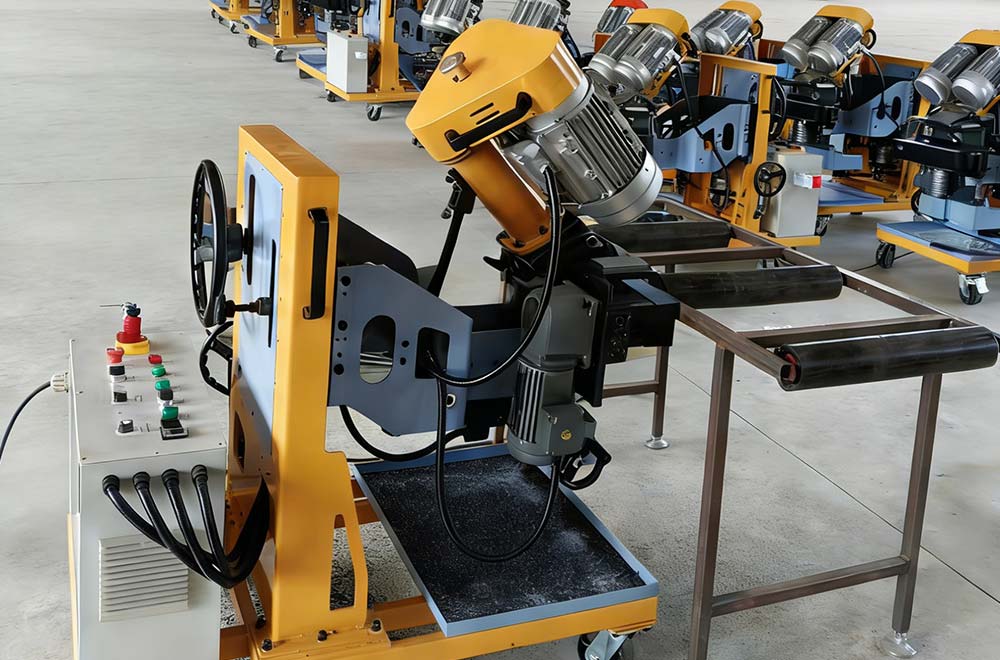
Automatic steel beveling machines are designed for high-efficiency industrial production environments. These systems use motor-driven feeding mechanisms or CNC-controlled systems to ensure continuous, stable, and highly precise beveling performance with minimal manual intervention.
Automated Beveling Process Explained
Once operational parameters such as bevel angle, feed speed, and cutting depth are set, the machine automatically processes steel edges with consistent accuracy. This automation significantly reduces operator involvement, allowing a single technician to monitor multiple production processes while maintaining stable output quality across large batches.
Industrial Applications
Automatic systems are widely used in industries that require continuous production and high precision, including:
- Large-scale pipeline welding projects
- Shipbuilding and offshore engineering structures
- Pressure vessel and boiler manufacturing industries
- Heavy steel structure fabrication plants
Advantages and Limitations
Automatic steel beveling machines provide significant benefits such as higher production speed, improved precision, reduced labor costs, and consistent quality output. However, these advantages come with a higher initial investment cost and require more advanced technical understanding for operation and maintenance. Despite this, they are highly cost-effective in long-term industrial production environments due to their efficiency and reliability.
Manual vs Automatic Steel Beveling Machine Comparison
| Feature | Manual Steel Beveling Machine | Automatic Steel Beveling Machine |
|---|---|---|
| Productivity | Low to medium output depending on operator | High and continuous production capability |
| Precision | Varies based on operator skill | Consistently high precision with automation |
| Labor Requirement | High dependency on manual operation | Low labor involvement, mostly supervision |
| Initial Cost | Lower investment cost | Higher upfront investment |
| Maintenance | Simple structure, easy servicing | More technical maintenance required |
| Best Application | Small workshops and repair tasks | Industrial production and mass fabrication |
This comparison clearly shows that manual machines are more suitable for flexible, low-volume operations, while automatic machines are designed for continuous industrial production where efficiency, speed, and consistency are essential.
Which Steel Beveling Machine Is Best for Your Business?
Selecting the right machine depends heavily on your production scale, workforce capacity, and long-term business goals. Choosing incorrectly can lead to inefficiency, higher operational costs, or underutilized equipment.
For Small Workshops and Fabrication Shops
Manual steel beveling machines are typically the best choice for small workshops because they require lower investment and provide flexibility for handling different types of custom jobs. These environments usually do not require continuous production, making manual operation more practical and cost-effective.
For Medium Manufacturing Facilities
Medium-scale manufacturers often benefit from semi-automatic solutions that combine manual flexibility with partial automation. This allows improved efficiency without the full cost of industrial automation systems, making it a balanced option for growing production demands.
For Heavy Industrial Production Lines
Automatic or CNC steel beveling machines are the most suitable choice for large-scale industrial operations. These machines are designed for continuous production, high accuracy, and minimal downtime, making them ideal for industries such as shipbuilding, energy infrastructure, and heavy steel fabrication.
Steel Beveling Machine Applications in Real Industries
Steel beveling machines are widely used across multiple heavy industries where precision welding preparation is essential for structural safety and long-term durability.
Pipeline Welding Preparation
In pipeline construction, consistent bevel angles are critical to ensuring strong and leak-free weld joints. Steel beveling machines help achieve uniform edge preparation, which improves welding efficiency and reduces the risk of structural failure in long-distance pipeline systems.
Shipbuilding and Marine Engineering
Shipbuilding requires processing large steel plates with strict dimensional accuracy. Steel beveling machines ensure that edges are properly prepared for welding, contributing to stronger hull structures and improved resistance to harsh marine environments.
Pressure Vessel and Boiler Manufacturing
These industries demand extremely high safety standards. Proper beveling ensures that weld joints can withstand high pressure and temperature conditions, reducing the risk of structural failure in critical equipment.
Steel Structure Fabrication
In construction and infrastructure projects, steel beveling machines improve assembly efficiency by ensuring consistent edge quality. This leads to faster welding processes and more reliable structural performance in buildings, bridges, and industrial frameworks.
Why Choose a Direct Steel Beveling Machine Manufacturer?
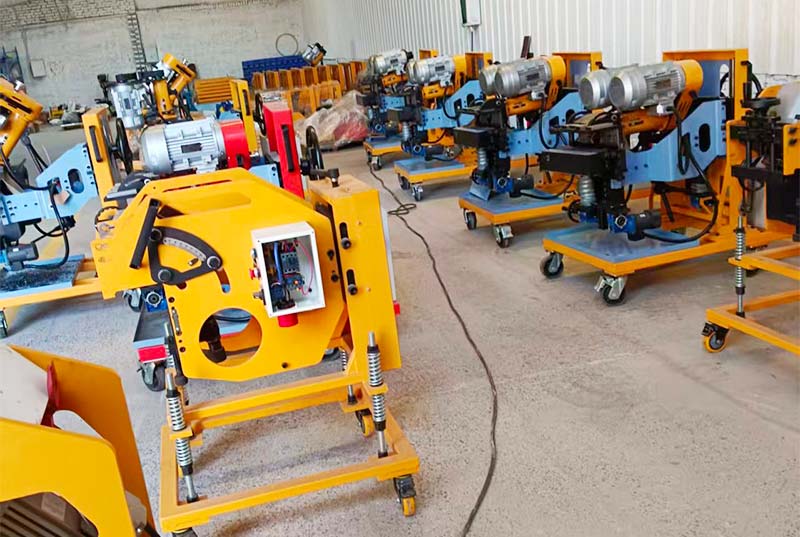
Working directly with a steel beveling machine manufacturer provides significant advantages compared to purchasing through distributors or trading companies. It not only reduces cost but also improves communication and customization flexibility.
Factory Pricing Advantage
Buying directly from the manufacturer eliminates intermediary costs, allowing customers to access more competitive pricing and better value for large-scale procurement projects.
Customization Capability
Manufacturers can customize machines based on specific requirements such as plate thickness, bevel angle range, production capacity, and automation level. This ensures that the equipment fully matches the customer’s production environment.
Quality Control Standards
Professional manufacturers implement strict quality inspection procedures throughout the production process. This includes material selection, assembly testing, and performance evaluation to ensure consistent machine reliability.
After-Sales Support and Spare Parts Supply
Direct manufacturers provide faster technical support and guaranteed spare parts availability, which helps reduce downtime and ensures long-term operational stability for industrial users.
Key Factors to Consider Before Buying a Steel Beveling Machine
Before investing in a steel beveling machine, it is important to evaluate several technical and operational factors to ensure the equipment matches your production needs.
Material Thickness and Hardness
Different machines are designed to handle varying steel thicknesses and material hardness levels. Selecting the correct model ensures stable cutting performance and extends machine lifespan.
Required Bevel Angle Range
Common bevel angles such as 30°, 37.5°, and 45° are widely used in welding applications. Choosing a machine with adjustable angle capability increases flexibility across different projects.
Production Volume Requirements
High-volume production environments benefit more from automatic systems, while low-volume operations may not require full automation. Understanding production demand is essential for cost-effective investment.
Machine Type Selection
Available options include portable, stationary, hydraulic, and CNC-controlled systems. Each type is designed for specific industrial applications and operational conditions.
Common Problems in Steel Beveling and How Machines Solve Them
Traditional manual beveling methods often lead to inconsistencies and inefficiencies in production. Modern steel beveling machines are designed to eliminate these issues through automation and precision control.
Uneven Edge Cutting
Manual processing often results in irregular bevel surfaces due to operator inconsistency. Automatic machines solve this issue by maintaining stable cutting speed and precise angle control throughout the process.
Low Efficiency in Manual Processing
Manual grinding or beveling is time-consuming and labor-intensive. Automated systems significantly increase production speed while reducing physical workload for operators.
Inconsistent Welding Preparation Quality
Variations in edge preparation can negatively affect weld strength. Modern beveling machines ensure uniform output quality, improving overall welding reliability and structural performance.
Maintenance Tips for Steel Beveling Machines
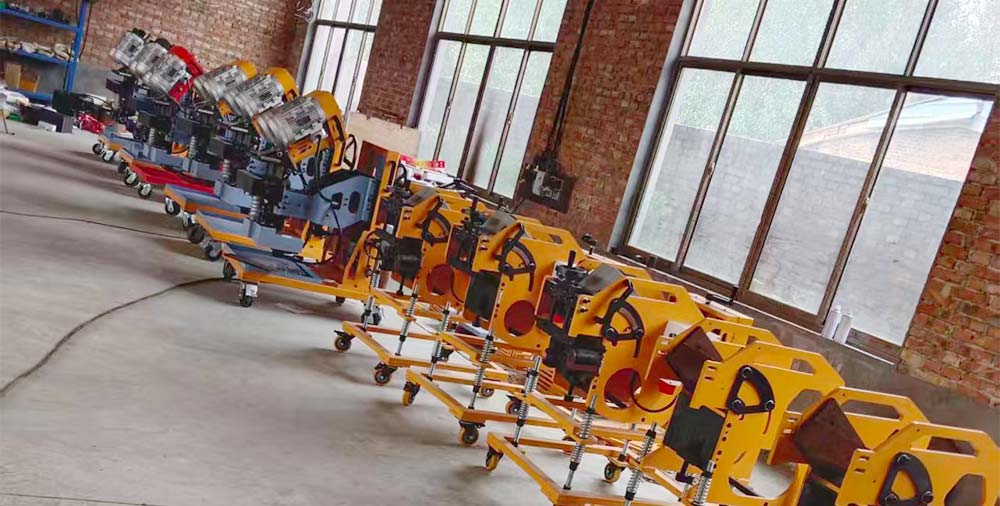
Proper maintenance is essential for ensuring long-term machine performance, reducing downtime, and maintaining production efficiency in industrial environments.
Daily Cleaning and Lubrication
Regular cleaning removes metal chips and debris that can affect machine operation. Proper lubrication of moving parts reduces friction and prevents premature wear.
Blade and Cutter Replacement Cycles
Cutting tools should be inspected and replaced periodically to maintain beveling accuracy and prevent damage to processed materials.
Electrical System Inspection
Routine checks of electrical components help prevent unexpected failures and ensure stable machine operation during continuous production.
Extending Machine Service Life
Following proper operating procedures, combined with scheduled maintenance, significantly extends equipment lifespan and improves return on investment.
Conclusion
Choosing between a manual and automatic steel beveling machine depends on production requirements, budget, and long-term operational goals. Manual machines are suitable for flexible, low-volume tasks where cost control is important, while automatic systems are essential for industrial environments that demand high efficiency, precision, and continuous production.
As a professional steel beveling machine manufacturer, we provide both manual and automatic solutions designed for different industries including pipeline welding, shipbuilding, pressure vessel fabrication, and steel structure manufacturing. Selecting the right equipment not only improves welding quality but also enhances productivity, reduces operational costs, and strengthens overall manufacturing competitiveness in the global market.
FAQ
What is a steel beveling machine used for?
A steel beveling machine is used to prepare metal edges before welding by cutting them into precise angles. It improves welding strength, reduces defects, and ensures better joint penetration in steel fabrication projects.
What is the difference between manual and automatic steel beveling machines?
Manual machines require operator control for feeding and cutting, making them suitable for small-scale work. Automatic steel beveling machines use motor or CNC systems to process steel edges continuously with higher speed, precision, and consistency.
Which industries use steel beveling machines the most?
Steel beveling machines are widely used in pipeline construction, shipbuilding, pressure vessel manufacturing, boiler production, and steel structure fabrication where accurate edge preparation is essential.
How do I choose the right steel beveling machine?
The choice depends on production volume, material thickness, required bevel angle, and budget. Small workshops often use manual machines, while industrial factories prefer automatic or CNC steel beveling machines for higher efficiency.
Why buy from a steel beveling machine manufacturer directly?
Purchasing directly from a steel beveling machine manufacturer ensures better pricing, customization options, stable quality control, and reliable after-sales support, which is important for long-term industrial use.