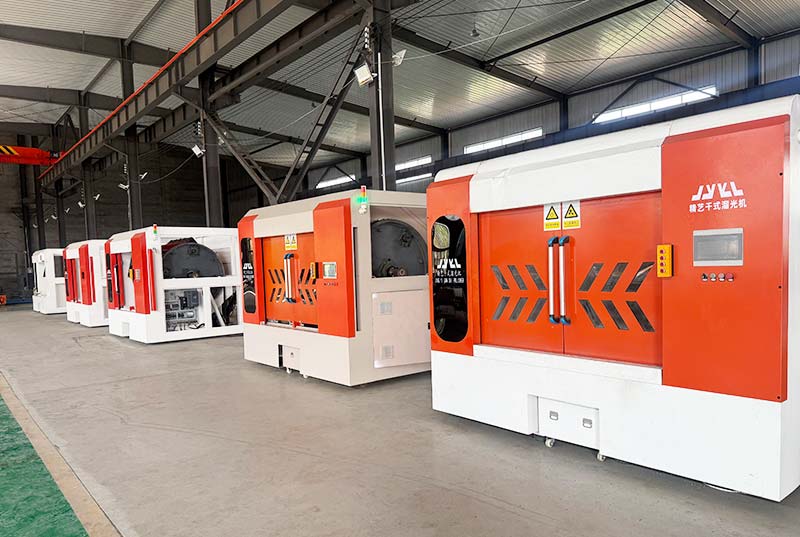
Industrial surface finishing has quietly become one of the most decisive steps in modern manufacturing. In many industries, the difference between a standard product and a high-value product often comes down to the final surface quality. That is where an industrial polishing machine plays a critical role—not as an optional tool, but as a production requirement.
For manufacturers, the challenge is no longer whether to use polishing equipment, but how to select the right system that fits real production conditions.
This guide is written from a production and engineering perspective, focusing on how these machines are actually used in factories rather than how they are described in brochures.
Table of Contents
Before Anything Else: What an Industrial Polishing Machine Actually Does

In simple terms, an industrial polishing machine is used to refine surfaces by controlled abrasion. But in real production environments, its role goes beyond “making things shiny.”
It is responsible for:
- Removing welding marks, burrs, oxidation, and machining traces
- Improving surface roughness consistency
- Preparing parts for coating, plating, or assembly
- Ensuring uniform appearance across batches
In many factories, polishing is the final checkpoint before a product is considered ready for shipment. A small inconsistency at this stage can affect how the entire batch is perceived in the market.
What often gets overlooked is that polishing is not just cosmetic. In stainless steel and precision metal parts, surface quality directly influences corrosion resistance, fatigue performance, and long-term durability.
Why the Same Machine Can Produce Completely Different Results
One common misunderstanding among buyers is assuming that polishing machines are interchangeable.
In reality, performance differences come from:
- Stability of mechanical structure
- Control accuracy of pressure and speed
- Matching between abrasive system and material type
- Operator workflow and process design
Two machines with similar appearances can produce completely different surface finishes depending on how these factors are engineered.
This is why experienced manufacturers focus less on “machine appearance” and more on process stability under continuous production conditions.
Main Categories of Industrial Polishing Machines in Real Production
Instead of listing textbook definitions, it is more practical to understand how different machines behave in factories.
Belt-based polishing systems
Common in sheet metal processing and structural components. These machines are preferred when working with flat surfaces or long continuous workpieces. They are valued for consistency and throughput.
Wheel polishing systems
Often used for curved parts, fittings, and smaller metal components. The flexibility of wheel contact makes them suitable for achieving finer finishes.
Automated polishing lines
These systems are increasingly used in medium to large factories. The main advantage is not just speed, but process stability. Once parameters are fixed, results remain consistent across long production cycles.
CNC-controlled polishing systems
Used where geometry and repeatability matter. These systems are typically found in high-precision industries where manual variation is not acceptable.
Semi-manual setups
Still widely used in workshops where product types change frequently. They allow operators to adjust polishing pressure and angle based on real-time observation.
Where Industrial Polishing Machines Are Actually Used
Polishing equipment is not limited to one industry. It appears wherever metal surface quality matters.
Typical application scenarios include:
- Stainless steel pipe and tube finishing
- Automotive exterior and structural components
- Kitchenware and household hardware production
- Aerospace-grade metal components
- General fabrication and sheet metal processing
In stainless steel production in particular, polishing is often the final stage that determines whether a product is considered industrial grade or premium grade.
The Features That Actually Matter in Daily Operation
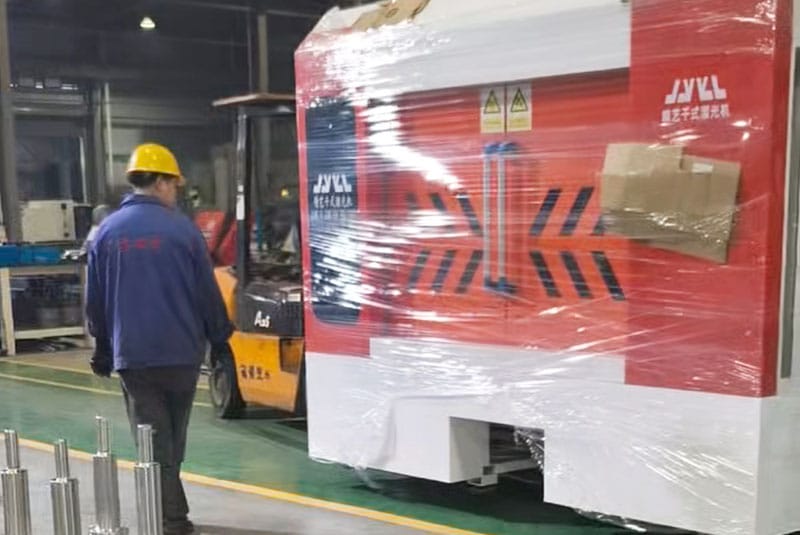
When machines are running for long shifts, specifications on paper become less important than operational stability.
From field experience, the most critical factors are:
Mechanical rigidity
A stable frame reduces vibration, which directly affects surface uniformity.
Control consistency
Speed and pressure control must remain stable even under load changes.
Abrasive adaptability
Different metals behave differently under friction. A flexible system reduces rework rates.
Dust handling efficiency
Polishing generates fine particles that affect both operator safety and surface cleanliness.
Maintenance accessibility
Machines that are easier to maintain tend to have higher uptime in real production environments.
Why Factory-Direct Equipment Matters More Than Expected
In industrial procurement, equipment source plays a larger role than most buyers initially expect.
Working directly with a manufacturer usually means:
- Better alignment between machine design and real production needs
- Faster response when technical adjustments are required
- More flexibility in structural or functional customization
- Greater consistency in quality control across production batches
More importantly, direct cooperation reduces miscommunication between design intention and actual application.
In practice, many production issues are not caused by machine limitations, but by mismatched expectations during procurement.
Automation vs Manual Operation: A Practical Way to Decide
Instead of thinking in terms of “better or worse,” it is more realistic to evaluate based on production logic.
Automation is more suitable when:
- Output volume is stable and continuous
- Product types are standardized
- Consistency is more important than flexibility
Manual or semi-automatic systems are more suitable when:
- Product types change frequently
- Small batch customization is required
- Operators need process flexibility
Most factories actually use a combination of both rather than relying on a single system.
Supplier Evaluation: What Experienced Buyers Actually Check
Beyond specifications, experienced procurement teams tend to evaluate suppliers based on deeper indicators:
- Whether the manufacturer has real production capability
- Whether equipment is tested under continuous load conditions
- Whether technical documentation is complete and usable
- Whether spare parts and support systems are structured
- Whether similar applications exist in real industrial environments
In practice, stable long-term operation matters more than initial machine performance during short demonstrations.
Maintenance: What Keeps Machines Stable Over Time
Industrial polishing machines are not “install and forget” equipment. Their performance depends heavily on routine maintenance discipline.
Common practices in production environments include:
- Regular removal of abrasive residue buildup
- Scheduled replacement of consumable polishing materials
- Lubrication of mechanical transmission parts
- Monitoring vibration and alignment stability
- Periodic electrical system inspection
Factories that maintain consistent routines typically experience fewer production interruptions.
Custom Engineering in Real Manufacturing Environments
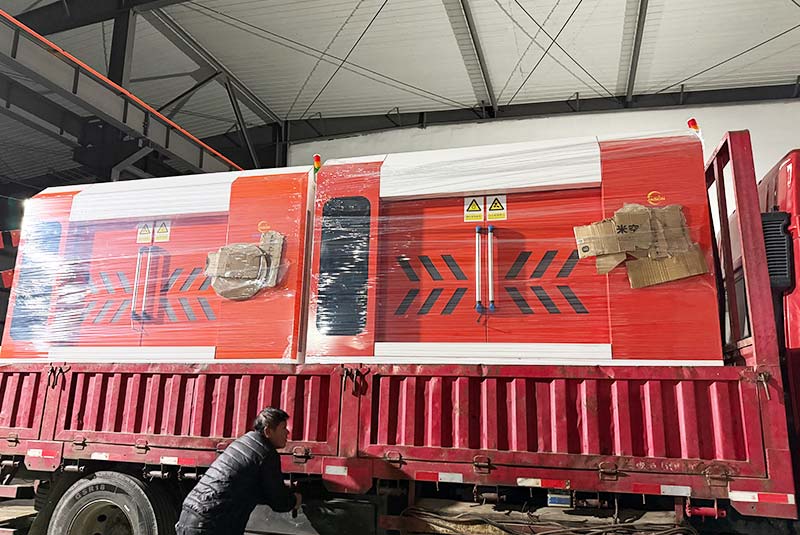
Standard machines rarely fit all production scenarios.
Customization is often required when:
- Workpiece geometry is non-standard
- Surface finishing requirements are highly specific
- Machines need integration into existing production lines
- Multiple polishing stages are required in one workflow
In these cases, polishing equipment becomes part of a larger production system rather than a standalone machine.
Conclusion
Selecting an industrial polishing machine is less about comparing models and more about understanding how the equipment will behave inside a real production environment.
The most successful manufacturing operations tend to focus on three things: process stability, adaptability to materials, and long-term operational reliability. When these elements are aligned, surface finishing becomes consistent, predictable, and scalable.
From a manufacturing perspective, the goal is not only to achieve better surface quality, but to build a polishing process that can sustain quality across long production cycles without unnecessary variation.
FAQ
Q1: What is an industrial polishing machine used for?
It is used to improve surface finish by removing burrs, oxidation, and machining marks from metal or non-metal parts, ensuring a smoother and more consistent surface quality.
Q2: Which industries commonly use industrial polishing machines?
They are widely used in stainless steel processing, automotive manufacturing, aerospace components, kitchenware production, and general metal fabrication industries.
Q3: How do I choose the right industrial polishing machine?
The choice depends on your material type, production volume, required surface finish, and whether you need manual, semi-automatic, or fully automated systems.
Q4: What is the difference between manual and automatic polishing machines?
Manual machines rely on operator control for flexibility, while automatic systems provide higher consistency and efficiency for large-scale standardized production.
Q5: What factors affect polishing quality in industrial machines?
Key factors include machine stability, abrasive material selection, speed control accuracy, pressure consistency, and proper maintenance practices.