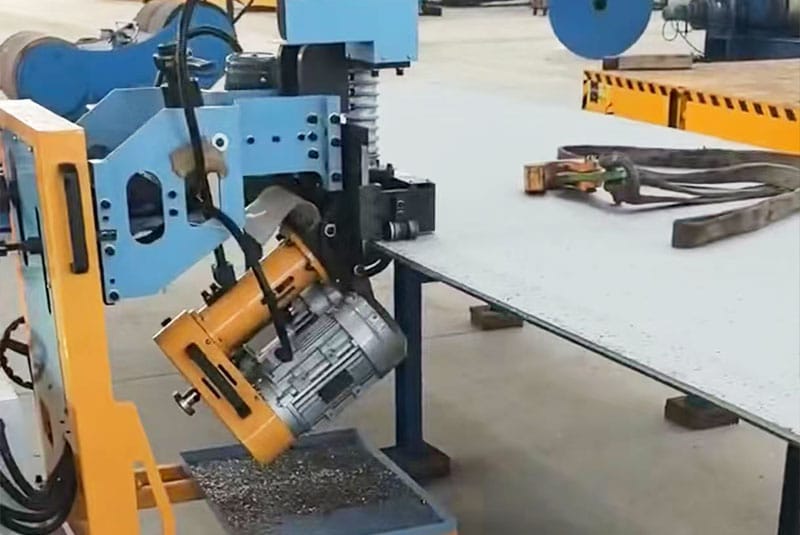
In most fabrication workshops, plate edge preparation is treated as a “supporting process.” But in real production environments—shipbuilding, pressure vessels, structural steel—it quietly decides whether welding runs smoothly or turns into rework-heavy downtime.
That is where plate beveling machine manufacturers matter more than most buyers initially realize. The difference between a stable production line and repeated welding defects often starts with how the bevel is created in the first place.
Instead of looking at this as a simple equipment purchase, it is more accurate to treat it as a long-term production decision.
Table of Contents
Why bevel quality becomes a production bottleneck
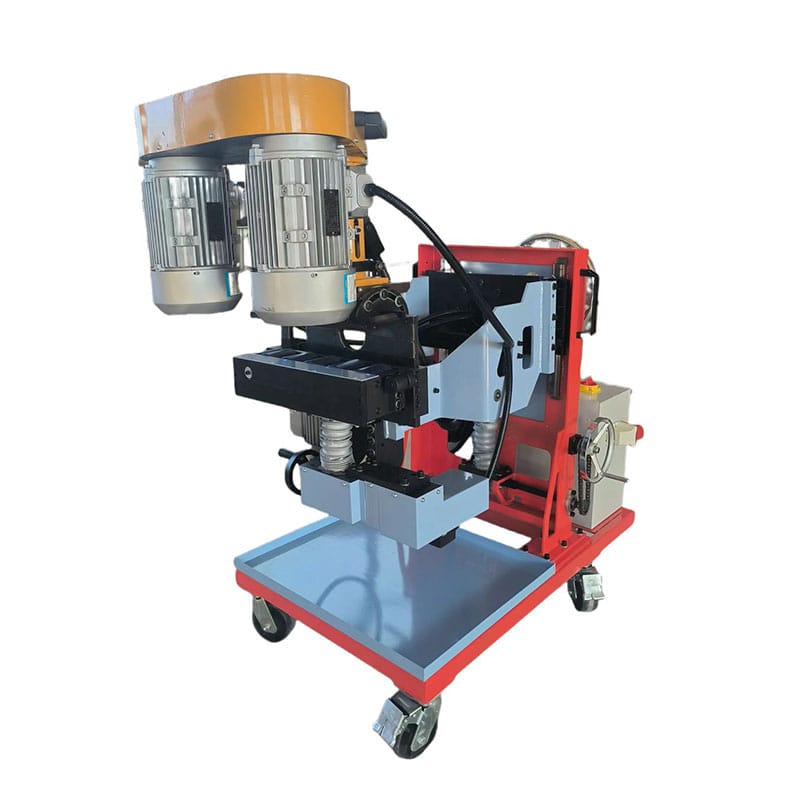
In theory, beveling is simple: create an angled edge so two plates can be welded properly.
In practice, the situation is more sensitive:
- A slightly uneven bevel changes weld penetration
- Inconsistent angles increase filler material usage
- Poor edge finish slows down welding speed
- Heat deformation can compromise alignment
This is why many fabrication engineers shift their focus away from “machine specifications on paper” and start evaluating the manufacturing capability behind the equipment itself.
What actually defines a serious plate beveling machine manufacturers
Not every supplier in this field is operating at the same level. The gap is usually visible in production philosophy rather than marketing claims.
A capable manufacturer typically focuses on:
- Structural rigidity of the machine frame
- Stability under continuous heavy-load operation
- Precision control of bevel angle consistency
- Long-cycle durability of cutting components
- Repeatability across different steel grades
More importantly, experienced plate beveling machine manufacturers tend to design equipment around real workshop conditions, not ideal laboratory settings.
That difference becomes obvious after months of operation, not during initial installation.
How beveling machines are actually used on the shop floor
In real industrial environments, beveling machines are rarely used in isolation. They sit at the front end of a full fabrication workflow:
Plate cutting → Edge preparation → Beveling → Welding → Inspection
Depending on the application, the machine may be expected to handle:
- Thick steel plates used in structural frames
- Long continuous sheets in shipbuilding yards
- High-strength materials for pressure systems
- Repeated batch processing in fabrication plants
Because of this, flexibility becomes just as important as raw cutting capability.
Different machine structures, different production logic
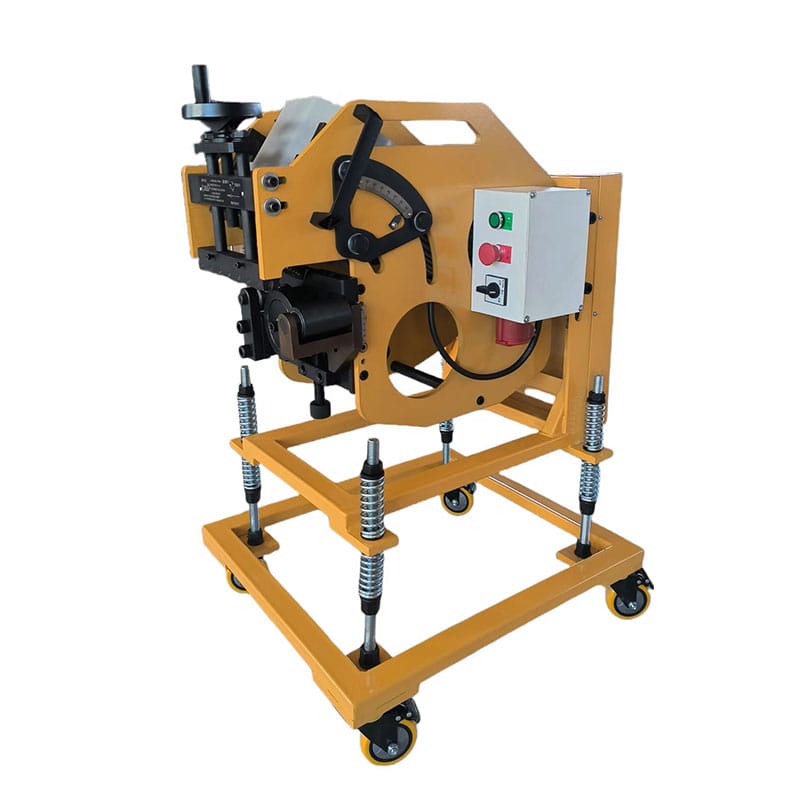
Instead of categorizing machines by marketing names, it is more useful to understand them by how they behave in production:
Stationary systems
Designed for continuous workshop operation. Stability and repeatability are the main priorities.
Portable units
Used where workpieces cannot be moved easily. Flexibility matters more than throughput.
CNC-controlled systems
Used in higher precision environments where angle accuracy must remain consistent across large batches.
Heavy-duty beveling systems
Built for thick plate processing and long operational cycles without performance drop.
Each structure reflects a different manufacturing philosophy. This is often where buyers realize that “one solution fits all” does not really exist in metal fabrication.
Why manufacturer capability affects welding outcomes
A common mistake in procurement is evaluating only output specifications.
In reality, welding quality is indirectly shaped by:
- Bevel consistency across batches
- Surface finish quality at the edge
- Heat impact control during cutting
- Machine vibration during operation
- Stability of feeding systems
When any of these factors drift, welding teams compensate downstream—usually at higher cost in time and rework.
That is why experienced engineers tend to ask a simpler question:
Can this machine behave the same way after months of continuous operation?
Manufacturing quality control is often underestimated
Behind every stable beveling machine, there is a manufacturing system that rarely gets discussed in sales materials.
In more established production environments, quality control typically includes:
- Frame stress testing before assembly
- Multi-stage machining verification
- Cutting head calibration under load
- Trial runs with different plate thicknesses
- Final inspection under continuous operation simulation
These steps are not visible in product catalogs, but they directly affect how the machine performs in real fabrication lines.
Direct manufacturers vs trading channels (from a practical view)
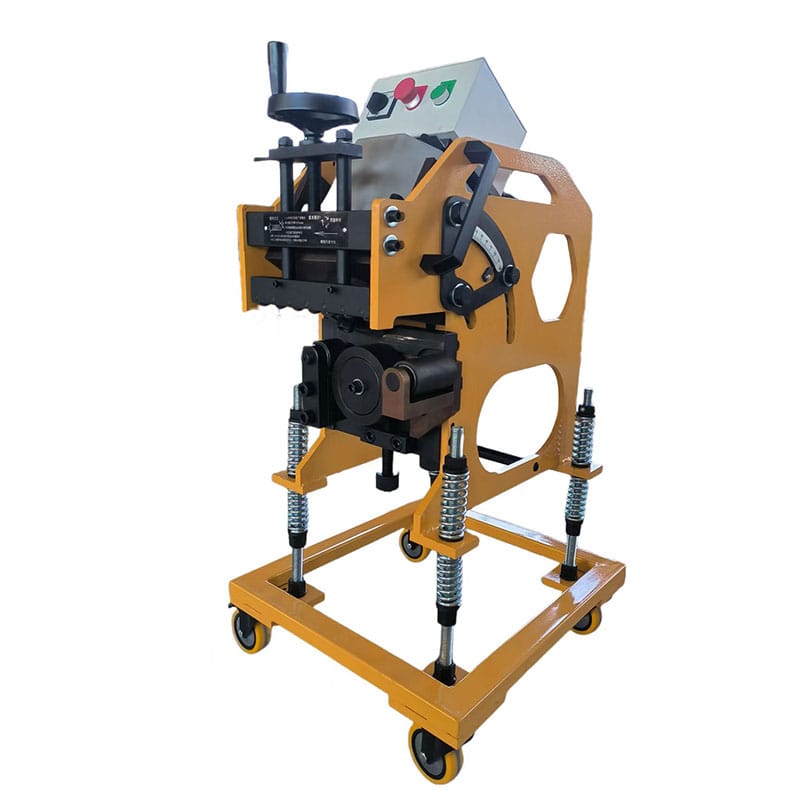
In industrial purchasing, the difference is not just about pricing structure—it is about control over the equipment lifecycle.
Working directly with plate beveling machine manufacturers usually provides:
- More consistent technical communication
- Easier adaptation for custom requirements
- Better understanding of machine limitations
- More stable long-term spare parts support
On the other hand, intermediary channels often introduce gaps between design intent and actual production execution.
For long-term industrial use, that gap matters more than most buyers expect.
What experienced buyers usually evaluate first
Instead of focusing only on brochures or specifications, industrial buyers tend to look at:
- How the machine behaves under continuous load
- Whether bevel quality remains stable over time
- How quickly technical issues are resolved
- Whether the machine adapts to different steel grades
- Whether production output stays consistent across shifts
These are operational indicators, not marketing metrics.
Where beveling machines actually create value
The real value of a beveling system is not in the machine itself, but in what it enables downstream:
- Faster welding preparation cycles
- Reduced manual grinding work
- More consistent weld geometry
- Lower defect rates in structural joints
- Smoother integration into automated fabrication lines
In large-scale production, even small improvements in edge preparation tend to scale quickly across output volume.
A closer look at modern manufacturing direction
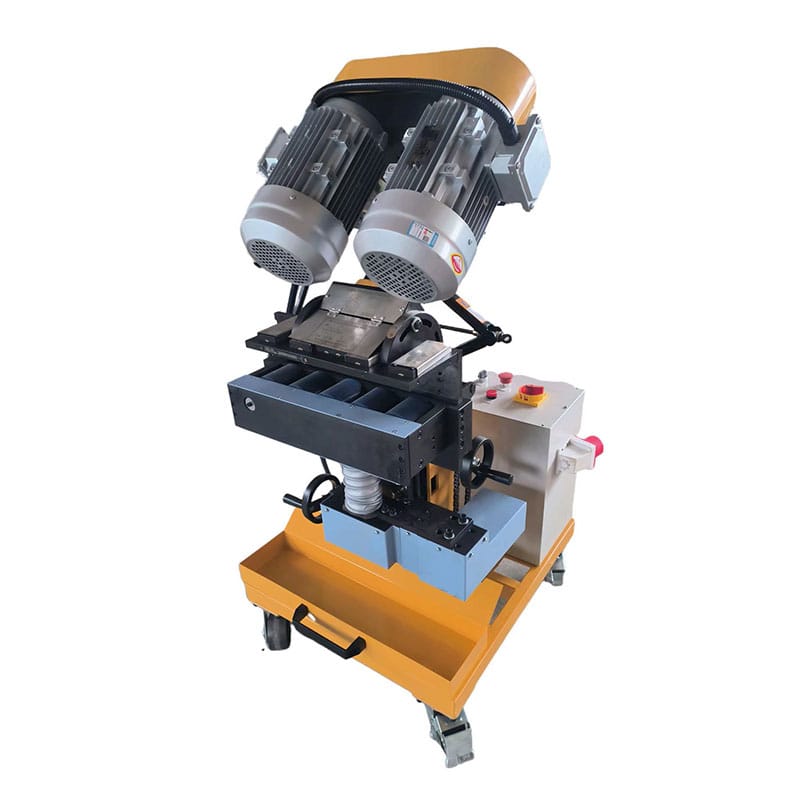
Across the industry, there is a clear shift happening:
- From manual beveling → automated edge preparation
- From operator-dependent accuracy → CNC-controlled consistency
- From isolated machines → integrated fabrication workflows
- From reactive maintenance → preventive system design
This is shaping how modern plate beveling machine manufacturers design equipment today.
The focus is no longer just cutting metal—it is about stabilizing production flow.
Conclusion
Choosing plate beveling machine manufacturers is ultimately not a product decision, but a production strategy decision.
The real difference between machines is rarely visible in specifications. It shows up later in welding consistency, production stability, and how often downstream teams need to compensate for upstream imperfections.
For industries like shipbuilding, pressure vessel fabrication, and structural steel engineering, beveling quality quietly defines how smooth everything else will be.
A well-designed system does not draw attention to itself. It simply keeps production moving without interruption—and in industrial environments, that is usually what matters most.
FAQ
Q1: What do plate beveling machine manufacturers actually provide?
A: They design and produce machines used for steel plate edge preparation before welding, ensuring accurate bevel angles and consistent machining quality for industrial fabrication.
Q2: Why is beveling quality so important in welding applications?
A: High-quality beveling improves weld penetration, reduces defects, and ensures stronger joint integrity, especially in structural steel, shipbuilding, and pressure vessel production.
Q3: What is the difference between manual and CNC plate beveling machines?
A: Manual machines require operator control, while CNC systems provide automated, highly consistent beveling with better precision and repeatability for large-scale production.
Q4: How do I evaluate a reliable plate beveling machine manufacturers?
A: Key factors include machine stability, production consistency, engineering capability, quality control systems, and long-term technical support rather than just specifications.
Q5: What industries commonly use plate beveling machines?
A: They are widely used in shipbuilding, steel structure fabrication, oil and gas pipeline projects, pressure vessel manufacturing, and heavy industrial equipment production.