Table of Contents
Introduction
In today’s competitive manufacturing landscape, the quality of your finished products can make or break your business reputation. Metal polishing has evolved from a manual craft to a sophisticated industrial process that directly impacts product aesthetics, durability, and market value. The right industrial metal polishing machine doesn’t just improve surface finish—it transforms your entire production efficiency.
Importance of metal polishing in modern manufacturing
Metal finishing serves multiple critical functions beyond mere aesthetics. Proper polishing removes surface imperfections, eliminates burrs from machining processes, and creates uniform surface textures that enhance corrosion resistance. Industries from automotive to medical devices rely on consistently polished metal components to meet strict quality standards and customer expectations. A well-executed finishing process can significantly reduce product failure rates and extend component lifespan.
Benefits of using high-quality industrial metal polishing machines
Investing in premium metal finishing equipment delivers measurable returns across your operation. Modern industrial metal polishing machines achieve uniform results that manual polishing simply cannot match, reducing rework rates by up to 70%. Advanced dust collection systems protect worker health and maintain clean production environments, while automated controls ensure consistent quality regardless of operator skill level. The increased throughput and reduced labor costs typically deliver ROI within 12-18 months for most manufacturers.
How choosing the wrong machine can impact efficiency and product quality
Selecting inappropriate equipment for your specific needs creates cascading problems. Underpowered motors struggle with heavy workpieces, leading to inconsistent finishes and premature equipment failure. Inadequate dust collection systems result in poor air quality and frequent maintenance interruptions. Perhaps most critically, mismatched automation levels force operators to either compensate for insufficient automation or struggle with overly complex systems, directly impacting productivity and employee satisfaction.
Understanding Industrial Metal Polishing Machines
What is an industrial metal polishing machine?
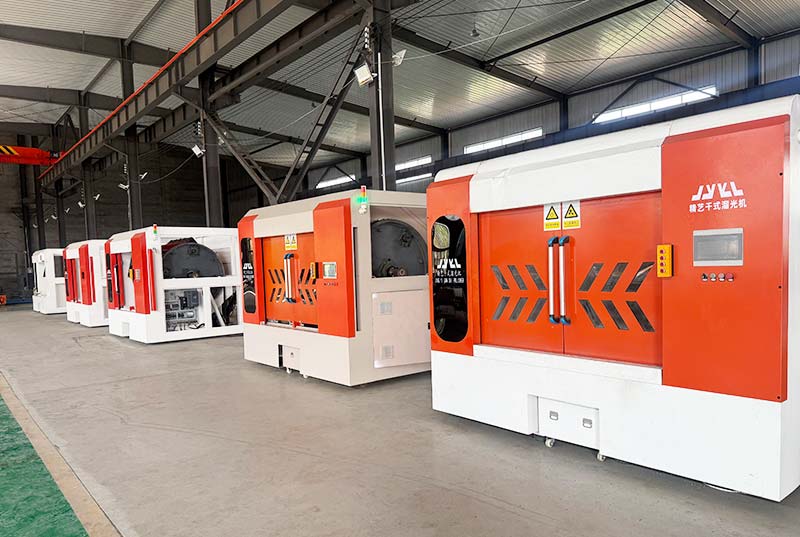
An industrial metal polishing machine is a specialized piece of metal finishing equipment designed to smooth, shine, and refine metal surfaces through controlled abrasive action. Unlike manual polishing tools, these machines combine precision motors, abrasive media, and often sophisticated controls to deliver consistent results across production runs. They range from simple bench-mounted units to fully automated systems integrated into production lines, handling everything from small precision components to large structural elements.
Key components: motors, polishing wheels, dust collectors, automation systems
The heart of any polishing system is its motor, which must deliver consistent torque across variable speeds to handle different materials and finish requirements. Polishing wheels come in various compositions—cotton, felt, synthetic materials—each suited to specific applications. Modern industrial metal polishing machines incorporate advanced dust collection systems that capture up to 99% of airborne particles, protecting both equipment and operators. Automation systems range from simple programmable controls to robotic loading/unloading, CNC positioning, and real-time quality monitoring.
Types of industrial metal polishing machines (manual, semi-automatic, automatic)
Manual machines require operator skill and constant attention, making them suitable for small batch production and prototyping. Semi-automatic systems handle the polishing process automatically but require manual loading and unloading, balancing flexibility with increased productivity. Fully automatic machines integrate robotic loading, programmed polishing sequences, and often inline quality inspection, delivering maximum throughput for high-volume production. The choice depends on your production volume, labor costs, and quality consistency requirements.
Key Features to Look for in an Industrial Metal Polishing Machine

Motor power and speed options
Motor power directly impacts your machine’s capability to handle different workpiece sizes and materials. For light polishing of small aluminum parts, 1-2 HP motors may suffice, while heavy stainless steel components often require 5-10 HP motors. Variable speed controls are essential—different metals and finish stages require different RPM ranges. Automated surface finishing systems typically offer programmable speed profiles that automatically adjust during the polishing cycle, optimizing results without operator intervention.
Adjustable polishing pressure and flexibility for different metals
The ability to precisely control polishing pressure distinguishes professional equipment from basic tools. Hydraulic or pneumatic pressure systems enable consistent force application regardless of workpiece variations. This flexibility is crucial when your factory processes multiple materials—aluminum requires lighter pressure than stainless steel, and different finish stages demand varying force. Look for machines with digital pressure readouts and programmable profiles for each material type you process.
Dust collection and safety features
Effective dust collection isn’t optional—it’s essential for worker safety and equipment longevity. Look for systems with HEPA-grade filtration, automatic filter cleaning, and sufficient airflow for your polishing wheel size. Safety features should include emergency stops, protective guards, interlocked access panels, and comprehensive operator training materials. The best industrial metal polishing machines integrate dust collection directly into the machine design, minimizing ductwork and maximizing efficiency.
Automation level and ease of operation
Consider your team’s technical expertise when evaluating automation complexity. Touch-screen interfaces with intuitive controls reduce training time and minimize errors. Modern systems offer recipe-based programming—operators simply select the appropriate recipe for each part, and the machine automatically adjusts speed, pressure, and timing. Remote monitoring capabilities allow supervisors to track production metrics and receive maintenance alerts, optimizing equipment utilization across multiple shifts.
Choosing the Right Machine for Your Factory Size and Production Needs
Small-scale vs large-scale production lines
Small manufacturers typically benefit from versatile semi-automatic machines that can handle diverse product lines without dedicated operators for each machine. These systems offer the right balance of automation and flexibility, allowing one operator to manage multiple machines. Large-scale operations achieve maximum efficiency with fully automated surface finishing lines, where robots handle loading/unloading and multiple polishing stations work in sequence. The higher initial investment pays back through reduced labor costs and increased throughput.
Polishing requirements for stainless steel, aluminum, and other metals
Different metals demand distinct polishing approaches. Stainless steel requires progressively finer abrasives and careful control to avoid overheating, which can compromise corrosion resistance. Aluminum is softer and requires lighter pressures with different abrasive compositions. Carbon steel needs aggressive initial cutting followed by refined finishing. Copper and brass require specialized techniques to prevent oxidation during processing. Your chosen machine should accommodate the specific requirements of all metals you process.
| Metal Type | Initial Abrasive Grit | Final Polish Grit | Recommended RPM Range | Special Considerations |
|---|---|---|---|---|
| Stainless Steel | 80-120 | 400-600 | 1200-1800 | Prevent overheating, maintain consistent pressure |
| Aluminum | 120-180 | 320-400 | 1800-2400 | Light pressure, avoid work hardening |
| Carbon Steel | 60-80 | 320-400 | 1000-1500 | Aggressive cutting needed, watch for rust |
| Copper/Brass | 180-220 | 400-600 | 1500-2000 | Prevent oxidation, use coolants |
| Titanium | 150-200 | 400-600 | 800-1200 | Very heat sensitive, specialized abrasives |
Throughput considerations: parts per hour, batch vs continuous processing
Calculate your required throughput based on production targets and shift patterns. Manual polishing typically produces 20-50 parts per hour depending on complexity, while semi-automatic systems can achieve 100-300 parts per hour. Fully automated lines routinely exceed 500 parts per hour. Consider whether batch processing or continuous flow better suits your operation—batch systems offer flexibility for product changeovers, while continuous processing maximizes throughput for stable production runs.
Applications of Industrial Metal Polishing Machines
Automotive and aerospace component polishing
The automotive and aerospace industries demand the highest precision and consistency from their metal finishing equipment. Engine components, transmission parts, and structural elements require exacting surface finishes to reduce friction, prevent stress concentrations, and ensure proper assembly tolerances. Aerospace applications often have additional requirements for traceability and process validation, making automated systems with comprehensive data logging essential. The reliability requirements in these sectors make investing in quality industrial metal polishing machines particularly critical.
Jewelry and decorative metal finishing
While often smaller in scale, jewelry and decorative finishing require exceptional attention to detail and surface quality. These applications benefit from machines with precise speed control and fine adjustment capabilities for pressure and polishing media. The ability to achieve mirror finishes on complex geometries without damaging delicate features is paramount. Many jewelry manufacturers prefer semi-automatic systems that allow operator oversight while maintaining the consistency needed for high-end products.
Rust removal and deburring for industrial parts
Heavy industrial applications often focus on functional rather than aesthetic finishing—removing weld scale, eliminating sharp burrs, and preparing surfaces for coating or assembly. These applications demand robust construction and powerful motors capable of sustained heavy operation. The ability to quickly change between aggressive cutting abrasives and finer finishing media allows a single machine to handle multiple preparation stages, optimizing floor space utilization and equipment investment.
Surface finishing for small and large components
Versatile industrial metal polishing machines accommodate a wide range of part sizes through adjustable workholding fixtures and variable speed polishing wheels. Small precision components require gentle treatment and precise control, while large structural elements demand powerful motors and robust wheel designs. Some manufacturers offer modular systems that can be reconfigured for different part families, providing flexibility for companies with diverse product lines. The key is matching the machine’s work envelope and power capabilities to your specific part dimensions and weight ranges.
Comparing Automatic and Semi-Automatic Polishing Machines
Advantages of automatic machines for high-volume production
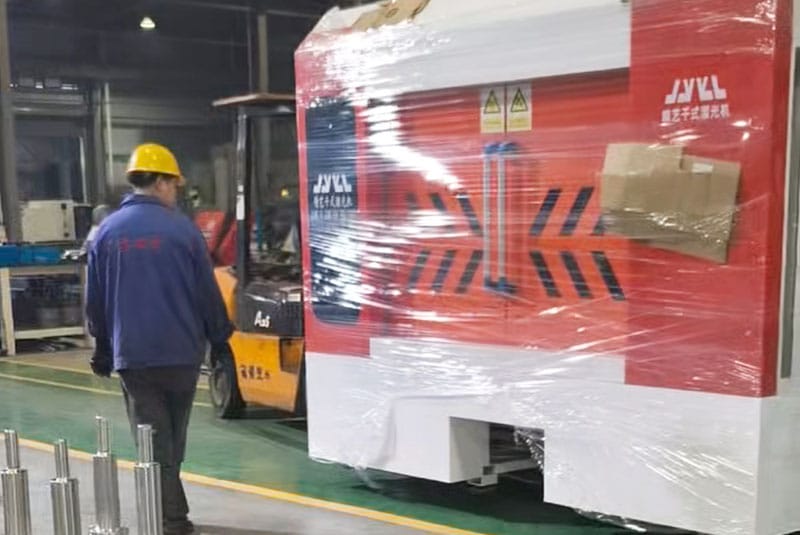
Automatic industrial metal polishing machines excel in high-volume production environments where consistency and throughput are paramount. These systems eliminate operator variability, ensuring each part receives identical treatment regardless of shift or operator. Robotic loading and unloading enable continuous operation across multiple shifts, dramatically increasing production capacity. Integrated quality monitoring systems can detect and reject out-of-spec parts automatically, reducing downstream inspection requirements. The labor savings alone often justify the investment for operations running multiple shifts.
| Feature | Semi-Automatic Machines | Automatic Machines |
|---|---|---|
| Initial Investment | $15,000-$50,000 | $75,000-$300,000+ |
| Labor Required | 1 operator per 1-2 machines | 1 operator per 4-6 machines |
| Throughput | 100-300 parts/hour | 300-800+ parts/hour |
| Changeover Time | 15-30 minutes | 30-60 minutes |
| Consistency | High (operator-dependent) | Very High (program-controlled) |
| Flexibility | High | Medium |
| Skill Requirements | Moderate | Low (after setup) |
Cost-effectiveness and flexibility of semi-automatic machines
Semi-automatic industrial metal polishing machines offer an attractive balance of automation and manual control, making them ideal for growing manufacturers and those with diverse product lines. The lower initial investment reduces financial risk while still delivering significant productivity improvements over manual methods. These systems allow operators to make real-time adjustments based on visual inspection, providing valuable flexibility for prototype work and custom orders. The ability to quickly change between different polishing compounds and wheel configurations accommodates varying product requirements without extensive reprogramming.
When to choose one over the other for factory efficiency
The decision between automatic and semi-automatic systems hinges on your production volume, product mix, and labor costs. Companies producing over 100,000 parts annually with consistent product specifications typically benefit most from fully automatic systems. Those with lower volumes or frequent product changes often find semi-automatic machines more economically suitable. Consider your growth trajectory—investing in automation-capable equipment even if starting with semi-automatic operation can provide upgrade paths as production increases. Labor availability and costs in your region should also factor into the decision, as automation becomes more attractive in high-wage markets.
Maintenance Tips for Industrial Metal Polishing Machines
Routine cleaning and lubrication
Consistent maintenance routines dramatically extend equipment life and maintain performance quality. Daily cleaning of dust collection systems prevents airflow restrictions that reduce efficiency and increase motor strain. Regular lubrication of moving parts according to manufacturer schedules prevents premature wear and reduces energy consumption. Establish preventive maintenance schedules based on operating hours rather than calendar time—heavy-use environments require more frequent attention. Document all maintenance activities to track component life and predict replacement needs.
Replacing polishing wheels and belts
Polishing wheels and belts wear predictably based on usage patterns and material hardness. Establish replacement schedules based on measured performance degradation rather than waiting for complete failure—minor quality issues often indicate wheel wear before catastrophic failure becomes obvious. Keep detailed records of wheel life across different materials and applications to optimize replacement intervals. Proper storage of replacement wheels and belts in climate-controlled conditions prevents premature degradation and ensures consistent performance when installed.
Ensuring safety compliance and reducing downtime
Regular safety inspections prevent accidents that can cause costly production interruptions and regulatory issues. Check all safety interlocks, emergency stops, and protective guards according to manufacturer recommendations and local regulations. Maintain spare parts inventories for critical components to minimize unplanned downtime. Train multiple operators on basic troubleshooting and maintenance procedures to ensure coverage across shifts. Consider remote monitoring capabilities that can predict maintenance needs before failures occur, enabling scheduled repairs during planned downtime rather than emergency interruptions.
Extending machine life through preventive maintenance
Preventive maintenance programs typically deliver 3-5x ROI by extending equipment life and preventing catastrophic failures. Establish baseline measurements for motor current draw, vibration levels, and air quality metrics when equipment is new, then track changes over time to identify developing issues. Partner with your manufacturer for specialized training on maintenance procedures specific to your equipment model. Consider service contracts for major components when internal expertise is limited—the predictability of scheduled maintenance often outweighs the incremental cost compared to emergency repairs.
How to Select a Reliable Industrial Metal Polishing Machine Manufacturer
Importance of choosing a trusted manufacturer
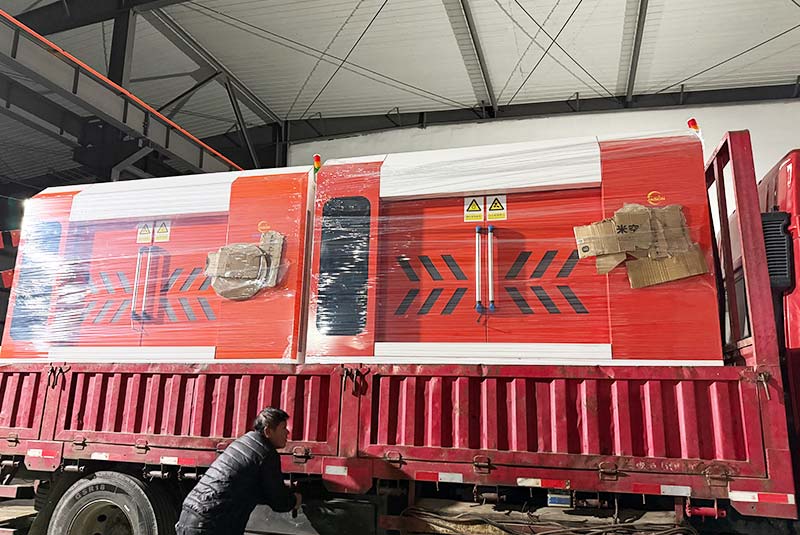
The quality and reliability of industrial metal polishing machines depend heavily on manufacturer expertise and support systems. Established manufacturers invest in research and development, incorporating improvements based on customer feedback and technological advances. They maintain comprehensive parts inventories and technical support teams, reducing downtime when issues arise. Consider manufacturers’ experience in your specific industry—applications expertise often matters more than generic machine knowledge. Long-term relationships with manufacturers provide advantages in priority support, upgrade opportunities, and customized solutions.
Evaluating product quality and certifications
Certification compliance demonstrates commitment to quality standards and regulatory requirements. Look for CE marking, ISO 9001 certification, and industry-specific certifications relevant to your applications. Request documentation on testing procedures and quality control measures—reputable manufacturers welcome detailed inquiries about their quality systems. Ask for customer references, particularly in similar industries and applications. Site visits to existing installations provide invaluable insights into real-world performance and manufacturer support quality. Warranties should cover not just parts but also performance guarantees backed by technical support.
After-sales support and technical assistance
The manufacturer’s commitment to after-sales support significantly impacts your long-term satisfaction. Evaluate response time guarantees, availability of spare parts, and technical support coverage across different time zones. Training programs for operators and maintenance personnel reduce reliance on manufacturer support for routine issues. Some manufacturers offer remote monitoring and diagnostic capabilities that can identify and resolve issues without site visits. Consider total cost of ownership rather than initial purchase price—comprehensive support may cost more upfront but delivers value through reduced downtime and longer equipment life.
Case studies and factory success stories
Real-world implementation examples provide concrete evidence of manufacturer capabilities. Request case studies that demonstrate performance improvements in applications similar to yours. Pay particular attention to quantified results—throughput improvements, quality enhancements, and ROI calculations. Site visits to reference customers offer opportunities to discuss experiences directly with operators and maintenance personnel. Success stories should address challenges similar to yours and demonstrate how manufacturer expertise overcame specific obstacles. Long-term customer relationships often indicate consistent performance and support quality.
Conclusion
Choosing the right industrial metal polishing machine represents one of the most impactful equipment decisions your factory will make. The appropriate selection enhances product quality, increases production efficiency, and delivers measurable ROI through reduced labor costs and improved consistency. Key considerations include matching automation levels to production volume, selecting appropriate power and flexibility for your metal types, ensuring adequate dust collection and safety features, and partnering with reliable manufacturers who provide comprehensive support.
Investment in quality metal finishing equipment delivers returns far beyond the initial purchase price. Throughput improvements of 200-500% are common when upgrading from manual to automated systems, while quality consistency dramatically reduces rework and customer complaints. The right machine becomes a competitive advantage, enabling your factory to meet increasing quality standards while maintaining profitability in competitive markets.
As manufacturing continues to evolve toward higher precision and efficiency, the importance of automated surface finishing will only increase. Companies that invest in appropriate industrial metal polishing technology today position themselves for future growth and market leadership. Evaluate your specific needs carefully, consult with experienced manufacturers, and choose equipment that not only meets current requirements but also provides flexibility for future production evolution. The quality of your finished products—and ultimately your market success—depends on this critical decision.
FAQ
What metals can industrial metal polishing machines handle?
Industrial metal polishing machines accommodate virtually all metal types used in manufacturing. Common applications include stainless steel, aluminum, carbon steel, copper, brass, titanium, and various alloys. The key is selecting appropriate abrasives, wheel materials, and process parameters for each metal type. Many manufacturers offer specialized configurations for particularly challenging materials like superalloys or reactive metals. Consult with your equipment supplier about specific material requirements—most have extensive experience across diverse applications and can recommend optimal configurations for your production needs.
How much does a high-quality industrial metal polishing machine cost?
Equipment costs vary widely based on configuration, automation level, and capacity. Entry-level semi-automatic machines suitable for small production runs typically range from $15,000-$50,000. Mid-range semi-automatic systems with advanced features cost $50,000-$100,000. Fully automated systems with robotic handling range from $100,000-$300,000+, with complete production lines exceeding $500,000. Consider financing options that align costs with productivity gains—many manufacturers offer leasing programs that make automation accessible while preserving cash flow. Focus on total cost of ownership including maintenance, energy consumption, and expected equipment life rather than initial purchase price alone.
Can small factories benefit from automatic polishing machines?
Small manufacturers often achieve significant benefits from appropriately sized automatic systems. Even modest production volumes can justify automation when considering labor costs, quality consistency, and capacity for growth. Many manufacturers offer scalable automation solutions that can start with basic features and add capabilities as production increases. The key is matching automation complexity to actual production needs—over-automation creates unnecessary complexity, while under-automation misses opportunities for efficiency gains. Consider your growth trajectory when making automation decisions, as future-proofing your investment often provides better long-term value than minimal initial expenditures.
How long does a machine typically last with proper maintenance?
Well-maintained industrial metal polishing machines typically provide 15-20 years of service in standard industrial environments. Heavy-duty applications with continuous operation may see 10-15 year lifespans, while light-duty intermittent use can extend beyond 25 years. Critical factors affecting equipment life include maintenance quality, operating environment, and usage patterns. Motors and electrical components often represent the longest-lived elements, while wear items like bearings, belts, and polishing wheels require regular replacement. Establishing comprehensive maintenance programs and following manufacturer recommendations for operation and care maximizes equipment life and minimizes total cost of ownership.