Changing machine speed will not correct the wrong chemistry. If polished parts develop haze, dark residue, stains, inconsistent gloss, clogged media, or poor coating adhesion, the problem may come from the relationship between the workpiece, media, and mass finishing compound rather than the equipment itself.
A compound is sometimes treated as a minor consumable selected after the machine. In production, it is part of the process recipe. Its formulation, dosage, condition, and compatibility can influence cutting action, brightness, friction, temperature, cleaning, residue, corrosion risk, and batch consistency.
The correct selection cannot be made from the metal name alone. Stainless steel, aluminum, brass, and carbon steel may require different formulations, but alloy grade is only one variable. Incoming surface condition, part geometry, media type, finish target, downstream operation, and acceptable residue are equally important.
This guide explains how to select and validate a mass finishing compound for dry and wet processes, with particular attention to dry planetary polishing of complex metal parts. For a closer explanation of planetary motion and separated workpiece compartments, read the dry polishing machine guide.
Table of Contents
What Is a Mass Finishing Compound?
A mass finishing compound is a formulated material added to a finishing system to help create or control the desired surface result. Depending on the process, it may be supplied as a liquid, powder, paste, or concentrated chemistry.
Its role varies considerably between dry and wet equipment.
In dry polishing, a formulated paste or similar product may be charged into plant-derived media. The media carries the compound and transfers it to the workpiece through repeated contact. The formulation may influence refinement, brightness, friction, residue, and the condition of the media.
In a wet mass-finishing process, the compound is normally mixed with water. It may help clean the workpiece, suspend removed particles, control foam, reduce corrosion risk, or maintain a suitable chemical environment.
The word “compound” therefore does not describe one universal product. Two formulations sold for metal finishing may perform completely different functions.
Compound Is Not the Same as Finishing Media
Media is the physical material that repeatedly contacts the workpiece. It may be organic, ceramic, plastic, steel, or another specialized material.
Compound is the formulation introduced into that media–workpiece system. It modifies how the contact behaves and how the surface, debris, heat, and residue are managed.
The machine supplies motion. The media supplies the contact interface. The compound modifies the finishing environment. All three must work together.
Compound Is Not a Substitute for Surface Preparation
A brightening compound cannot efficiently correct every upstream defect. Deep scratches, heavy burrs, casting pits, weld spatter, scale, and major tool marks may require machining, grinding, abrasive deburring, or another preparation stage.
Using a long polishing cycle to remove a deep defect may round surrounding edges or alter dimensions before the defect disappears. Define what must be removed upstream and what the polishing stage is expected to refine.
What Does a Mass Finishing Compound Actually Do?
Not every formulation performs every function. Review the technical information and test the product instead of assuming that all compounds clean, polish, lubricate, and protect equally.
| Possible function | How it supports the process | Risk when poorly controlled |
|---|---|---|
| Surface refinement | Supports the removal or blending of fine surface marks | Excessive cutting, edge change, or haze |
| Brightening | Improves light reflection on a suitably prepared surface | Uneven gloss or residue that temporarily looks shiny |
| Friction control | Changes contact behavior between media and metal | Excess heat or insufficient finishing action |
| Debris management | Helps prevent removed material from redepositing | Black residue, scratches, or contaminated media |
| Cleaning | Removes oil, soil, and processing residue in compatible systems | Poor coating adhesion or staining |
| Corrosion control | Helps protect reactive metal during some wet processes | Flash rust, tarnish, or discoloration |
| Media conditioning | Helps maintain effective contact behavior | Glazed, overloaded, or inconsistent media |
| Foam control | Stabilizes selected wet processes | Overflow, poor circulation, or insufficient cleaning |
The formulation should perform only the functions the process actually needs. Adding unnecessary chemistry can complicate cleaning, safety, inspection, and downstream compatibility.
Dry vs. Wet Mass Finishing Compound
Dry and wet processes use different operating environments. A compound that performs well in one may fail in the other.
| Decision factor | Dry polishing compound | Wet finishing compound |
| Typical carrier | Organic or other compatible dry media | Water-based process solution |
| Common form | Paste, powder, or process-specific dry formulation | Liquid concentrate or soluble powder |
| Main process concerns | Distribution, media loading, friction, heat, residue, and fines | Concentration, pH, water quality, foam, rinsing, and corrosion |
| Cleaning during cycle | Limited and formulation-dependent | Can continuously carry away some soil and removed material |
| Post-process handling | Media removal, wiping, air cleaning, or validated cleaning | Separation, rinsing, and drying are commonly required |
| Common overdosing symptoms | Oily film, clumps, media glazing, heat, or dullness | Foam, residue, staining, difficult rinsing, or chemical attack |
| Common underdosing symptoms | Slow brightening, dry-looking surface, or inconsistent action | Poor cleaning, redeposition, corrosion, or unstable finish |
| Environmental considerations | Dust, fines, spent media, and compound residue | Wastewater, rinse water, solution control, and disposal |
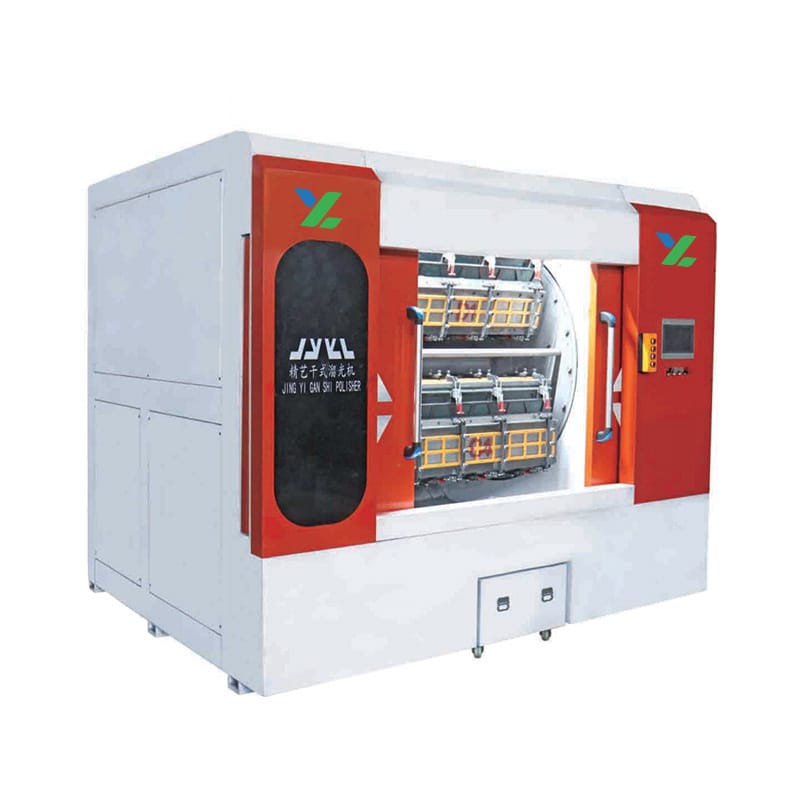
Yuanli dry polishing equipment uses plant nutshell media with specially formulated polishing paste, according to the industrial polishing machine range. That process should not be treated as a dry version of a conventional water-based vibratory recipe. The media, compound distribution, workpiece position, and planetary motion must be developed as one system.
Begin With the Required Surface, Not the Compound Catalog
Before requesting a compound sample, define what a conforming part means.
Identify the Defect to Be Reduced
Record the actual starting condition:
- Fine machining lines
- Sanding marks
- Light burrs
- Oxidation or tarnish
- Handling scratches
- Casting texture
- Uneven gloss
- Residue from an earlier operation
- Heat-treatment discoloration
Photograph the defects under controlled lighting and mark their location. A formulation that improves general brightness may not remove a specific scratch or reach a shielded recess.
Define the Final Appearance
Terms such as “bright,” “mirror,” “smooth,” and “premium finish” are subjective. Convert them into repeatable criteria where possible:
- Approved visual master sample
- Fixed lighting and viewing distance
- Gloss reading at named locations
- Surface texture measurement
- Maximum number and size of visible scratches
- Color or haze limit
- Edge-radius limit
- Critical dimensional tolerances
- Residue and cleanliness requirements
A single roughness value does not describe every aspect of a surface. The NIST surface-finish metrology tutorial discusses roughness parameters and other surface characteristics that affect measurement and interpretation.
Review the Next Manufacturing Operation
The polished part may later be plated, coated, welded, bonded, passivated, assembled, packaged, or used in a cleanliness-sensitive application.
A surface that looks acceptable can still fail downstream if the mass finishing compound leaves an incompatible film. Ask whether the next operation has limits for oil, silicone, abrasive particles, alkalinity, acidity, chloride, sulfur, or other residues.
When necessary, run coating adhesion, welding, bonding, corrosion, or cleaning validation after polishing. Do not approve the compound based only on appearance.
Match the Mass Finishing Compound to the Metal
Material compatibility must be confirmed using the exact alloy and production condition. Generic labels such as “stainless,” “aluminum,” or “brass” are not enough.
| Material family | Common process risks | What the trial should check |
| Stainless steel | Embedded contamination, haze, uneven brightness, alteration of identification marks | Gloss, scratch pattern, residue, edge change, and any required post-polishing passivation |
| Aluminum | Rapid edge change, haze, discoloration, heat sensitivity, exposed porosity | Temperature, color, dimensions, sharp features, and compound removal |
| Brass and copper | Tarnish, color change, dark residue, fingerprints, inconsistent brightness | Color stability, residue, handling method, and time between polishing and inspection |
| Zinc alloys | Porosity exposure, staining, soft-edge deformation, inconsistent casting response | Appearance across multiple cast lots, dimensions, heat, and coating compatibility |
| Carbon steel | Flash rust in wet processes, embedded debris, uneven surface activity | Corrosion after processing, drying time, storage condition, and protective requirements |
| Hardened steel | Slow response, limited defect removal, dimensional sensitivity | Cycle time, achievable finish, edge preservation, and media aggressiveness |
| Coated or plated parts | Removal or thinning of the finish, discoloration, loss of adhesion | Coating thickness, appearance, adhesion, and exposed base metal |
Test different grades separately until data show that one recipe can safely cover them. A successful stainless-steel trial does not validate the same formulation for aluminum or brass.
Match the Compound to the Finishing Media
A compound cannot work effectively if the media cannot carry it, distribute it, or reach the target surface.
Organic Media in Dry Polishing
Plant-derived media can act as the contact and compound-carrying interface in a dry polishing process. Its absorbency, particle size, hardness, cleanliness, moisture condition, and degree of wear affect how the paste is distributed.
Fresh media and seasoned media may behave differently. Fresh media may absorb more compound before the process stabilizes, while old media may become loaded with metal fines and degraded material.
The trial should identify:
- Initial media charge procedure
- Time required to condition new media
- Normal top-up quantity
- Maximum acceptable media contamination
- Media screening method
- Replacement or refresh criteria
- Storage requirements for unused media
Ceramic and Plastic Media in Wet Processes
Ceramic and plastic media are commonly associated with wet cutting, deburring, radiusing, or smoothing. The liquid compound must remain compatible with the media while controlling soil, removed metal, foam, and corrosion.
A dry polishing paste should not be added to a wet media system unless the supplier has specifically validated that use.
Media Shape Still Controls Access
Even a suitable mass finishing compound cannot compensate for inaccessible geometry. Media must move across the target area instead of merely filling it.
Check holes, threads, slots, cross-holes, ribs, undercuts, and narrow openings. Evaluate worn media as well as new media because its dimensions change over time.
If media becomes trapped, select a different shape or size before adjusting compound dosage.
How to Control Mass Finishing Compound Dosage
“Add some more compound” is not a repeatable production instruction. Dosage must be measurable and traceable.
Separate Initial Charging From Routine Top-Up
New or cleaned media may require an initial conditioning charge. Routine production may then need smaller additions to replace compound consumed, removed with parts, or lost through fines and cleaning.
Do not use the initial charge quantity as the automatic amount for every batch.
A basic control formula is:
Compound added = validated dosage rate × controlled media quantity
The dosage rate must come from testing with the actual formulation. It should not be copied from another compound or machine.
Measure by Mass or Calibrated Delivery
Use a scale, calibrated pump, or another controlled delivery method. Scoops, visual estimates, and unmarked containers create operator-to-operator variation.
The batch record should include:
- Compound name and lot number
- Quantity added
- Media identity and condition
- Number and mass of workpieces
- Machine settings
- Cycle time
- Temperature observation
- Cleaning method
- Inspection result
Control Addition Location and Distribution
Adding the correct quantity in one concentrated spot may still produce an uneven result. Follow the validated sequence for media movement, addition location, distribution time, and part loading.
Where appropriate, allow the compound to distribute through the media before loading sensitive workpieces.
Avoid Automatic Overdosing
More compound may increase residue without increasing polishing performance. Common signs of excessive dry-process dosage include:
- Sticky or oily parts
- Clumps inside the media
- Reduced media movement
- Localized dark deposits
- Increased temperature
- Dull or smeared surfaces
- Longer cleaning time
- Rapid media loading
Reduce dosage only through a controlled trial. The same symptoms can also come from incompatible chemistry, contaminated media, insufficient distribution, or excessive cycle intensity.
How to Build a Compound Selection Trial
A useful trial must produce a repeatable recipe, not one impressive sample.
Step 1: Standardize the Test Parts
Use production-representative parts from more than one lot. Include:
- Normal incoming condition
- Worst-case acceptable surface condition
- Delicate edges or cosmetic zones
- Features likely to trap media
- Parts from different cavities, machines, or suppliers when relevant
Record alloy, hardness, heat treatment, coating status, upstream abrasive condition, dimensions, and known defects.
Step 2: Establish the Baseline
Inspect and photograph each part before polishing. Measure critical dimensions and surface characteristics at identified locations.
If a current compound is already in use, document its normal result. This creates a fair baseline for the new formulation.
Step 3: Screen a Small Number of Formulations
Begin with two or three formulations selected for the actual alloy and process. Hold the following variables constant:
- Media type and condition
- Media quantity
- Part loading
- Part orientation
- Machine speed
- Cycle time
- Inspection method
Changing the compound, media, speed, and time simultaneously makes it impossible to identify the cause of the result.
Step 4: Optimize Dosage
After selecting the most promising formulation, compare controlled dosage levels. Use the supplier’s recommendation as a starting point, but include a lower and higher level when safe and technically appropriate.
Monitor temperature, distribution, residue, gloss, edge change, and media condition.
Step 5: Optimize Cycle Time
Run timed checkpoints rather than one extended cycle. Determine when improvement begins to level off.
A longer cycle may create only a small increase in brightness while continuing to change edges, increase heat, consume compound, and reduce throughput.
Step 6: Repeat the Winning Recipe
Repeat the proposed recipe with fresh production parts and a different incoming lot. A formulation should not be approved until it produces stable results across repeated batches.
What to Measure During the Trial
| Trial measure | Inspection method | Acceptance question |
| Surface appearance | Fixed lighting, distance, angle, and master sample | Is the finish visually uniform across the required areas? |
| Surface texture | Agreed instrument and named measurement locations | Does the result meet the specified texture requirement? |
| Gloss | Consistent instrument geometry and locations | Is gloss within the approved range without haze? |
| Color | Approved sample or color measurement when required | Did the compound alter alloy appearance? |
| Critical dimensions | Before-and-after dimensional inspection | Did polishing change a functional feature? |
| Edge condition | Radius, profile, microscope, or limit sample | Is edge rounding within the allowed limit? |
| Residue | Wipe, extraction, visual, or process-specific cleanliness test | Can the compound be removed to the required level? |
| Downstream compatibility | Coating, bonding, welding, plating, or corrosion test | Does the polished surface perform correctly in the next operation? |
| Media condition | Visual inspection, screening, weight, and finish trend | Is the media becoming loaded, broken, or contaminated? |
| Accepted output | Accepted parts divided by total elapsed time | Does the recipe support production capacity? |
The winning compound is not necessarily the one that creates the highest gloss. It is the formulation that passes every critical requirement with the strongest repeatability and acceptable total cost.
Common Compound Problems and Corrective Actions
| Symptom | Possible compound-related causes | What to check next |
| Dull or hazy finish | Incompatible formulation, excessive dose, excessive heat, or unsuitable finishing stage | Compare a lower dose, monitor temperature, and test a finer brightening formulation |
| Black residue | Metal fines, overloaded media, insufficient debris control, or cross-contamination | Inspect and screen media, clean the machine, and isolate material families |
| Sticky or oily surface | Excessive compound, poor distribution, or incompatible carrier | Reduce the controlled dose and verify the addition procedure |
| Uneven brightness | Nonuniform compound distribution, restricted media movement, or inconsistent loading | Condition media before loading, check workpiece position, and reduce overloading |
| Fine new scratches | Contaminated compound or media, trapped chips, or foreign particles | Inspect storage containers, media, compartments, and cleaning practices |
| Slow polishing | Insufficient compound, exhausted media, overly mild formulation, or poor surface preparation | Confirm dosage, media condition, target accessibility, and incoming finish |
| Compound clumping | Excess addition, moisture variation, poor storage, or inadequate distribution | Review storage conditions and loading sequence |
| Discoloration | Chemical incompatibility, excessive heat, long cycle, or delayed cleaning | Test a compatible formulation and control inspection timing |
| Media glazing | Compound buildup, metal loading, or unsuitable formulation | Refresh or replace media and reduce the validated top-up rate |
| Batch-to-batch drift | Inconsistent dosage, compound lot, media age, loading, or incoming parts | Use lot traceability and a controlled setup sheet |
| Poor coating adhesion | Residual film or incomplete cleaning | Perform a cleanliness and coating-adhesion validation |
| Corrosion after wet finishing | Inadequate inhibition, slow drying, contamination, or unsuitable water chemistry | Review solution concentration, rinsing, drying, and storage |
Troubleshooting should change one major variable at a time. If several factors are changed together, an improved batch does not reveal which correction worked.
Compound Life, Media Life, and Contamination Control
The process can drift even when the machine settings remain unchanged.
Track Compound Lots
Record the manufacturer, product code, batch number, delivery date, and opening date. If a finish problem appears after a new lot is introduced, traceability makes comparison possible.
Do not mix unidentified leftovers into a production container.
Define Storage Conditions
Temperature, humidity, contamination, container closure, and shelf life can affect some formulations. Follow the manufacturer’s storage instructions and keep labels legible.
Use first-in, first-out inventory control where appropriate.
Control Cross-Contamination
Media and compound used for one alloy may carry metal particles into another process. This can create scratches, discoloration, corrosion concerns, or downstream quality problems.
Consider dedicated media, labeled containers, separate tools, and documented cleaning procedures for sensitive material families.
Replace Media by Performance
Media replacement should not be based only on calendar time. Track:
- Increasing cycle time
- Declining gloss
- Higher residue
- Physical media breakdown
- Excessive fines
- Particle-size change
- Increased compound consumption
- New scratches or color variation
Compound consumption that suddenly increases may be a symptom of worn or contaminated media rather than a need for a stronger formulation.
Calculate Cost per Accepted Part
The lowest price per kilogram does not identify the most economical mass finishing compound.
Use a complete cost calculation:
Cost per accepted part = total process cost ÷ accepted parts
Total process cost may include:
- Compound consumption
- Finishing media consumption
- Machine time and energy
- Loading and unloading labor
- Cleaning and inspection
- Rework and rejected parts
- Changeover and media replacement
- Ventilation and housekeeping
- Waste treatment or disposal
- Remaining manual touch-up
- Downtime caused by unstable recipes
A more expensive compound may reduce cycle time, cleaning, rework, or media consumption enough to lower the total cost. A low-cost formulation can become expensive if it creates haze, residue, inconsistent gloss, or coating failures.
Compare formulations over repeated batches rather than one short laboratory test.
Safety and Environmental Checks
A compound should not enter production until its hazards and control requirements have been reviewed.
Obtain the Safety Data Sheet
Request the current Safety Data Sheet before testing. Review composition information, hazard classification, handling, storage, exposure controls, personal protection, fire response, spill response, stability, and disposal considerations.
In the United States, OSHA’s Hazard Communication Standard addresses chemical classification, labels, Safety Data Sheets, and employee training. Other countries have their own requirements.
Assess Dust, Fines, and Ventilation
A dry process can generate media fines, compound residue, and metal-containing dust. A sealed machine reduces open exposure during operation but does not remove risks during loading, unloading, cleaning, maintenance, or media handling.
Review local exhaust, dust-collection compatibility, housekeeping, filter selection, ignition sources, and cleaning methods. OSHA’s general-industry ventilation requirements provide a useful U.S. reference for certain grinding, polishing, and buffing operations, although applicability must be assessed for the actual installation.
Some metal and organic dusts can create fire or explosion hazards under particular conditions. The OSHA combustible-dust guidance explains why dust accumulation, ignition sources, ventilation, and housekeeping require formal evaluation.
Do Not Assume “Dry” Means Residue-Free
Dry polishing avoids a continuously flowing water solution, but parts may still carry compound or media residue. Cleaning requirements depend on the alloy, formulation, next operation, and product specification.
Medical, aerospace, coating, bonding, food-contact, vacuum, and precision assembly applications may require additional validated cleaning.
Questions to Ask a Compound or Equipment Supplier
Send detailed application information instead of requesting “the best polishing compound.”
Include:
- Exact alloy and material grade
- Heat treatment, hardness, plating, or coating status
- Part drawings and photographs
- Minimum and maximum dimensions and mass
- Current manufacturing and prefinishing route
- Surface defects that must be reduced
- Target appearance, roughness, gloss, and approved sample
- Critical dimensions and edges that must not change
- Holes, threads, and recesses that may trap media
- Current media type and condition
- Available machine type and operating range
- Batch size and required output
- Downstream coating, welding, bonding, or assembly
- Cleanliness and residue limits
- Safety, storage, and environmental restrictions
Ask the supplier to provide:
- Recommended formulation and technical data
- Current Safety Data Sheet
- Initial media-charging procedure
- Routine top-up method
- Starting dosage range
- Storage and shelf-life information
- Compatible media
- Before-and-after trial data
- Full trial recipe
- Known limitations
- Cleaning recommendations
- Estimated consumption per accepted batch
Statements such as “works on all metals” or “always produces an 8K finish” should not replace application testing.
Match the Proven Recipe to the Polishing Machine
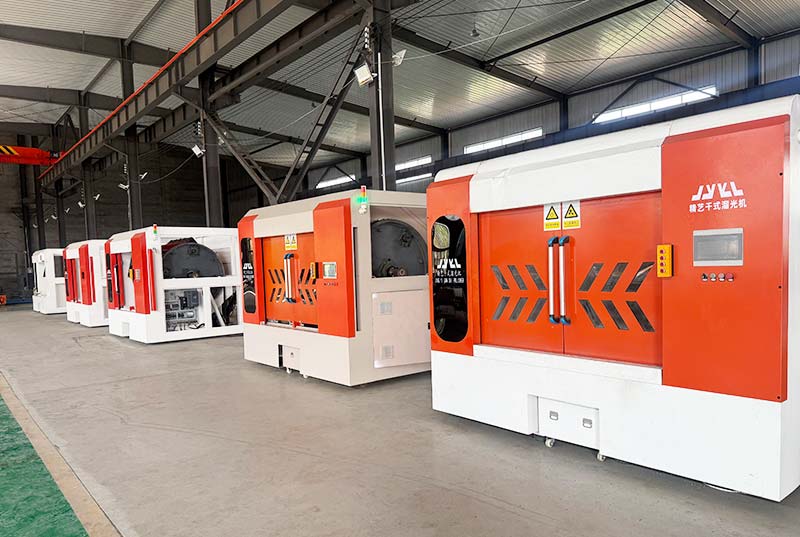
Machine selection should follow process validation. The equipment must provide enough workpiece clearance, effective media movement, safe support, controlled motion, and usable output for the validated compound–media recipe.
For smaller or special-size workpieces, review the YLJY7.5KW-192 polishing machine. For recurring production with broader workpiece compatibility, compare the YLJY15KW-640 dry polishing machine. Larger part and batch requirements can be evaluated against the YLJY22KW-768 polishing machine.
These model pages are starting points. A machine should be selected using actual workpiece dimensions, geometry, mass, batch quantity, media clearance, and sample-test results.
If you need a process recommendation, send your part details and finishing requirements before choosing the equipment configuration.
FAQ
Is Mass Finishing Compound the Same as Polishing Media?
No. Media is the physical material that contacts the workpiece. Compound is the formulation added to influence cutting, brightening, friction, cleaning, corrosion control, residue, or other process conditions.
They must be selected and tested together.
Can One Compound Be Used for Every Metal?
It should not be assumed. Stainless steel, aluminum, brass, copper, zinc alloys, and carbon steel can respond differently to the same chemistry.
Test the exact alloy, surface condition, and downstream process before approval.
How Much Compound Should Be Added?
There is no universal dosage. The correct amount depends on the formulation, media quantity and condition, workpiece loading, machine motion, cycle time, and finish target.
Begin with the supplier’s application-specific recommendation and optimize it through controlled trials.
Does More Compound Produce a Better Mirror Finish?
Not necessarily. Excessive compound can create oily residue, clumping, heat, media glazing, haze, or uneven polishing.
Brightness depends on the complete process, including the starting surface, media, compound, loading, motion, and time.
How Often Should Compound Be Added?
The initial media charge and routine production top-up are normally different control points. The schedule should be established through testing and finish trend data.
Do not add compound automatically without considering media condition and previous batch performance.
Can Dry Polishing Compound Remove Heavy Burrs?
Dry polishing is usually better suited to fine refinement and brightening. Heavy burrs, deep scratches, scale, and major geometry defects often require a more aggressive upstream operation.
Attempting to remove them with an extended brightening cycle may damage edges or dimensions.
Why Are Parts Turning Black After Polishing?
Possible causes include metal-fine buildup, contaminated media, incompatible chemistry, excessive compound, high temperature, or residue redeposition.
Inspect media condition, compound dosage, material segregation, temperature, and cleaning before changing machine speed.
Why Does the Same Recipe Produce Different Results?
Common causes include changes in incoming surface condition, media age, compound lot, dosage, loading, part orientation, temperature, humidity, or inspection method.
Use a controlled setup sheet and record each batch.
Does Dry Polishing Eliminate Cleaning?
Not always. Parts may retain compound, organic media particles, or metal-containing fines. Cleaning requirements depend on the part specification and next manufacturing operation.
Validate residue removal instead of assuming that a dry process produces a clean part.
Should Compound Be Selected Before the Machine?
Compound and media screening can begin before final machine selection, but the complete recipe must be validated using representative equipment motion and workpiece handling.
The safest sequence is to define the surface requirement, screen the media and compound, validate the process, and then size the machine around usable batch output.
Conclusion
A mass finishing compound is not a minor accessory. It is a controlled process input that can determine whether a batch becomes bright and consistent or hazy, contaminated, difficult to clean, and expensive to rework.
The correct selection begins with the real part: alloy, starting surface, geometry, protected features, finish requirement, and downstream operation. The formulation must then be matched with suitable media, controlled dosage, machine motion, loading, cycle time, and inspection criteria.
Avoid approving a compound from one visually attractive sample. Test representative production parts, record the complete recipe, measure dimensions and surface quality, repeat the winning condition, and calculate cost per accepted part.
When these steps are followed, compound selection becomes evidence-based. The result is not merely a shinier component, but a more stable, traceable, and scalable metal-finishing process.