Table of Contents
Introduction

In today’s competitive metal fabrication landscape, precision and efficiency aren’t just goals—they’re requirements for survival. A flat plate beveling machine represents one of the most critical investments for any fabrication shop or manufacturing facility aiming to deliver superior welded structures while maintaining productivity.
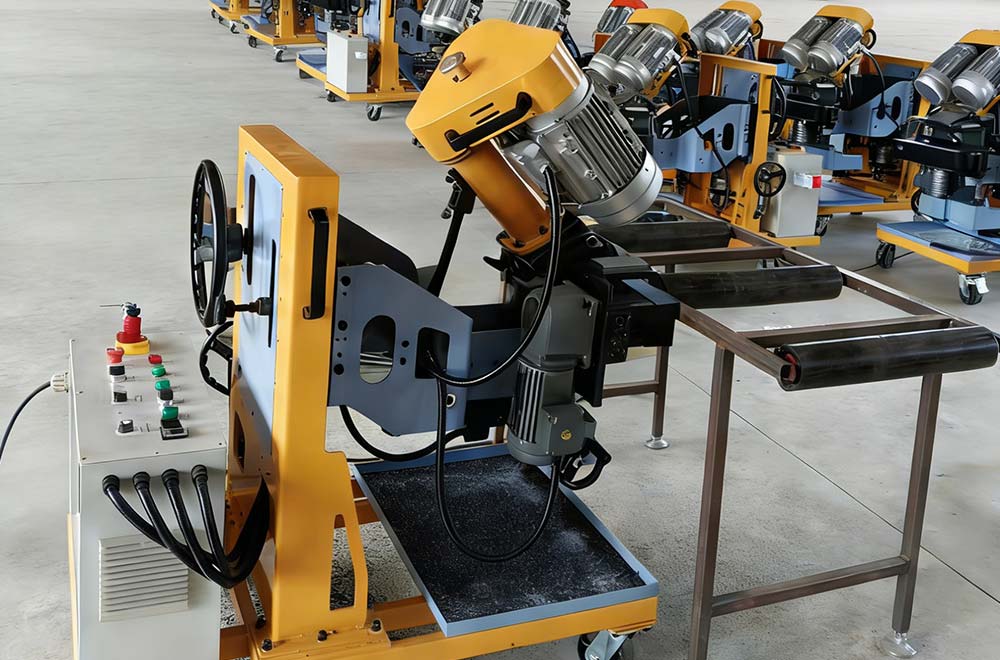
At its core, a flat plate beveling machine is specialized industrial equipment designed to create beveled edges on metal plates and sheets before welding. This edge preparation process creates an angled surface that allows for proper weld penetration, ensuring stronger, more reliable joints. Unlike traditional grinding methods that are inconsistent, labor-intensive, and often produce uneven results, modern beveling machines deliver precise, repeatable edge preparation every time.
As a manufacturer specializing in industrial beveling equipment, we’ve witnessed firsthand how the right beveling solution transforms fabrication operations. From small welding shops to large-scale shipyards, the impact on weld quality and production efficiency is immediate and substantial.
Key Functions of a Flat Plate Beveling Machine
Plate Edge Preparation
The primary function of any beveling machine is edge preparation, but the quality of that preparation varies dramatically based on the equipment used. Clean, consistent edges are fundamental to successful welding operations. When edges are properly beveled:
- Weld penetration reaches optimal depth
- Filler material distributes evenly
- Weld defects are significantly reduced
- Joint strength is maximized
Straight cutting edges versus beveled edges represent two fundamentally different approaches to welding preparation. While straight edges might suffice for thin materials and basic applications, beveled edges become essential when working with thicker plates requiring deep penetration welds. The angle typically ranges from 22.5 to 45 degrees, with specific requirements determined by plate thickness, welding process, and engineering specifications.
Angle Control and Precision
Modern industrial fabrication demands exacting standards, and angle control is where CNC flat plate beveling machines truly distinguish themselves from manual models. CNC systems offer:
- Digital angle adjustment with precision to 0.1 degrees
- Automated positioning for consistent results across multiple pieces
- Complex bevel profiles including J-bevels and compound angles
- Memory functions for storing frequently used settings
Manual beveling machines, while cost-effective for basic operations, rely heavily on operator skill and experience. Variations in angle, depth, and surface quality are common, leading to inconsistent weld preparation that can compromise final weld integrity. For industries where weld failure carries serious consequences, CNC precision isn’t optional—it’s essential.
Time and Labor Efficiency
Consider the traditional approach to edge preparation: manual grinding with angle grinders, disc sanders, or torch cutting. These methods are not only slow but also physically demanding and prone to operator fatigue. A skilled worker might spend 15-20 minutes preparing a single edge by hand, with results varying throughout the day.
In contrast, a flat plate beveling machine can process the same edge in under 2 minutes with consistent quality throughout an entire production run. This efficiency translates directly to:
- Production throughput: 5-10 times faster than manual methods
- Labor reduction: One operator can handle multiple machines
- Cost savings: Lower per-part preparation costs
- Scheduling flexibility: Faster turnaround times improve customer satisfaction
Types of Flat Plate Beveling Machines
Manual vs Automatic Beveling Machines
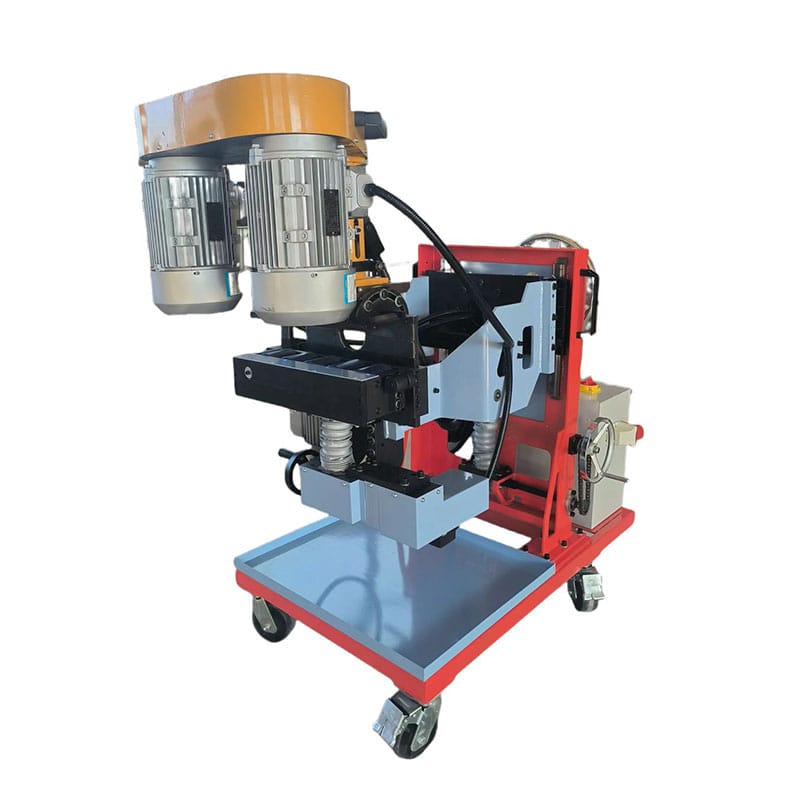
The choice between manual and automatic beveling machines depends on production volume, budget constraints, and quality requirements. Each type serves specific market segments effectively.
Manual Beveling Machines offer advantages for:
- Small fabrication shops with limited budgets
- Low-volume, high-mix production environments
- Situations where flexibility is more important than speed
- Operations with variable plate sizes and shapes
However, they come with limitations:
- Inconsistent edge quality depending on operator skill
- Slower production speeds
- Higher labor requirements
- Limited angle precision
Automatic Beveling Machines excel in:
- Medium to high production environments
- Applications requiring consistent quality
- Operations where labor costs are significant
- Facilities seeking to scale production
The investment in automatic equipment typically pays for itself within 12-18 months through labor savings and reduced rework.
CNC Flat Plate Beveling Machines
Computer Numerical Control represents the pinnacle of beveling technology. These sophisticated machines integrate industrial automation with precision engineering to deliver unmatched performance.
Key features include:
- Programmable angle control: Store unlimited angle settings for instant recall
- Automatic feeding: Consistent feed rates regardless of operator fatigue
- Multi-pass capability: Handle deep bevels with multiple shallow passes
- Quality monitoring: Built-in sensors detect tool wear and material variations
- Integration ready: Connect to existing production management systems
Benefits extend beyond mere speed improvements:
- Consistent edge quality from the first piece to the thousandth
- Reduced scrap rates from preparation errors
- Lower training requirements for operators
- Predictable production scheduling
Heavy-Duty Industrial Beveling Machines
For the most demanding applications—shipbuilding, bridge construction, heavy machinery fabrication—standard equipment simply isn’t adequate. Heavy-duty beveling machines are engineered specifically for:
- Thick plate processing: Capable of handling plates up to 6 inches (150mm) thick
- High-strength materials: Hardened steels, exotic alloys, and abrasion-resistant materials
- Continuous operation: Designed for 24/7 manufacturing environments
- Extreme durability: Reinforced construction withstands industrial abuse
These machines typically feature:
- High-power motors (15HP and above)
- Rigid frame construction
- Advanced coolant systems
- Specialized tooling for challenging materials
- Enhanced safety systems
Applications of Flat Plate Beveling Machines
The versatility of flat plate beveling machines makes them indispensable across numerous industries and applications:
Welding Preparation
The most obvious application is preparing edges for welding, but the specific use cases are surprisingly diverse:
- Butt welds: The most common joint type in structural fabrication
- V-joint preparation: Single and double V configurations for various thicknesses
- J-joints and U-joints: Specialized profiles for critical applications
- Pipe and tube beveling: End preparation for welding pipelines
- Compound bevels: Complex angles for thick plate transition zones
Industry-Specific Applications
| Industry | Application | Critical Requirements |
|---|---|---|
| Shipbuilding | Hull plate preparation, deck fabrication | Thick plates, long bevels, corrosion-resistant welds |
| Construction | Structural steel fabrication, bridge components | Precision angles, high volume, consistent quality |
| Pressure Vessels | Tank and vessel shell preparation | Critical welds, strict quality standards |
| Heavy Machinery | Frame and component manufacturing | Heavy-duty cycles, diverse materials |
| Pipeline | Pipe end preparation, spool fabrication | Consistent bevels, mobile/portable options |
Integration with Fabrication Workflows
Modern beveling machines don’t operate in isolation—they’re integral components of broader manufacturing systems. Leading manufacturers design their equipment to work seamlessly with:
- CNC plasma cutting systems: Receive cutting programs directly
- Material handling systems: Automated loading and unloading
- Welding robots: Provide consistently prepared edges for automated welding
- Quality control systems: Provide data for process optimization
This integrated approach enables the “smart factory” concept where production flows smoothly from raw material to finished product with minimal manual intervention and maximum quality control.
Advantages of Using Flat Plate Beveling Machines
Improved Welding Quality
The connection between edge preparation quality and final weld integrity cannot be overstated. Poorly prepared edges are among the leading causes of weld defects including:
- Incomplete penetration
- Porosity from contamination
- Lack of fusion from inconsistent angles
- Cracking from stress concentrations
Investment in proper beveling equipment delivers direct quality improvements:
Weld Penetration: Consistent bevel angles ensure that weld filler material penetrates to the designed depth, achieving full-strength joints.
Defect Reduction: Clean, uniform edges minimize the root causes of welding defects, reducing rework rates from 15-20% (with manual preparation) to under 3% (with machine preparation).
Inspection Pass Rates: Properly prepared welds pass radiographic and ultrasonic inspection at dramatically higher rates, reducing costly delays and rework.
Enhanced Productivity
Beyond quality improvements, beveling machines fundamentally transform production capabilities:
- Throughput increases: A single CNC beveling machine can replace 4-6 manual grinding stations
- Labor reallocation: Skilled workers shift from manual preparation to value-added tasks
- Scheduling predictability: Machine-based operations provide reliable cycle times
- Batch processing: One machine setup processes entire production runs
The productivity gains compound over time. As fabricators become more comfortable with automated equipment, they discover new efficiencies: optimized batch sizes, reduced changeover times, and better integration with downstream processes.
Cost Efficiency
While the initial investment in beveling equipment can be significant, the total cost of ownership analysis overwhelmingly favors mechanization:
Direct Labor Costs: Manual edge preparation costs $8-12 per linear foot of edge beveled. Machine preparation reduces this to $1.50-2.50 per foot—a 75-85% reduction.
Material Waste: Manual methods produce 5-8% scrap from preparation errors. Machine preparation reduces this to under 1%.
Consumables: Manual grinding requires frequent disc replacement. Beveling machines use industrial tooling with predictable replacement schedules and lower overall costs.
Energy Efficiency: Modern beveling machines consume significantly less energy per linear foot of processed edge than manual grinding methods, especially when considering the overhead of supporting multiple manual stations.
The return on investment timeline typically ranges from 12-24 months depending on production volume, with many heavy users achieving payback in under 12 months.
How to Choose the Right Flat Plate Beveling Machine
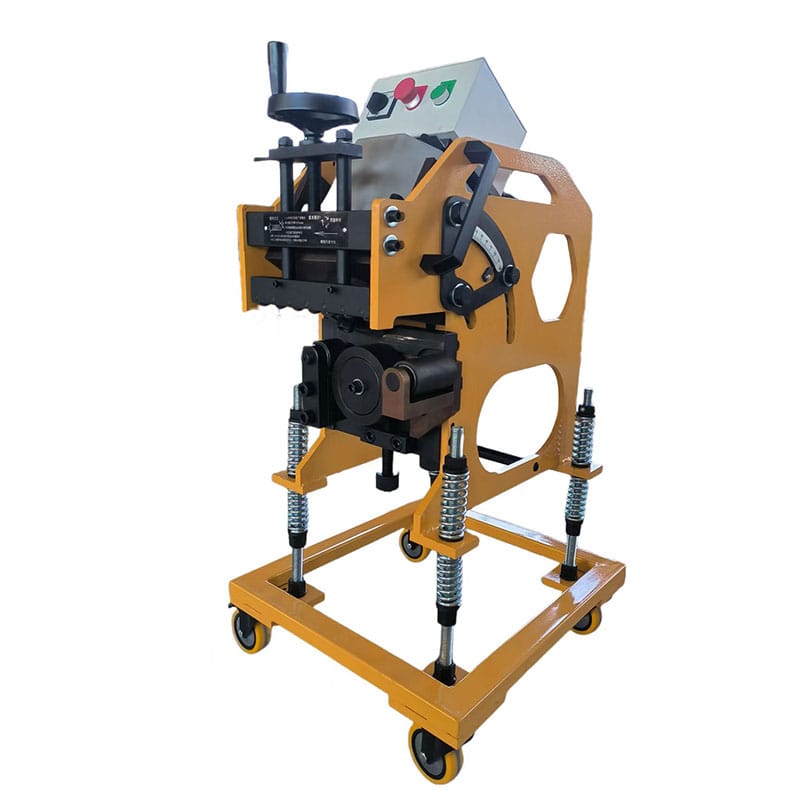
Selecting the appropriate beveling machine requires careful analysis of your specific needs. Consider these critical factors:
Production Requirements
Plate Thickness Range: Your equipment must handle both your typical and maximum plate thicknesses. Consider both current needs and future expansion plans. Machines are typically rated by maximum thickness:
- Light-duty: Up to 1 inch (25mm)
- Medium-duty: 1-3 inches (25-75mm)
- Heavy-duty: 3-6 inches (75-150mm)
Production Volume: Determine your average and peak production requirements:
- Low volume (<500 linear feet/day): Manual or light-duty automatic machines
- Medium volume (500-2000 linear feet/day): Automatic machines
- High volume (>2000 linear feet/day): CNC or heavy-duty machines
Angle Requirements: Consider the range of bevel angles you need:
- Standard V-bevels (30°, 37.5°, 45°): Most machines handle these easily
- Custom angles: CNC machines offer the most flexibility
- Compound bevels: Requires advanced CNC systems
Technical Specifications
| Feature | Small Workshop | Medium Production | Heavy Industrial |
|---|---|---|---|
| Plate Capacity | Up to 1″ (25mm) | 1-3″ (25-75mm) | 3-6″ (75-150mm) |
| Power | 3-5 HP | 7.5-15 HP | 15-30 HP |
| Bevel Speed | 2-3 ft/min | 4-6 ft/min | 6-10 ft/min |
| Angle Range | Fixed or Manual | Manual Adjust | CNC Auto |
| Price Range | $8,000-$20,000 | $25,000-$75,000 | $80,000-$250,000 |
Supplier Considerations
The relationship with your equipment supplier extends far beyond the initial purchase:
Manufacturer vs. Distributor: Working directly with a manufacturer offers advantages:
- Direct technical support from engineering teams
- Customization capabilities for unique requirements
- Genuine replacement parts availability
- Equipment upgrade options as technology evolves
After-Sales Support: Critical considerations include:
- Response time for service requests
- Availability of replacement parts
- Technical training for operators and maintenance staff
- Warranty coverage and duration
Customization Options: As a manufacturer, we understand that standard equipment doesn’t always meet every need. Look for suppliers willing to provide:
- Custom bevel profiles
- Specialized tooling for unique materials
- Integration with existing systems
- Operator interface customization
Maintenance Tips for Flat Plate Beveling Machines
Proper maintenance is essential for maximizing equipment life and maintaining consistent performance. Establishing a preventive maintenance program prevents unexpected downtime and ensures optimal output quality.
Daily Maintenance
Operator Responsibilities: Train operators to perform daily checks before starting production:
- Inspect cutting tools for wear or damage
- Check fluid levels (coolant, hydraulic oil)
- Verify safety guards and sensors are functional
- Clean debris from work areas and guides
- Listen for unusual sounds during operation
Tool Inspection: Cutting tools are the most critical wear items:
- Check for chipped or damaged cutting edges
- Monitor tool temperature during operation
- Inspect tool holders for wear or damage
- Replace tools according to manufacturer specifications
Weekly and Monthly Maintenance
Lubrication Schedule: Establish a lubrication routine based on usage:
- Lubricate guide rails and bearings weekly
- Check and top up gear oil monthly
- Inspect hydraulic lines for leaks
- Replace filters according to schedule
Cleaning Procedures: Proper cleaning prevents long-term issues:
- Remove metal chips and debris from internal components
- Clean coolant systems to prevent contamination
- Inspect and clean electrical enclosures
- Check and clean air intake filters
Preventive Maintenance Schedule
Establish a calendar-based maintenance program with documented procedures:
| Maintenance Task | Frequency | Duration | Responsibility |
|---|---|---|---|
| Tool inspection | Daily | 5-10 min | Operator |
| Fluid level check | Daily | 5 min | Operator |
| Guide lubrication | Weekly | 30 min | Maintenance |
| Belt/chain inspection | Monthly | 1 hour | Maintenance |
| Hydraulic system service | Quarterly | 4 hours | Service Tech |
| Complete machine inspection | Annually | 8-16 hours | Service Tech |
Training and Documentation
Operator Training: Comprehensive training programs should include:
- Proper machine operation procedures
- Safety protocols and emergency procedures
- Basic troubleshooting
- Daily maintenance requirements
Documentation Maintenance: Keep accurate records of:
- Maintenance performed and dates
- Parts replacements and upgrades
- Performance measurements and output quality
- Repairs and service visits
Industry Trends in Flat Plate Beveling Technology
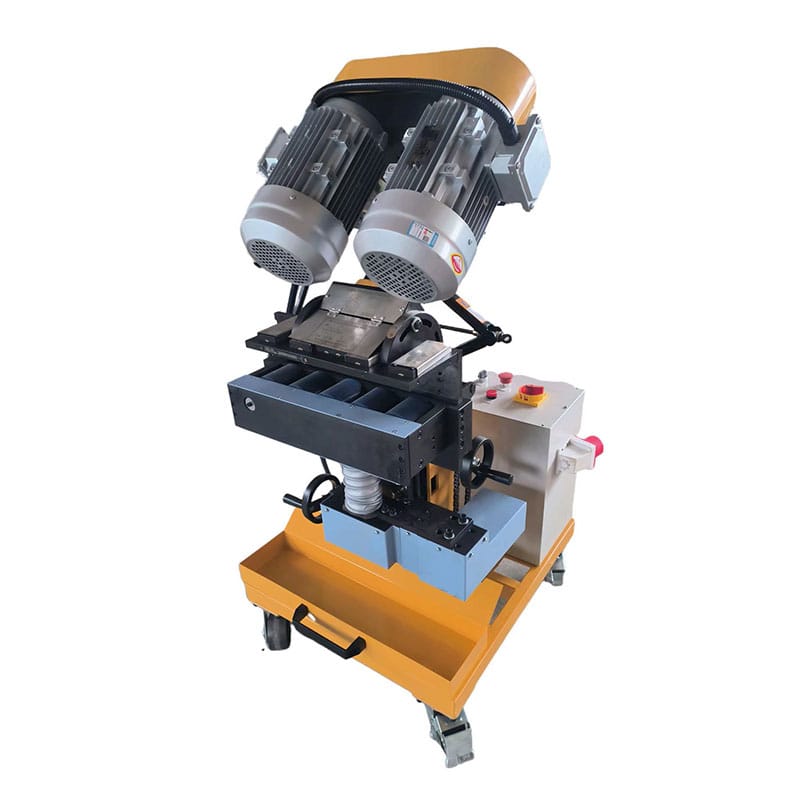
The beveling equipment industry continues to evolve rapidly, driven by technological advancements and changing market demands.
CNC and Automation Advancements
Modern CNC beveling machines incorporate sophisticated technologies:
- Touchscreen interfaces: Intuitive controls reduce training time
- Offline programming: Create programs without interrupting production
- Remote monitoring: Track machine status and performance remotely
- Predictive maintenance: Sensors detect potential issues before failure
Integration Trends: Smart factory initiatives require seamless integration:
- Data collection for production analytics
- Communication with material handling systems
- Real-time quality monitoring
- Energy consumption optimization
Industry 4.0 and Smart Manufacturing
The fourth industrial revolution is transforming beveling equipment:
- IoT connectivity: Machines communicate with production management systems
- Cloud-based monitoring: Real-time performance tracking from anywhere
- Artificial intelligence: Automated parameter optimization
- Digital twins: Virtual models for process simulation
Environmental Considerations
Sustainability drives new equipment designs:
- Energy efficiency: Motors and systems designed for minimal power consumption
- Coolant management: Closed-loop systems reduce fluid waste
- Dust and chip collection: Improved filtration and collection systems
- Noise reduction: Quieter operation for improved workplace conditions
Conclusion
Flat plate beveling machines have evolved from optional equipment to essential assets in modern metal fabrication. The demands of today’s competitive market—for higher quality, faster production, and lower costs—make mechanized edge preparation not just advantageous but necessary.
The impact extends beyond individual machines to transform entire fabrication operations. From welding preparation to final product quality, beveling equipment serves as a critical foundation for manufacturing excellence. Companies that invest in proper beveling technology consistently outperform competitors in quality, delivery speed, and cost efficiency.
As a manufacturer of industrial beveling equipment, we understand these challenges and opportunities. Our comprehensive product lineup—from economical manual machines to advanced CNC systems—provides solutions for fabrication operations of all sizes and requirements. We combine equipment quality with comprehensive support, including customization options, technical training, and responsive after-sales service.
The right beveling machine isn’t just equipment—it’s a strategic investment in your company’s future. It’s about quality, productivity, and competitiveness in a market that demands nothing less.
Contact us today to learn more about our flat plate beveling machines and get a custom solution for your fabrication needs. Our engineering team will analyze your requirements, recommend the optimal equipment configuration, and provide a detailed proposal showing how our solutions can improve your operations and return on investment.
FAQ
What is a flat plate beveling machine used for?
A flat plate beveling machine is used to create angled edges on metal plates before welding. This beveling process ensures proper weld penetration and stronger weld joints. The machine is essential in metal fabrication for preparing edges on steel plates, pipes, and various metal components. It’s commonly used in shipbuilding, construction, pressure vessel manufacturing, and general fabrication shops.
Can a flat plate beveling machine handle thick steel plates?
Yes, but the capacity depends on the machine type. Light-duty machines typically handle plates up to 1 inch (25mm) thick, medium-duty machines process 1-3 inches (25-75mm), and heavy-duty industrial beveling machines can handle plates up to 6 inches (150mm) thick or more. When selecting a machine, it’s important to consider both your typical plate thickness and your maximum requirements to ensure adequate capacity.
How does CNC improve beveling precision?
CNC (Computer Numerical Control) technology dramatically improves beveling precision by automating angle adjustment and maintaining consistent feed rates. CNC systems can achieve angle precision to 0.1 degrees, store unlimited angle settings for instant recall, and produce identical edges across thousands of parts. Unlike manual machines that vary based on operator skill and fatigue, CNC systems deliver repeatable results regardless of the operator or time of day. They also enable complex bevel profiles like J-bevels and compound angles that are difficult or impossible with manual equipment.
How long does a beveling machine last with proper maintenance?
With proper maintenance and regular service, a quality flat plate beveling machine can last 15-20 years or more. The key factors affecting lifespan include:
- Regular preventive maintenance following manufacturer guidelines
- Proper operator training to avoid misuse
- Using genuine replacement parts
- Operating within the machine’s rated capacity
- Maintaining a clean operating environment
Industrial-grade machines built with heavy-duty components typically have the longest service life, especially when maintained according to schedule. Many manufacturers offer extended warranty options and service contracts that help ensure long equipment life.
What industries benefit most from flat plate beveling machines?
Several industries derive significant benefits from flat plate beveling technology:
Shipbuilding: Large-scale hull plate preparation requires consistent, high-quality bevels on thick plates—a perfect application for CNC beveling machines.
Construction: Structural steel fabricators prepare thousands of linear feet of edges for beams, columns, and connection plates where speed and consistency are critical.
Pressure Vessel Manufacturing: Tank and vessel fabricators need precise edge preparation for critical welds that must pass stringent quality inspections.
Heavy Machinery: Manufacturers of construction equipment, agricultural machinery, and industrial equipment require beveling for frames, booms, and structural components.
Pipeline and Oil & Gas: Pipe fabricators prepare pipe ends for welding pipelines, where weld integrity is crucial for safety and performance.
Metal Fabrication Shops: General fabrication shops benefit from the versatility of beveling machines for diverse customer requirements.