Table of Contents
Beveling machine quotation starts with a clearly defined application. The useful starting point is the production decision: what must the equipment deliver, how will the result be checked, and which supporting operations are required? This guide uses YL-PKFZ95 as a relevant Yuanli product reference and separates published specifications from application conditions that require confirmation.
Beveling machine quotation: the decision to resolve
A low machine price can conceal a different cutter package, electrical configuration, support arrangement, or acceptance standard. Build the enquiry around the actual plate family and a marked groove drawing. Ask every bidder to return the same scope matrix, with exclusions visible beside the price. A demonstration on a thin, clean sample cannot validate a quotation intended for thick production plate. Compare the delivered capability and the conditions under which it was demonstrated. Record separately what is included at delivery, what is consumed during production, and what depends on a future paid service. This creates a useful commercial comparison without treating a model number as a complete specification.
Beveling machine quotation: turn the application into a comparable scope
In a beveling machine quotation review, an equipment enquiry should separate what the workpiece requires from how a supplier proposes to achieve it. Give the same material identification, dimensional range, edge drawing, expected order pattern, and inspection requirement to every supplier. Ask for a clear response against each requirement, including any condition that needs a sample trial.
For beveling machine quotation, the scope should explicitly address included cutter and inserts and electrical supply configuration. Keep a requirement marked unresolved until the bidder supplies an answer that the responsible buyer can evaluate. A general statement that the machine is suitable does not show whether the quoted configuration includes the necessary tooling, workpiece support, electrical arrangement, or service. Maintain the scope matrix through order placement so later commercial changes do not silently alter the technical agreement.
Beveling machine quotation: assign the interfaces before placing the order
In a beveling machine quotation review, many equipment problems appear at the boundary between the supplier's machine and the buyer's production system. List the interfaces that require an owner: utilities, lifting and handling, workpiece supports, tooling replenishment, inspection, and operator training. Confirm whether each item is supplied with the machine, supplied separately, or prepared by the buyer.
Use beveling machine quotation to resolve representative test plates before delivery rather than leaving it as a commissioning conversation. The person who signs the commercial order may not be the person who prepares the shop floor, so make the responsibilities accessible to both. Include an agreed communication route for unanswered technical questions. An interface list is most valuable when it names a deliverable and an accountable party, rather than recording that everyone will cooperate.
Beveling machine quotation: compare costs on the same production basis
In a beveling machine quotation review, build the commercial comparison around an identical accepted component or edge. Include all operations required to reach that state, even when they occur outside the machine being purchased. Separate equipment investment from recurring tooling, labour, inspection, maintenance, and handling. Use the same working calendar and utilisation assumptions for competing routes.
When reviewing beveling machine quotation, distinguish a measured input from an estimate. Sensitivity testing is more useful than presenting one precise-looking answer based on uncertain numbers. For example, examine how the decision changes when setup frequency or tool consumption differs from the initial assumption. Do not label released labour time as a cash saving unless the business has a corresponding plan. The comparison should explain the purchase, not merely justify a preferred machine.
Example: compare two quotations with different exclusions
Suppose two offers name a machine with a suitable plate-thickness range. One includes the cutter assembly used in the trial, while the other lists the machine alone. Put those differences into separate rows before comparing the totals. Then add the support equipment, spare tooling, inspection work, and installation responsibilities needed to reach the same production state.
Request written answers to three questions: which quoted items produced the demonstrated result, which items the buyer must supply, and which application conditions remain untested. If a vendor changes the configuration to reduce the price, repeat that reconciliation. This is an illustrative purchasing exercise, not a claim about Yuanli's standard package. Its value is that the buyer can see exactly what each price buys.
Beveling machine quotation: application comparison checklist
Use this beveling machine quotation checklist to compare a proposal with the required production condition. The rows are discussion and verification points; they are not universal machine settings or guaranteed acceptance limits.
| Review item | Question to resolve | Useful evidence |
|---|---|---|
| Included cutter and inserts | Confirm included cutter and inserts for the actual workpiece and order. | Annotated drawing, sample identification, or order-specific scope |
| Electrical supply configuration | Keep the requirement for electrical supply configuration identical across the options. | Supplier response with stated conditions and exclusions |
| Representative test plates | Observe representative test plates during the complete proposed work sequence. | Representative trial record, including supporting work |
| Packing and delivery scope | Record packing and delivery scope with an identified sample or configuration. | Repeatable inspection record or signed configuration detail |
| Training deliverables | Assign responsibility for training deliverables before release. | Named owner and agreed deliverable in the handover record |
| Written exclusions | Revisit written exclusions when the approved conditions change. | Updated application review with a documented decision |
Beveling machine quotation: relevant Yuanli equipment
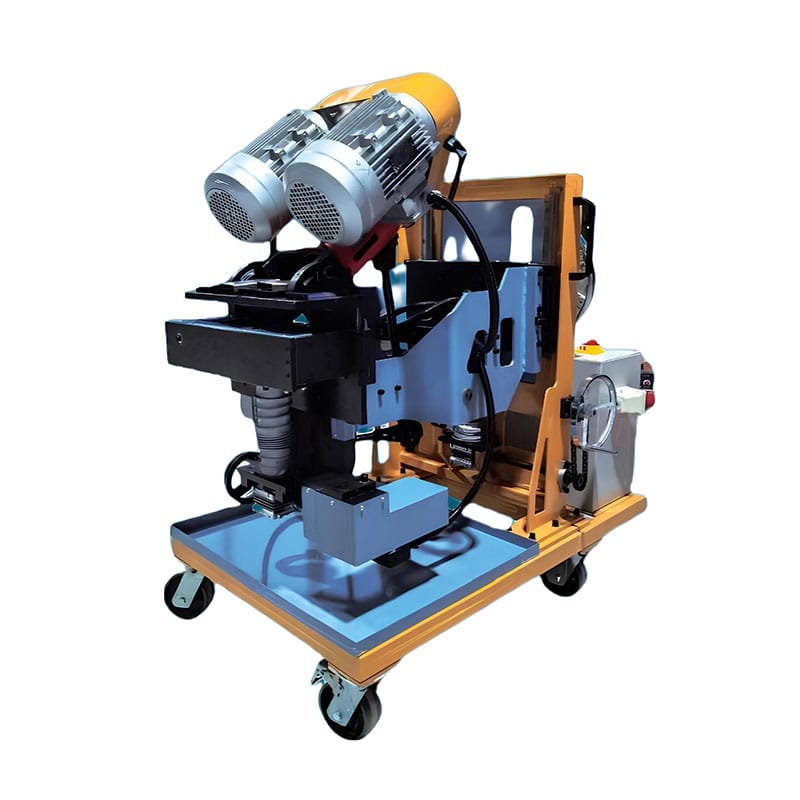
For beveling machine quotation, the YL-PKFZ95 product page provides a starting reference. Yuanli describes a reversible, self-propelled milling configuration for upper and lower bevel preparation, with floating height adjustment. Confirm the delivered configuration and the actual sample result before treating it as an approved production solution.
| Published item | Product-page reference |
|---|---|
| Motor power / power supply | 6,000 W / 380 V / 50 Hz |
| Plate thickness range | 4–95 mm |
| Bevel angle | 0°–75° (adjustable) |
| Groove types | K-, V-, X-, and Y-grooves; upper and lower bevels; 0° side milling |
| Bevel width | 20 mm per pass; up to 65 mm with multiple passes |
| Machine weight / dimensions | Approx. 450 kg / 1.0 × 1.0 × 1.5 m |
Published limits describe reference specifications; they do not establish that every maximum can be used simultaneously. Confirm the material, geometry, tooling, support, and delivered options for the intended job.
Beveling machine quotation: prepare a technical enquiry
A useful beveling machine quotation enquiry combines the workpiece drawing, material identification, incoming condition, expected order pattern, and the acceptance requirements. Add photographs that show the relevant geometry, with dimensions or an identified reference where needed. Include included cutter and inserts and written exclusions explicitly so the supplier can respond to the actual decision.
Compare the model above with the Yuanli beveling machine range. Ask which proposed conditions have already been demonstrated and which require samples. If the scope changes during discussion, update the enquiry and keep the revised requirements with the quotation.
For terminology used in joint cross-sections, see the TWI explanation of weld-joint preparation geometry; the applicable joint dimensions still come from the approved fabrication drawing and procedure. For related Yuanli guidance, review the existing groove-inspection guide.
Ready to discuss beveling machine quotation for your production line? Contact Yuanli with the application package above and request a configuration review, sample-trial scope, and quotation. Use the enquiry form below to describe the job and the result you need.
Frequently asked questions
What should be defined first for beveling machine quotation?
Start with included cutter and inserts and electrical supply configuration. Connect them to the actual drawing, workpiece condition, and required result. The relevant model can then be evaluated against a specific application instead of a general product description.
Which evidence is useful when reviewing beveling machine quotation?
Request an identified sample or configuration record covering representative test plates and packing and delivery scope. Preserve the method, observations, and any deviations. A selected photograph or a single nominal specification cannot replace the complete agreed verification.
Is YL-PKFZ95 automatically suitable for this application?
No. The YL-PKFZ95 page is a product reference for the beveling machine quotation discussion. Suitability depends on the material, complete geometry, required output, supplied configuration, and the representative evidence accepted by the buyer and supplier.
Can beveling machine quotation be approved from a catalogue alone?
A catalogue can support initial screening, but it does not establish every condition of the intended job. Resolve training deliverables and written exclusions before release. Use a representative trial whenever the required result or supporting method remains uncertain.
What should I send Yuanli about beveling machine quotation?
Send the relevant drawing, material and incoming-condition details, expected quantities, and the acceptance criteria. Identify included cutter and inserts, representative test plates, and any unresolved constraint. Request a written response with the recommended configuration and any conditions requiring a sample trial.