The wrong way to compare polishing processes is to ask, “Which one makes a part shinier?” A better question is: Which process produces more conforming parts while protecting the surfaces, edges, and dimensions that matter?
Manual polishing gives a skilled operator direct control over a selected area. Mass finishing treats several surfaces or workpieces through a controlled combination of machine motion, media, compound, loading, and time. Either route can produce an attractive part. Either can also create scrap when it is applied to the wrong geometry or judged only by appearance.
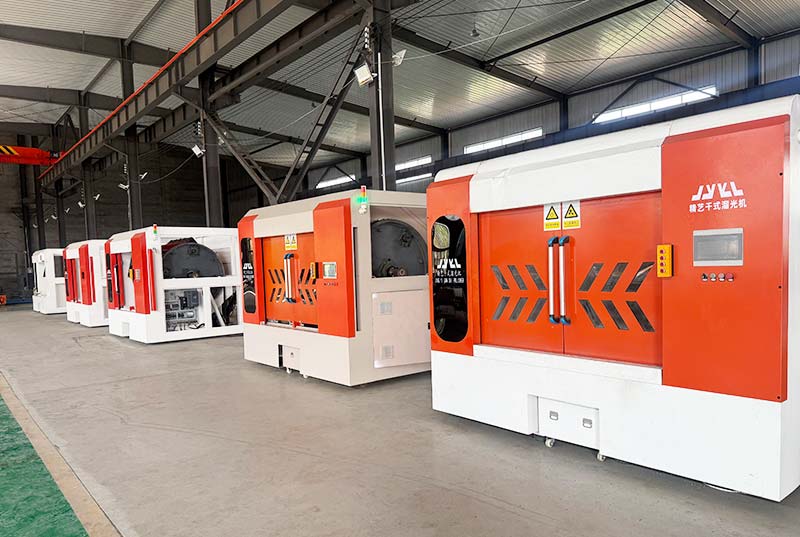
This guide compares manual buffing with dry planetary mass finishing for recurring batches of metal parts. The dry process discussed here uses polishing media and compound rather than a continuously flowing liquid solution; some equipment can also separate workpieces in individual compartments to limit part-to-part contact. For a closer look at that equipment motion and its process variables, read the dry polishing machine guide.
The short answer
- Choose manual polishing when the job is low-volume, highly variable, directional, localized, or inaccessible to media.
- Consider dry mass finishing when a recurring part family needs repeatable treatment across several media-accessible surfaces.
- Use a hybrid route when machines can complete the repeatable majority of the work but a skilled operator must finish exceptional features.
- Compare accepted parts per shift—not machine run time, operator touch time, or the best-looking sample.
- Approve either method only after a repeated trial with measurable surface and dimensional criteria.
Table of Contents
What Mass Finishing Means in This Comparison
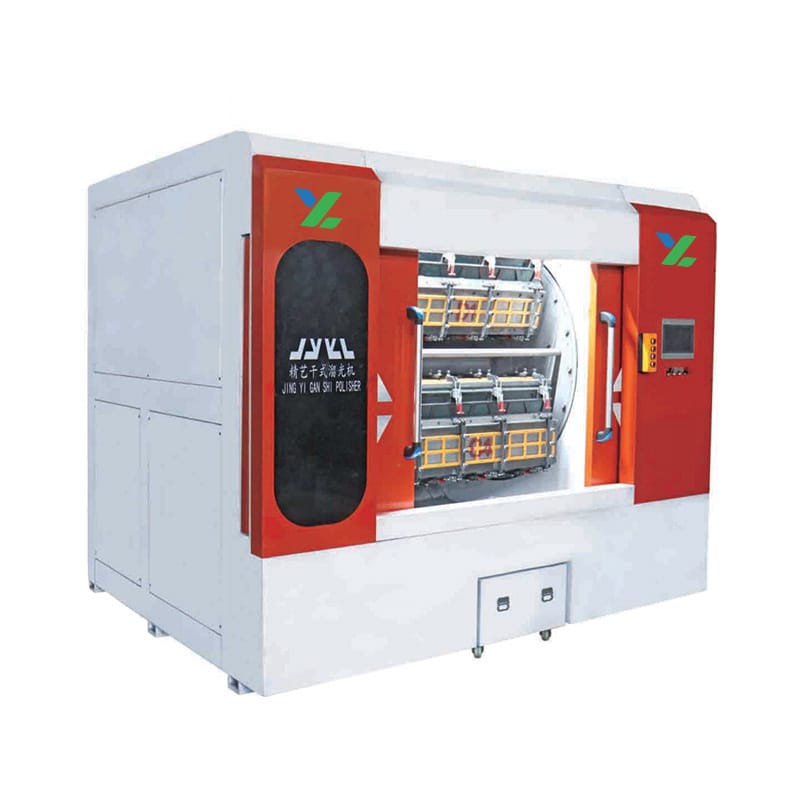
Mass finishing is a broad family of processes that treats multiple parts, or multiple surfaces of a part, through repeated contact with finishing media. Barrel tumbling, vibratory finishing, centrifugal systems, and planetary systems belong to this wider category, but they do not create identical motion or surface effects.
This article focuses on a dry planetary approach intended for surface refinement and brightening. Workpieces interact with plant-based media carrying a compatible polishing compound. Rotation and revolution create changing relative motion between the media and the exposed metal surfaces. In a compartment-style machine, dividers or individual positions may keep parts from colliding with one another.
That distinction matters. Loose-part wet deburring, aggressive centrifugal finishing, and fixed-workpiece dry polishing should not be treated as interchangeable simply because all are described as mass finishing.
What Manual Polishing Includes
Manual polishing may use a bench-mounted buffing wheel, a handheld tool, abrasive sheets, belts, pads, or polishing compound. The operator controls contact angle, pressure, dwell, tool path, and the surfaces that receive treatment.
Manual buffing is not the same as heavy grinding. Grinding is normally used to remove more material, correct welds, or eliminate substantial defects. Polishing progressively refines a prepared surface. If deep scratches, heavy burrs, pits, or scale remain, neither gentle hand buffing nor a brightening-stage mass finishing recipe should be expected to erase them efficiently without affecting surrounding geometry.
The Real Decision: Good Parts, Not Shiny Parts
A reflective surface can still fail inspection. A process is valuable only if it produces the required appearance without rounding a functional edge, altering a sealing face, filling a thread with media, softening an identification mark, or leaving a recess unfinished.
For that reason, the useful output measure is:
Good-part throughput = accepted parts ÷ total elapsed production time
Total elapsed time should include loading, polishing, repositioning, unloading, cleaning, inspection, changeover, and average rework. This measurement prevents two common distortions:
- Manual polishing looks faster when only wheel-contact time is counted.
- Mass finishing looks faster when only the automatic cycle is counted.
The better process is the one that meets the drawing, visual standard, and production schedule with a stable rejection rate. In some factories that will be manual work. In others a controlled mass finishing process will be stronger. Many will need both.
Mass Finishing vs Manual Polishing at a Glance
| Decision factor | Dry planetary mass finishing | Manual polishing |
|---|---|---|
| Best production fit | Repeating part families and recurring batches | Prototypes, repairs, low volume, and frequent variation |
| Surface coverage | Multiple exposed surfaces that media can move across | Selected surfaces that the tool and operator can reach |
| Finish direction | Usually nondirectional or blended | Directional grain and localized patterns are possible |
| Operator influence | Lower after the recipe and loading method are validated | High; skill, pressure, angle, and fatigue affect results |
| Part-to-part contact | Can be limited in a separated-compartment design | No part-to-part contact during individual polishing |
| Deep or shielded features | Limited when media cannot circulate | Possible when a suitable tool can physically reach the feature |
| Heavy defect removal | Usually needs an upstream process | Possible locally, but can be slow and geometry-sensitive |
| Batch repeatability | Strong potential with controlled incoming parts and media | Requires detailed work instructions and skilled execution |
| Changeover | Recipe, media, compartment, and cleaning changes may be required | Often faster for one-off parts, but tooling must still be changed |
| Labor pattern | Loading, unloading, inspection, media care, and process control | Continuous part handling and surface-by-surface work |
The table is a screening tool, not a final answer. A process trial can reverse the apparent choice when real geometry, media access, or finish requirements are introduced.
Start With Geometry: Media Path vs Tool Path
The most important difference is how each method reaches the surface.
Media Needs Space to Move
In mass finishing, media must slide, roll, or press across the target zone. A cavity that merely fills with granules may receive little useful polishing action. Blind holes, deep slots, narrow cross-holes, undercuts, and closely spaced ribs can limit movement or trap media.
Before testing, mark each feature as:
- Open and easy for media to reach
- Partially shielded
- Likely to trap media
- Critical to dimension
- Critical to appearance
- Excluded from polishing
Media selection must consider new and worn particle dimensions. A granule that does not lodge when new may become small enough to enter a hole after extended use.
Manual Tools Need Physical and Visual Access
Manual polishing can concentrate on one scratch, corner, or cosmetic face. It is often the better choice for directional grain, local blending after welding, or a feature that needs different treatment from the rest of the part.
Its access is not unlimited. A buffing wheel cannot safely or consistently reach every deep recess, and a small handheld tool may still alter adjacent edges. Visibility, tool clearance, operator posture, and the ability to hold the workpiece securely all affect the result.
Isolation Changes the Collision Risk
Traditional loose-part mass finishing can allow components to contact each other. Robust parts may tolerate this; polished faces, thin edges, threads, and soft alloys may not.
A separated-compartment design can reduce collision risk, but separation alone does not validate the setup. The workpiece must be supported without creating pressure marks, and sufficient clearance must remain for media circulation. Ask the supplier to show the actual part position and media movement during a representative trial.
Compare Surface Quality With More Than Roughness
Buyers often reduce finish quality to an Ra value or the phrase “mirror finish.” Neither is enough.
Surface texture includes roughness, waviness, and lay. The official ASME B46.1 surface-texture overview explains that these are distinct geometric characteristics. A manual tool can create a directional lay, while tumbling-style mass finishing more often blends the surface in multiple directions. Two parts may therefore show similar average roughness but look different under light or behave differently in service.
Build an acceptance plan around the part’s function:
| Requirement | Suggested control | Why it matters |
| Surface texture | Measure agreed parameters at named locations with stated instrument settings | Prevents a good reading on an easy area from hiding a poor critical zone |
| Visual appearance | Approved master sample, fixed lighting, viewing angle, distance, and inspection time | Makes “bright,” “uniform,” and “mirror-like” less subjective |
| Gloss, if relevant | Same instrument geometry and measurement location for every trial | Allows useful comparison between recipes and lots |
| Edge preservation | Before-and-after radius, profile, or approved limit sample | Detects excessive rounding that shine may conceal |
| Critical dimensions | Measure sealing faces, fits, threads, and thin sections | Confirms that polishing did not create a functional rejection |
| Surface defects | Defect map for scratches, dents, haze, color shift, and exposed porosity | Distinguishes removed defects from newly created ones |
| Cleanliness | Residue limit and inspection of holes, threads, and recesses | Prevents media or compound from disrupting coating, assembly, or use |
Use the same acceptance plan for both methods. If manual samples are judged by appearance while mass finishing samples are judged by roughness and dimensions, the comparison is invalid.
Calculate Throughput From the Entire Process
Automatic does not always mean higher useful output, and a longer machine cycle does not always mean lower output. Batch processing works in parallel; manual polishing works mainly in sequence.
Time the Manual Route
For each representative part, record:
- Pickup, fixturing, and safe handling
- Abrasive or compound application
- Active polishing time
- Repositioning and tool changes
- Intermediate cleaning
- Inspection
- Average correction or rework
Repeat the time study across different operators, shifts, and incoming surface conditions. One expert polishing an easy sample is not a production baseline.
Time the Mass Finishing Route
For each batch, record:
- Media preparation and condition check
- Part loading and compartment adjustment
- Recipe run time
- Unloading and media removal
- Cleaning, if required
- Inspection
- Changeover and average rework
Then divide total elapsed batch time by the number of accepted parts—not the nominal compartment count.
Include Changeover and Product Mix
A stable, recurring part family is usually easier to justify for mass finishing than a queue of unrelated one-off components. When alloy, media, compound, part geometry, and target finish change several times per shift, cleaning and recipe verification can consume the expected capacity advantage.
Build the calculation from the real weekly mix:
- Part families and batch frequency
- Minimum and maximum batch size
- Number of finish specifications
- Required media or compound changes
- Typical incoming variation
- Percentage of parts still requiring manual touch-up
This analysis reveals whether the mass finishing bottleneck is polishing, loading, cleaning, inspection, or scheduling.
How Each Method Changes Labor and Process Knowledge
Manual polishing stores a large part of the process inside the operator’s hands and judgment. An experienced polisher senses pressure, sound, heat, compound condition, and surface response. That expertise is valuable, especially when parts vary.
The weakness is transferability. Instructions such as “use light pressure until bright” do not create a reproducible production standard. A strong manual work instruction should define tool, abrasive sequence, compound, contact zone, prohibited areas, approximate dwell, part orientation, inspection lighting, and defect limits.
Validated mass finishing moves more of that knowledge into a recipe:
- Media identity and condition
- Compound type and dosage
- Part count and orientation
- Compartment or fixture setup
- Speed and motion settings
- Stage sequence and cycle time
- Cleaning and inspection method
Automation does not eliminate skilled work. It redistributes it toward sample development, setup control, media management, maintenance, exception handling, and quality verification.
This shift can also reduce continuous forceful and repetitive hand work on suitable part families. The NIOSH ergonomics guidance identifies force, repetition, and awkward posture as workplace risk factors. Any ergonomic benefit should be confirmed through a task-specific assessment; it should not be assumed from the word “automatic.”
Safety, Dust, and Housekeeping Still Need Engineering Controls
Neither route is automatically safe. Manual wheels and belts create rotating-tool, entanglement, ejection, dust, noise, and workholding hazards. Dry mass finishing introduces guarded moving assemblies, loading and unloading risks, stored energy, media fines, compound handling, and maintenance tasks.
The applicable controls depend on the alloy, process, equipment, and installation country. In the United States, OSHA’s ventilation requirements for grinding, polishing, and buffing address exhaust systems and dust collection for relevant operations. This is a useful reference, but it does not replace local legal review or a site-specific risk assessment.
Pay particular attention to combustible material. Fines from some metals—including aluminum and magnesium—and some organic materials can present fire or explosion hazards under certain conditions. OSHA’s combustible-dust safety guidance explains why dust characteristics, accumulation, ignition sources, collection, and housekeeping require proper evaluation.
A dry process may reduce liquid handling, but “dry” does not mean “dust-free,” “clean,” or “risk-free.” Review:
- Guarding, interlocks, and emergency stops
- Workholding and safe loading aids
- Lockout and maintenance procedures
- Local exhaust and dust-collection compatibility
- Media and compound safety information
- Cross-contamination between alloys
- Cleaning methods that do not disperse dust
- Fire protection and disposal requirements
- Noise and manual-handling exposure
Safety comparisons should be based on the complete installed process, not a showroom demonstration.
When Manual Polishing Is the Better Choice
Manual work remains the technically stronger route in several situations.
One-Off and Rapidly Changing Work
Prototypes, repairs, and very small batches may not justify a dedicated recipe, media trial, compartment setup, and cleaning sequence. A trained operator can adapt faster when every part is different.
Directional Decorative Finishes
If the drawing or approved sample requires a clear linear grain, the tool path is part of the finish. Manual or purpose-designed belt processing can control direction more directly than nondirectional mass finishing.
Local Defect Correction
One weld discoloration zone, isolated scratch, or casting gate may need selective treatment. Processing the entire surface could be unnecessary or could alter features that already meet specification.
Media-Inaccessible Geometry
If a suitable tool reaches a recess that media cannot traverse, manual finishing may be the only practical option. Always test actual access rather than deciding from a photograph.
Features With Different Finish Requirements
A component may combine a cosmetic face, a directional surface, a sharp functional edge, a sealing land, and an unpolished identification zone. Selective manual work or careful masking can provide control when one batch recipe cannot satisfy every area.
Manual polishing should not be chosen merely because no equipment trial has been performed. It should be selected because its controlled tool path solves the real quality requirement better.
When Dry Mass Finishing Has the Stronger Case
Dry mass finishing becomes attractive when the work is repeatable enough to become a controlled recipe.
Recurring Part Families
The same or closely related components return in predictable batches, with controlled incoming machining or prefinishing. This makes recipe development reusable rather than a one-time exercise.
Multiple Accessible Surfaces
Irregular external forms may require constant repositioning at a manual station. If media can circulate around the target zones, planetary motion can treat several surfaces during the same cycle.
High Sensitivity to Operator Variation
If acceptable gloss, color, or scratch blending changes by operator or shift, a logged mass finishing recipe can reduce variability—provided loading, media condition, and incoming surfaces are also controlled.
Need to Limit Part-to-Part Marks
Separated compartments can be useful for soft alloys, visible faces, threads, or delicate components that should not tumble freely against one another. The configuration still needs sample validation.
Desire to Reserve Skilled Labor for Exceptions
A dry batch stage can perform repeatable whole-part refinement while experienced operators handle shielded details, repairs, and special cosmetic areas. This is often a more realistic objective than eliminating manual work completely.
Review the available dry polishing machine configurations only after these process conditions are confirmed.
The Hybrid Workflow Often Produces the Best Result
Treating manual and automated finishing as opponents can lead to poor process design. They solve different parts of the problem.
A practical hybrid route may look like this:
- Remove major defects upstream. Machine, grind, or deburr heavy burrs, deep scratches, scale, gates, and weld irregularities.
- Standardize the incoming surface. Define the abrasive stage or machining condition that feeds the polishing process.
- Use mass finishing for broad, repeatable refinement. Apply a validated dry recipe to accessible surfaces across the batch.
- Perform targeted manual touch-up. Address media-shadowed recesses, directional zones, or isolated defects instead of repolishing the entire part.
- Clean and inspect against one standard. Check appearance, texture, edges, dimensions, and residue using the same criteria for every route.
This design makes the machine responsible for repetition and the operator responsible for exceptions. It also gives improvement teams a useful metric: the percentage of parts and minutes still requiring touch-up after mass finishing.
If that percentage rises, investigate incoming variation, media condition, loading, part orientation, or an unrealistic finish target before adding labor.
How to Run a Fair Side-by-Side Trial
A supplier sample that looks impressive is evidence of possibility, not production capability. A useful mass finishing comparison needs representative parts, controlled baselines, and a repeated result.
Gate 1: Define the Problem
Document:
- Alloy, grade, hardness, heat treatment, and coating status
- Upstream manufacturing and starting surface
- Defects to remove or reduce
- Surfaces to improve
- Features to protect
- Batch size and production frequency
- Current manual sequence and labor time
- Acceptance and rejection criteria
Include normal parts, worst-case acceptable incoming parts, and more than one production lot.
Gate 2: Establish the Manual Baseline
Use the current approved manual method. Record active time, total elapsed time, tool and compound consumption, inspections, rework, and rejected parts. Photograph samples under fixed lighting and measure critical features before and after.
The baseline should represent normal production, not a rushed demonstration or an unusually experienced operator working without interruption.
Gate 3: Develop the Dry Recipe
Change one major variable at a time where practical. Log media, compound, part orientation, compartment setup, fill level, settings, time, temperature observations, cleaning, and inspection results.
Do not extend the cycle simply because more shine appears. Stop when the next increment produces too little quality improvement relative to edge, dimension, media-wear, or throughput risk.
Gate 4: Repeat and Stress the Winning Condition
Run the proposed recipe again with a fresh group of parts. Include the expected range of incoming variation. A stable second and third batch are more persuasive than one exceptional sample.
Use a scorecard like this:
| Trial measure | Manual baseline | Proposed mass finishing route | Acceptance rule |
| Accepted parts per elapsed hour | Record actual | Record actual | Must support required output |
| Direct operator minutes per accepted part | Record actual | Include loading, cleaning, and touch-up | Use the same time-study method |
| Roughness or texture result | Named locations | Same locations | Drawing or agreed limit |
| Visual consistency | Fixed inspection method | Same method | Approved sample or defect standard |
| Edge and dimensional change | Before/after data | Before/after data | Must remain within tolerance |
| Rework rate | Normal production result | Repeated batches | Define maximum acceptable rate |
| Media or residue in features | Inspect and document | Inspect and document | No unacceptable lodging or contamination |
| Changeover burden | Tools and cleanup | Media, recipe, compartments, cleanup | Must fit the real product mix |
The winning route is the one that passes every critical requirement and produces the strongest repeatable flow—not the one with the highest gloss reading.
How to Size a Mass Finishing Machine Around Real Output
Machine selection should begin only after a suitable recipe has been demonstrated.
Workpiece Envelope Is Not Usable Capacity
Provide maximum length, width, height, mass, center of gravity, and fragile features. A part can physically fit inside a compartment yet leave too little room for effective media movement.
Count Accepted Parts per Batch
Nominal chamber volume and number of positions do not equal usable output. Confirm how many real parts can be loaded while preserving separation, media circulation, finish uniformity, and safe handling.
For a reference point, review a 16-compartment dry polishing configuration, then validate its compartment dimensions and operating range against the actual workpiece rather than the model name alone.
Confirm Recipe Control
Ask which settings are adjustable, how recipes are recorded, how unauthorized changes are prevented, and what operators must check before a run. A stable machine cannot compensate for uncontrolled media age, inconsistent compound dosage, or mixed incoming surfaces.
Include Plant Integration
Review electrical supply, floor loading, footprint, access, workpiece handling, ventilation, dust collection, noise, cleaning, inspection, and maintenance space. The best laboratory recipe can still fail as a production system if loading or housekeeping becomes the new bottleneck.
Before requesting a recommendation, prepare drawings, photographs, material data, current surface condition, batch requirements, protected features, and the target finish. You can then send the application details for a sample and configuration review.
Common Decision Mistakes
Comparing One Perfect Sample
One attractive part does not show lot-to-lot repeatability, rework, media life, or dimensional risk. Require repeated batches and include difficult incoming conditions.
Comparing Incomplete Cycle Times
Manual wheel time and automatic run time are not equivalent. Include every handling, cleaning, inspection, changeover, and correction step.
Assuming Every Surface Receives Equal Action
Media follows available paths. Tools follow accessible paths. Map shadowed zones for both methods and design the route around them.
Treating All Incoming Parts as Identical
Changes in machining marks, sanding grit, heat treatment, casting porosity, or prior handling can change the outcome. A mass finishing recipe is repeatable only when its inputs are controlled.
Ignoring Directional Lay
If line direction is a requirement, nondirectional blending may be a defect even when the part is smoother and brighter.
Promising Zero Manual Work
Some part families can leave the machine complete; others need targeted correction. Measure touch-up honestly and improve it over time instead of hiding it from the capacity calculation.
Choosing Equipment Before Developing the Process
Motor power, machine size, and compartment count cannot answer whether media reaches the part or whether the finish passes inspection. Prove the process first, then size the equipment.
FAQ
Is Mass Finishing the Same as Tumbling?
Tumbling is one form of mass finishing, but the broader category also includes vibratory, centrifugal, and other controlled-media processes. Motion, media, part handling, and energy level differ, so results from one system should not be assumed for another.
Can Mass Finishing Completely Replace Manual Polishing?
Sometimes, but that should not be the default promise. It is most likely when parts repeat, target surfaces are media-accessible, the finish is nondirectional, and incoming conditions are controlled. Local defects, shielded features, or directional patterns may still need manual work.
Can Dry Mass Finishing Remove Deep Scratches or Heavy Burrs?
It is normally more effective as a refinement and brightening stage. Deep damage and heavy burrs often require machining, grinding, or a more aggressive upstream process. Trying to remove them with a long polishing cycle can change surrounding edges before the defect disappears.
Is Mass Finishing Suitable for Stainless Steel, Aluminum, Brass, and Copper?
Potentially, yes. Suitability depends on the exact alloy, hardness, starting surface, geometry, media, compound, and acceptance target. Softer alloys need careful checks for edge change, haze, dents, and embedded contamination.
Will Mass Finishing Round Sharp Edges?
Any friction- or abrasive-based process can alter an edge at some scale. The practical question is whether the change remains within the specified limit. Measure the most sensitive edges before and after a worst-case repeated trial.
How Many Parts Can Be Polished in One Batch?
The answer depends on workpiece size and mass, required separation, compartment layout, media flow, finish uniformity, and safe loading. Use the number of accepted parts demonstrated in a representative trial, not nominal machine volume.
Is Dry Mass Finishing Cleaner Than Manual Buffing?
It may reduce some open manual contact and avoid a continuously flowing liquid process, but it still requires media, compound, residue, fines, cleaning, and housekeeping controls. Compare the full installed processes and the requirements of the specific materials.
How Do We Evaluate the Business Case Without Relying on Machine Speed?
Track accepted output, operator minutes, rework, scrap, consumables, changeover, cleaning, inspection, maintenance, and remaining manual touch-up. The useful comparison is total cost and capacity per conforming part over the real product mix—not the fastest individual cycle.
Conclusion
The choice between manual polishing and mass finishing is not a contest between old and new technology. It is a routing decision based on geometry, finish direction, repeatability, production mix, quality risk, and access to the target surfaces.
Manual polishing is difficult to beat for local correction, directional finishes, one-off work, and features that require direct tool control. Dry planetary mass finishing has a stronger case when recurring batches need consistent refinement across multiple accessible surfaces and the process can be stored as a controlled recipe.
For many manufacturers, the best answer is hybrid: remove large defects upstream, use mass finishing for repeatable whole-part work, reserve skilled manual effort for exceptions, and inspect everything against one measurable standard.
Begin with representative parts, not equipment specifications. Map the surfaces, protect the critical features, record the complete mass finishing cycle, compare accepted output, and repeat the winning condition on another production lot. Once the process is proven, machine size and batch capacity become engineering decisions instead of sales assumptions.