Table of Contents
Introduction
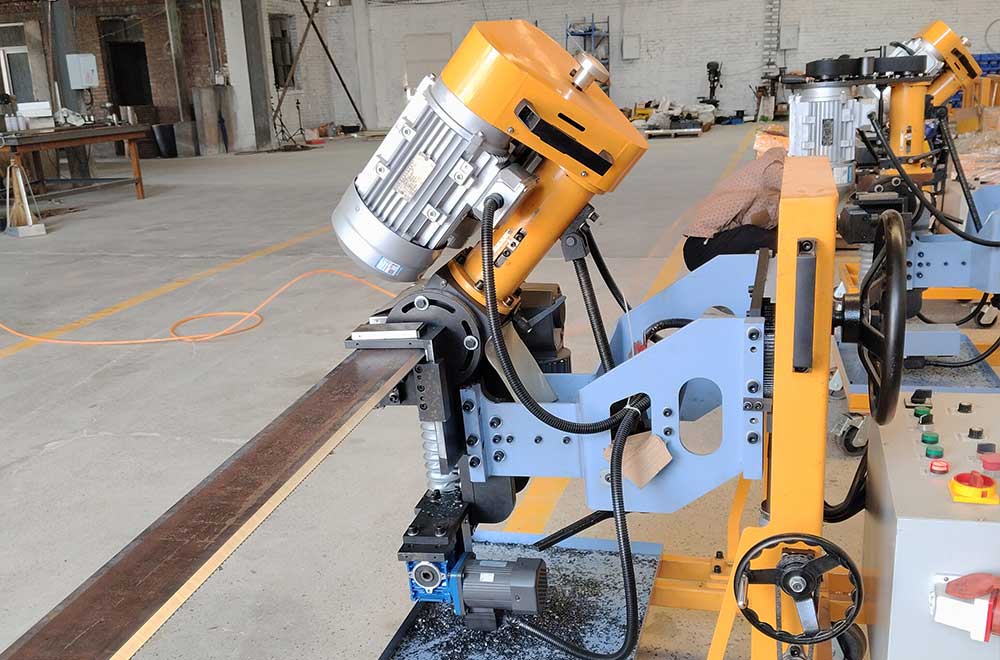
In steel fabrication, weld quality is not only determined by the welding process itself. It often begins much earlier, at the plate edge. If the edge is uneven, overheated, poorly angled, or inconsistent, the welding team may face unstable fit-up, extra grinding, irregular penetration, and more rework after inspection.
A steel plate beveling machine helps solve this problem by preparing plate edges with controlled bevel angles, repeatable groove forms, and cleaner weld-ready surfaces. For steel structure fabrication, shipbuilding, pressure vessel manufacturing, tank fabrication, bridge construction, and heavy machinery production, beveling is not a small supporting step. It is a key part of weld preparation quality.
Yuanli provides industrial beveling machine solutions for metal plate edge preparation, including automatic walking beveling machines, milling-type beveling machines, and heavy-duty models for different groove requirements. This guide explains how to choose a steel plate beveling machine from the perspective of real production needs, not just catalog specifications.
Why Steel Plate Edge Preparation Matters Before Welding
Steel plates used in heavy fabrication are often thick, long, and difficult to correct once processing begins. When the bevel is inconsistent, the issue may continue through fit-up, welding, inspection, and final correction.
A good bevel is not simply an angled edge. It must support the welding procedure, the groove design, and the structural requirements of the finished component.
| Edge Preparation Factor | Why It Matters |
|---|---|
| Bevel angle | Controls weld access and groove shape |
| Bevel width | Affects filler metal volume and weld preparation |
| Root face | Helps stabilize fit-up and penetration |
| Edge straightness | Supports better alignment before welding |
| Surface finish | Reduces cleaning and grinding before welding |
| Heat influence | Affects deformation risk and edge condition |
| Repeatability | Keeps production quality more consistent |
When steel plate edges are prepared mainly by hand, results may vary between operators, shifts, and projects. A steel plate beveling machine reduces this variation by turning edge preparation into a more controlled and repeatable process.
For a general technical reference on weld joint forms, the welding joint overview explains common joint concepts such as butt joints, edge preparation, and groove welding.
What Is a Steel Plate Beveling Machine?
A steel plate beveling machine is industrial equipment used to process the edge of steel plates before welding or assembly. It removes material mechanically to create a bevel angle, weld groove, or prepared edge form.
Depending on the machine structure and application, it may be used for single-sided beveling, double-sided beveling, upper beveling, lower beveling, V-groove preparation, K-groove preparation, X-groove preparation, side and end groove preparation, step groove processing, and heavy plate weld preparation.
The machine is commonly used for carbon steel, stainless steel, alloy steel, and other industrial metal plates. Yuanli’s industrial equipment products include beveling and polishing machine categories for different metalworking applications.
A steel plate beveling machine is especially valuable when the workshop needs repeatable weld grooves on medium and thick plates.
Steel Plate Beveling Machine vs Manual Grinding
Manual grinding is flexible, familiar, and useful for small correction work. However, it has clear limitations when used as the main method for preparing long steel plate edges.
| Comparison Item | Manual Grinding | Steel Plate Beveling Machine |
| Consistency | Depends heavily on operator skill | More repeatable after setup |
| Labor intensity | High for long or thick plates | Lower manual burden |
| Bevel angle control | Difficult over long edges | Easier to standardize |
| Production speed | Slower for batch work | Better for repeated jobs |
| Surface condition | May require correction | More controlled edge quality |
| Operator fatigue | High | Reduced |
| Workflow stability | Variable | More predictable |
Manual grinding still has a place in repair work, touch-up work, and final adjustment. But for batch production and heavy plate welding, machine beveling is usually more practical.
A steel plate beveling machine helps reduce dependence on individual hand skill. This is important when the same bevel requirement must be repeated across many plates, workstations, or projects.
Key Applications of Steel Plate Beveling Machines
A steel plate beveling machine is most useful where weld preparation quality directly affects project reliability and production efficiency.
Steel Structure Fabrication
Steel structure workshops process columns, beams, box sections, base plates, frames, and welded assemblies. Consistent beveling improves fit-up and helps reduce weld preparation time before assembly.
Shipbuilding and Marine Fabrication
Shipyards often process large steel plates and long weld seams. Automatic walking beveling machines can help prepare long edges without requiring every heavy plate to be moved to a fixed station.
Pressure Vessel Manufacturing
Pressure vessels require controlled weld groove preparation because joint quality affects reliability and inspection confidence. Stable bevel geometry helps support more consistent welding procedures.
Storage Tank Fabrication
Tank fabrication involves long seams and large plate sections. A steel plate beveling machine helps prepare edge forms that support stable alignment and welding.
Heavy Machinery Manufacturing
Machinery frames, equipment bases, brackets, and structural parts often use thick steel plates. Beveling before welding helps reduce correction work and improve production flow.
Bridge and Infrastructure Fabrication
Bridge components and infrastructure steelwork often require strong weld joints and consistent preparation. Machine beveling can help standardize groove quality across repeated components.
Which Type of Steel Plate Beveling Machine Fits Your Workshop?
Different workshops need different beveling solutions. A machine that works well for one production environment may not fit another. The best choice depends on plate thickness, groove type, bevel angle, bevel width, workpiece size, production volume, and working location.
Automatic Walking Beveling Machine
An automatic walking beveling machine moves along the plate edge during processing. It is suitable for long plate edges and workshops that need efficient weld preparation without moving large plates repeatedly.
Yuanli’s YL-GJF26 beveling machine is suitable for automatic walking beveling applications in sheet metal and plate edge processing.
Milling-Type Beveling Machine
A milling-type beveling machine is suitable when the workshop needs more controlled edge machining, complex grooves, or higher edge quality. It may be used for side grooves, end grooves, double-sided grooves, upper and lower bevels, and stepped groove processing.
The YL-FZ900 beveling machine is relevant for applications requiring multiple groove forms and more flexible plate edge processing.
Heavy-Duty Plate Beveling Machine
For thick plates, large structures, and more demanding production conditions, teams should pay close attention to machine rigidity, cutting stability, tool structure, and processing range.
The YL-PKFZ95 beveling machine can be reviewed when large plate processing and double-sided beveling are part of the application.
How to Match the Machine to Steel Plate Thickness
Plate thickness is one of the first factors to confirm, but it should not be the only selection condition.
A thin plate and a thick plate may both require beveling, but their processing requirements are very different. Thick plates usually require stronger cutting power, better machine stability, and more careful groove design. Thin plates may require better control to avoid edge damage or unstable processing.
Before choosing a steel plate beveling machine, confirm the minimum plate thickness, maximum plate thickness, common daily thickness range, material grade, bevel angle, bevel width, groove type, single-sided or double-sided requirement, plate size, and production quantity.
A supplier cannot recommend accurately from plate thickness alone. The full working condition matters.
How Bevel Angle and Groove Type Influence Machine Selection
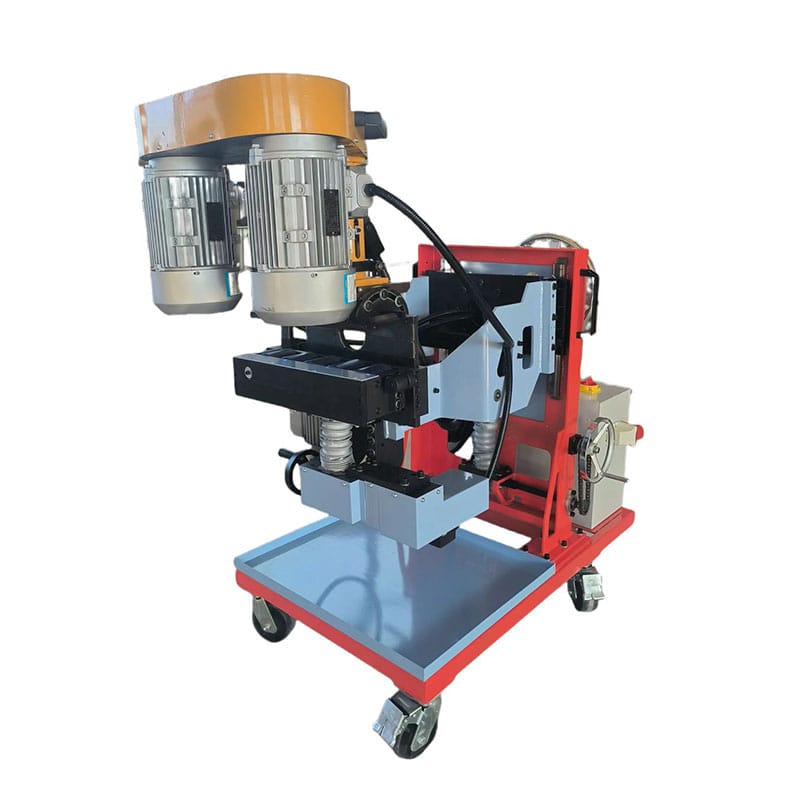
A bevel angle is not just a number. It directly affects welding access, root condition, filler metal requirement, and weld preparation quality.
Common groove types include V groove, K groove, X groove, Y groove, U groove, J groove, step groove, upper bevel, lower bevel, and double-sided groove.
For simple weld preparation, a standard plate beveling machine may be suitable. For complex groove forms, a milling-type or heavy-duty beveling machine may be more appropriate.
The ISO 9692-1 standard page provides useful background because it covers types of joint preparation for welding and allied processes. While each project may use its own drawings and procedures, recognized joint preparation concepts can help teams communicate more clearly when confirming groove requirements.
Cold Cutting and Heat Control in Steel Plate Beveling
Steel plate edge preparation can be performed by different methods, including grinding, thermal cutting, mechanical beveling, and milling. When weld groove quality matters, mechanical cold cutting has important advantages.
Cold mechanical beveling avoids relying on melting the edge. This can help reduce heat-related deformation, internal stress, excessive scale, and secondary grinding.
For fabrication workshops, the practical benefits may include cleaner weld groove preparation, less edge correction after beveling, lower risk of heat distortion, more stable fit-up, better repeatability across long plate edges, and reduced dependence on heavy manual grinding.
This is especially important for stainless steel, thick carbon steel, pressure vessel plates, and large welded structures where edge condition affects downstream welding and inspection.
Production Workflow: How to Use a Steel Plate Beveling Machine Efficiently
A steel plate beveling machine performs best when it is part of a standardized workflow.
A practical workflow may include reviewing the drawing and welding groove requirement, confirming plate material and thickness, checking the plate edge condition before beveling, selecting the correct machine and cutting setup, setting bevel angle and bevel width, running a test pass for new materials or groove types, inspecting the first finished bevel, recording confirmed settings for repeated jobs, cleaning chips, checking cutting tools, and sending the prepared plate to fit-up or welding.
This workflow helps reduce random operation. Once settings are confirmed, operators can repeat them more consistently across similar workpieces.
Important Machine Features to Compare
When comparing steel plate beveling machines, do not focus only on motor power or machine appearance. Practical performance depends on structure, stability, adjustment, tooling, and service support.
Key features include machine frame rigidity, stable cutting or milling system, adjustable bevel angle, suitable bevel width range, reliable feeding or walking mechanism, compatibility with required plate thickness, easy tool replacement, clear control layout, chip removal convenience, safety protection design, maintenance accessibility, and spare parts support.
For heavy fabrication, stability is especially important. If the machine vibrates, walks unevenly, or struggles with the cutting load, bevel quality may become inconsistent.
Safety Considerations for Steel Plate Beveling
A steel plate beveling machine works with sharp edges, moving parts, cutting tools, flying chips, heavy plates, and electrical systems. Safety planning should be included from the beginning.
Workshops should pay attention to machine guarding, emergency stop access, stable plate support, chip control, tool inspection, operator hand position, electrical safety, training before independent operation, clear operating procedures, and regular maintenance checks.
The OSHA 1910.212 machine guarding requirement is a useful reference for understanding hazards such as point of operation, rotating parts, flying chips, and sparks.
A productive beveling process should improve efficiency while also reducing avoidable operator risk.
Common Mistakes When Choosing a Steel Plate Beveling Machine
Many machine selection problems happen because the inquiry is too general or the comparison only focuses on a few visible parameters.
Choosing Only by Maximum Thickness
Maximum thickness is important, but it does not define the full application. Groove type, bevel width, material grade, plate size, and production volume also matter.
Ignoring the Welding Procedure
The bevel must match the welding process. A clean bevel is still not useful if the groove form does not support the required weld joint.
Forgetting Small or Narrow Plates
Some machines are designed for large plates but may not handle narrow or irregular pieces well. Both minimum and maximum workpiece size should be confirmed.
Underestimating Tool Consumption
Cutting tools are part of long-term machine operation. Tool replacement, maintenance, and spare parts support should be considered before ordering.
Not Providing Drawings or Photos
Drawings, photos, and real workpiece information help the supplier recommend more accurately. A vague inquiry can easily lead to machine mismatch.
What Information Should You Prepare for Machine Selection?
A clear technical request helps the supplier respond faster and recommend the correct steel plate beveling machine.
| Inquiry Information | Why It Helps |
| Material type | Helps determine tool and machine suitability |
| Plate thickness range | Confirms processing capacity |
| Plate length and width | Confirms machine structure and workpiece handling |
| Groove type | Determines whether standard or complex processing is needed |
| Bevel angle | Confirms adjustment range |
| Bevel width | Affects cutting load and machine choice |
| Production volume | Helps match efficiency requirements |
| Work location | Workshop and on-site use may need different designs |
| Power supply | Ensures electrical compatibility |
| Drawings or photos | Reduces misunderstanding |
These details can be submitted through Yuanli’s contact page for a technical recommendation.
Maintenance Tips for Long-Term Bevel Quality
Machine maintenance directly affects bevel consistency. Even a strong machine can produce poor results if tools are worn or adjustment parts are loose.
Recommended maintenance habits include cleaning chips after each shift, inspecting tools before operation, replacing worn cutting tools promptly, checking bolts and adjustment parts, keeping guide surfaces clean, lubricating moving components as instructed, avoiding overload operation, watching for abnormal vibration or noise, protecting electrical components from dust and moisture, and recording common settings for repeated jobs.
Maintenance should not be treated as separate from quality control. A well-maintained steel plate beveling machine produces more stable bevels and supports longer service life.
When a Steel Plate Beveling Machine May Not Be Necessary
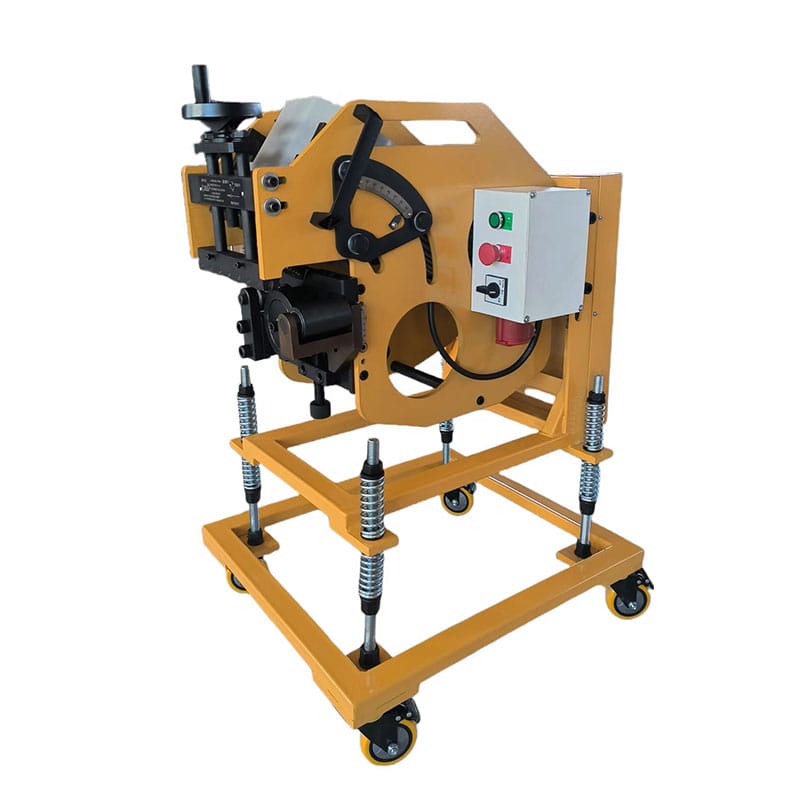
A steel plate beveling machine is valuable, but it is not required for every workshop.
It may not be necessary when beveling work is rare, plates are very small, the bevel requirement is simple, manual grinding is sufficient, production volume is low, or the workshop only needs occasional repair work.
However, when steel plate beveling becomes frequent, repetitive, or inspection-sensitive, machine beveling becomes more practical. The stronger the need for consistency, the more valuable the machine becomes.
For workshops that also need surface treatment after fabrication, Yuanli’s polishing machine category may support downstream finishing applications.
Conclusion
A steel plate beveling machine helps fabrication workshops create consistent weld grooves, reduce manual grinding, improve fit-up, and make welding preparation more predictable. For steel structures, shipbuilding, pressure vessels, storage tanks, bridges, and heavy machinery manufacturing, bevel quality is closely connected to welding efficiency and inspection confidence.
The right machine should be selected based on material type, plate thickness, bevel angle, bevel width, groove form, plate size, production volume, and working environment. It is not enough to choose only by maximum thickness or motor power. Real workpiece information, drawings, and welding requirements are more important.
To compare suitable options, visit Yuanli’s beveling machine category or submit your plate details through the contact page for a technical recommendation.
FAQ
What is a steel plate beveling machine used for?
A steel plate beveling machine is used to prepare steel plate edges before welding. It creates controlled bevels or groove forms that help improve fit-up, weld access, and preparation consistency.
Is a steel plate beveling machine better than manual grinding?
For repeated or heavy plate work, machine beveling is usually more consistent than manual grinding. Manual grinding is still useful for repairs, touch-up work, and small corrections.
What materials can a steel plate beveling machine process?
Depending on the machine and tools, it can process carbon steel, stainless steel, alloy steel, aluminum alloy, and other common industrial metals used in fabrication.
How do I choose the right beveling machine for thick steel plates?
Confirm the material, plate thickness, bevel angle, bevel width, groove type, plate size, workload, power supply, and work location before requesting a recommendation.
Can one machine make different groove types?
Some steel plate beveling machines can support multiple groove types such as V, K, X, Y, side grooves, double-sided grooves, and step grooves. Capability depends on the model.
Does cold cutting beveling reduce heat deformation?
Yes. Mechanical cold cutting reduces heat influence compared with thermal cutting methods, helping protect edge condition and reduce unnecessary correction.
What information should I send for machine selection?
Send material type, thickness range, plate size, groove drawings, bevel angle, bevel width, production volume, power supply, and photos of typical workpieces.
Where can I request a steel plate beveling machine recommendation?
You can submit your application details through Yuanli’s contact page for a suitable steel plate beveling machine recommendation.