Índice
YL-PK95 vs YL-PKFZ95 começa com uma aplicação claramente definida O ponto de partida útil é a decisão de produção: o que o equipamento deve entregar, como o resultado será verificado e quais operações de suporte são necessárias Este guia usa YL-PKFZ95 como uma referência relevante do produto Yuanli e separa as especificações publicadas das condições de aplicação que exigem confirmação.
YL-PK95 vs YL-PKFZ95: the decision to resolve
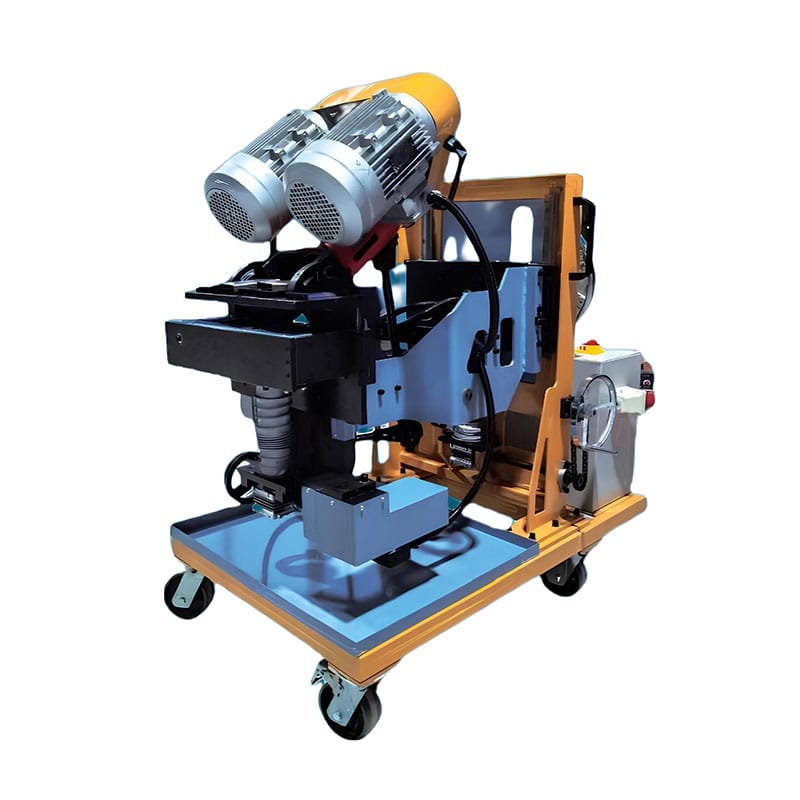
The useful distinction between these models is the processing route the buyer needs. Yuanli describes YL-PK95 for upper and side bevel work, and YL-PKFZ95 as a machine that can be flipped for upper and lower preparation. The published tables also list different weights and multi-pass bevel widths. Do not select a model from the shared thickness range alone. Show the supplier how the plate is supported and which edges must be completed before it moves to assembly. Ask for a demonstrated sequence that includes any reversing or repositioning. The added capability is valuable when it removes a real handling constraint in the intended workflow.
YL-PK95 vs YL-PKFZ95: match the required faces to the configuration
In a YL-PK95 vs YL-PKFZ95 review, identify every face that must be prepared before the component leaves the cell. Show upper and lower edges, side faces, shoulders, and any adjacent feature that affects access. Ask the supplier which operations the proposed configuration supports and which require a different arrangement or secondary process. Similar model names and thickness ranges do not establish identical capability.
For YL-PK95 vs YL-PKFZ95, resolve upper versus lower access using a section drawing and a representative workpiece. Compare the complete sequence, including turning, support changes, and inspection access. Record the delivered options and tooling that make the sequence possible. This keeps the model comparison focused on the buyer's actual geometry instead of a collection of disconnected catalogue numbers.
YL-PK95 vs YL-PKFZ95: keep support and contact conditions stable
In a YL-PK95 vs YL-PKFZ95 review, stable machining depends on more than the cutting edge. Examine workpiece support, the surfaces used for guiding or clamping, and the condition of the incoming plate. Identify where the contact arrangement changes along the path or near the end of a part. A long plate can reveal a problem that does not occur on a short demonstration piece.
For YL-PK95 vs YL-PKFZ95, include published multi-pass width in the trial observations. When marks or dimensional variation appear, record where they occur and whether they repeat on equivalent samples. Use the supplier's diagnostic process before changing the operating arrangement. Correcting the physical cause of instability is more reliable than preserving an unexplained adjustment that only works on one convenient sample.
YL-PK95 vs YL-PKFZ95: plan intermediate cuts around the final requirement
In a YL-PK95 vs YL-PKFZ95 review, translate the required finished section into an approved machining sequence. Identify the material removed at each stage, the reference retained for later stages, and the inspection point that confirms progress. The supplier should confirm permitted pass conditions for the actual application. Do not assume that a published maximum width is a universal single-pass instruction.
A YL-PK95 vs YL-PKFZ95 plan must protect machine mass throughout the sequence. If the geometry contains a shoulder or corner, specify its requirement independently instead of assuming that the main bevel dimension covers it. Record any later operation needed to complete the feature. During trials, measure the intermediate conditions that influence the final result so an error can be traced to the stage that created it.
Review the shared and different published specifications
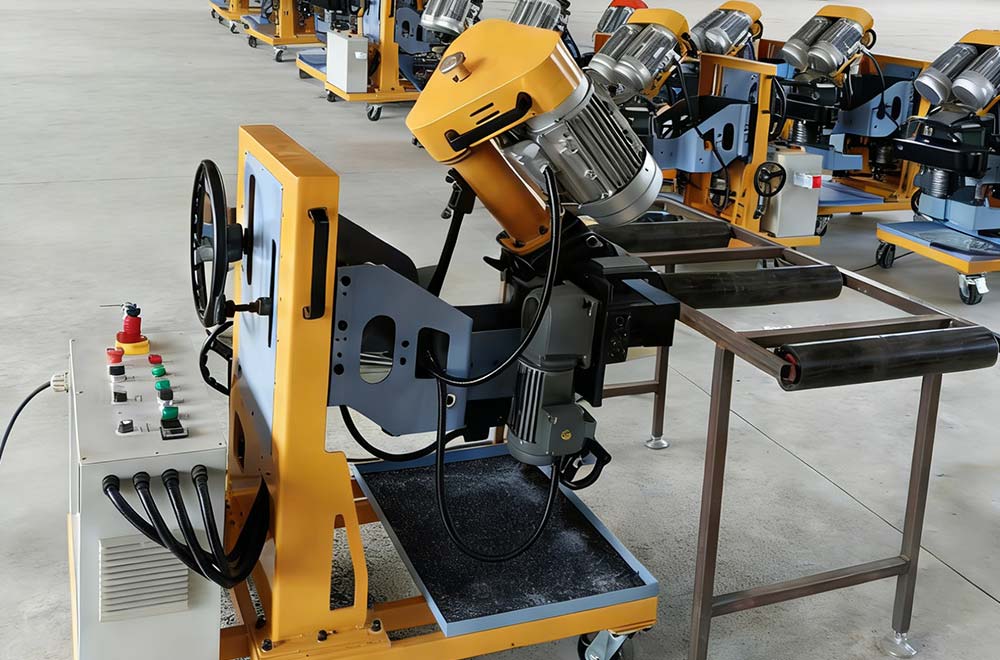
Both current product pages list a 4–95 mm plate-thickness range and a 0–75 degree adjustable bevel-angle range. Their descriptions distinguish upper and side preparation from reversible upper-and-lower capability. The tables also list approximately 300 kg for YL-PK95 and 450 kg for YL-PKFZ95, with different stated multi-pass bevel widths.
Confirm those figures and the relevant operating conditions in a signed configuration sheet. Then compare the models against a drawing and handling sequence. A buyer with recurring lower-edge work may value access differently from a workshop focused on one upper edge. The shared thickness range is useful for screening, but it does not answer that workflow question or establish interchangeable delivered configurations.
YL-PK95 vs YL-PKFZ95: application comparison checklist
Use this YL-PK95 vs YL-PKFZ95 checklist to compare a proposal with the required production condition. The rows are discussion and verification points; they are not universal machine settings or guaranteed acceptance limits.
| Item de revisão | Pergunta para resolver | Evidência útil |
|---|---|---|
| Upper versus lower access | Confirm upper versus lower access for the actual workpiece and order. | Desenho anotado, identificação de amostra ou escopo específico do pedido |
| Plate movement count | Keep the requirement for plate movement count identical across the options. | Resposta do fornecedor com condições e exclusões declaradas |
| Published multi-pass width | Observe published multi-pass width during the complete proposed work sequence. | Registro de julgamento representativo, incluindo trabalho de apoio |
| Machine mass | Record machine mass with an identified sample or configuration. | Registro de inspeção repetível ou detalhe de configuração assinado |
| Support arrangement | Assign responsibility for support arrangement before release. | Proprietário nomeado e entrega acordada no registro de transferência |
| Demonstrated work sequence | Revisit demonstrated work sequence when the approved conditions change. | Revisão atualizada do aplicativo com uma decisão documentada |
YL-PK95 vs YL-PKFZ95: relevant Yuanli equipment
For YL-PK95 vs YL-PKFZ95, the Página do produto YL-PKFZ95 fornece uma referência inicial Yuanli descreve uma configuração de fresagem reversível e autopropulsada para preparação de bisel superior e inferior, com ajuste de altura flutuante Confirme a configuração entregue e o resultado real da amostra antes de tratá-la como uma solução de produção aprovada.
| Item publicado | Referência da página do produto |
|---|---|
| Potência do motor/fonte de alimentação | 6.000 W/380 V/50 Hz |
| Faixa de espessura da placa | 4mm5 |
| Ângulo chanfrado | 0°5° (ajustável) |
| Tipos de ranhura | Ranhuras K, V, X e Y; chanfros superiores e inferiores; fresagem lateral de 0° |
| Largura chanfrada | 20 mm por passagem; até 65 mm com múltiplas passagens |
| Peso da máquina/dimensões | Aproximadamente. 450 kg /1,0 × 1,0 × 1,5 m |
Os limites publicados descrevem especificações de referência; eles não estabelecem que todo máximo possa ser usado simultaneamente Confirme as opções de material, geometria, ferramentas, suporte e entrega para o trabalho pretendido.
YL-PK95 vs YL-PKFZ95: prepare a technical enquiry
A useful YL-PK95 vs YL-PKFZ95 enquiry combines the workpiece drawing, material identification, incoming condition, expected order pattern, and the acceptance requirements. Add photographs that show the relevant geometry, with dimensions or an identified reference where needed. Include upper versus lower access and demonstrated work sequence explicitly so the supplier can respond to the actual decision.
Compare o modelo acima com o Faixa de máquinas chanfradas Yuanli. Pergunte quais condições propostas já foram demonstradas e quais requerem amostras. Se o escopo mudar durante a discussão, atualize a consulta e mantenha os requisitos revisados com a cotação.
Para terminologia usada em seções transversais conjuntas, consulte o explicação TWI da geometria de preparação da junta de solda; as dimensões de junta aplicáveis ainda vêm do desenho e procedimento de fabricação aprovados Para orientação Yuanli relacionada, revisão o guia de inspeção de ranhuras existente.
Ready to discuss YL-PK95 vs YL-PKFZ95 for your production line? Contato Yuanli com o pacote de aplicativos acima e solicite uma revisão de configuração, escopo de teste de amostra e cotação. Use o formulário de consulta abaixo para descrever o trabalho e o resultado que você precisa.
Perguntas frequentes
What should be defined first for YL-PK95 vs YL-PKFZ95?
Start with upper versus lower access and plate movement count. Connect them to the actual drawing, workpiece condition, and required result. The relevant model can then be evaluated against a specific application instead of a general product description.
Which evidence is useful when reviewing YL-PK95 vs YL-PKFZ95?
Request an identified sample or configuration record covering published multi-pass width and machine mass. Preserve the method, observations, and any deviations. A selected photograph or a single nominal specification cannot replace the complete agreed verification.
YL-PKFZ95 é automaticamente adequado para esta aplicação?
No. The YL-PKFZ95 page is a product reference for the YL-PK95 vs YL-PKFZ95 discussion. Suitability depends on the material, complete geometry, required output, supplied configuration, and the representative evidence accepted by the buyer and supplier.
Can YL-PK95 vs YL-PKFZ95 be approved from a catalogue alone?
A catalogue can support initial screening, but it does not establish every condition of the intended job. Resolve support arrangement and demonstrated work sequence before release. Use a representative trial whenever the required result or supporting method remains uncertain.
What should I send Yuanli about YL-PK95 vs YL-PKFZ95?
Send the relevant drawing, material and incoming-condition details, expected quantities, and the acceptance criteria. Identify upper versus lower access, published multi-pass width, and any unresolved constraint. Request a written response with the recommended configuration and any conditions requiring a sample trial.