Table of Contents
Polishing cost per part starts with a clearly defined application. The useful starting point is the production decision: what must the equipment deliver, how will the result be checked, and which supporting operations are required? This guide uses YLJY15KW-640 as a relevant Yuanli product reference and separates published specifications from application conditions that require confirmation.
Polishing cost per part: the decision to resolve
The most useful cost measure is total finishing cost divided by accepted parts from the complete route. Include loading, processing, separation, cleaning, inspection, media consumption, and rework. Do not compare the full cost of a manual route with only the machine-cycle cost of an automated route. Use measured labour involvement rather than assuming that automatic movement means no operator time. Keep energy use tied to a defined measured period or batch. The product tables contain estimated consumption figures whose time basis needs confirmation, so they should not be converted directly into a guaranteed cost per part. Build a transparent model and replace assumptions as trials provide evidence.
Polishing cost per part: set the correct unit of production
In a polishing cost per part review, use accepted parts from the complete finishing route as the output measure. Define the beginning and end of that route so competing methods are compared consistently. Include loading, processing, separation, cleaning, inspection, and any rework needed before release. Keep different part families separate when their requirements or supporting effort differ substantially.
For polishing cost per part, establish accepted-part denominator before calculating a benefit. A machine-cycle figure can look attractive while omitting work that still consumes labour and delays the next batch. Record both total elapsed time and actual labour involvement. These measures answer different planning questions and should not be substituted for each other simply because one is easier to obtain.
Polishing cost per part: find the constrained stage of the work cell
In a polishing cost per part review, map the stages around the machine and note their duration, required people, and shared equipment. Check whether loading, separation, inspection, or preparation limits the rate at which accepted work leaves the cell. An idle machine does not necessarily mean insufficient orders, and a continuously running machine does not prove that the whole process is balanced.
A polishing cost per part review should investigate media and consumables. Test a practical change within the approved operating and inspection methods, then compare accepted output across similar work. Avoid claiming a capacity increase from one unusually easy batch. The useful improvement is one that remains achievable under the normal mix of orders and staffing.
Polishing cost per part: make changeovers and consumables visible
In a polishing cost per part review, production estimates often understate the time between unlike jobs. Define the changeover from the last accepted batch of one family to the first accepted batch of the next. Include media handling, required cleaning, recipe confirmation, trial work, and inspection. Track consumable use against comparable accepted output rather than calendar time alone.
For polishing cost per part, record defined energy measurement as a real process activity. Identify preparation that can occur in advance without interfering with the machine's operating instructions. Use the observations to improve organisation and replenishment. Do not shorten a changeover on paper by removing a necessary material-separation or release check; that merely transfers the cost into later defects or confusion.
Illustration: calculate cost using accepted quantity
Suppose an illustrative batch incurs 80 monetary units in total finishing-route cost and yields 400 accepted components. The cost is 80 divided by 400, or 0.20 units per accepted part. If only 320 parts are accepted for the same cost, the figure becomes 0.25. These are hypothetical inputs, not quoted prices or expected production results.
Include all relevant labour, energy, media, inspection, and rework within the same boundary for each alternative. If rejected parts require another route, record the added cost and avoid counting them as accepted output prematurely. The example shows why dividing by the loaded quantity can make an unstable process appear less expensive than it really is.
Polishing cost per part: application comparison checklist
Use this polishing cost per part checklist to compare a proposal with the required production condition. The rows are discussion and verification points; they are not universal machine settings or guaranteed acceptance limits.
| Review item | Question to resolve | Useful evidence |
|---|---|---|
| Accepted-part denominator | Confirm accepted-part denominator for the actual workpiece and order. | Annotated drawing, sample identification, or order-specific scope |
| Complete labour involvement | Keep the requirement for complete labour involvement identical across the options. | Supplier response with stated conditions and exclusions |
| Media and consumables | Observe media and consumables during the complete proposed work sequence. | Representative trial record, including supporting work |
| Defined energy measurement | Record defined energy measurement with an identified sample or configuration. | Repeatable inspection record or signed configuration detail |
| Reject and rework rate | Assign responsibility for reject and rework rate before release. | Named owner and agreed deliverable in the handover record |
| Consistent route comparison | Revisit consistent route comparison when the approved conditions change. | Updated application review with a documented decision |
Polishing cost per part: relevant Yuanli equipment
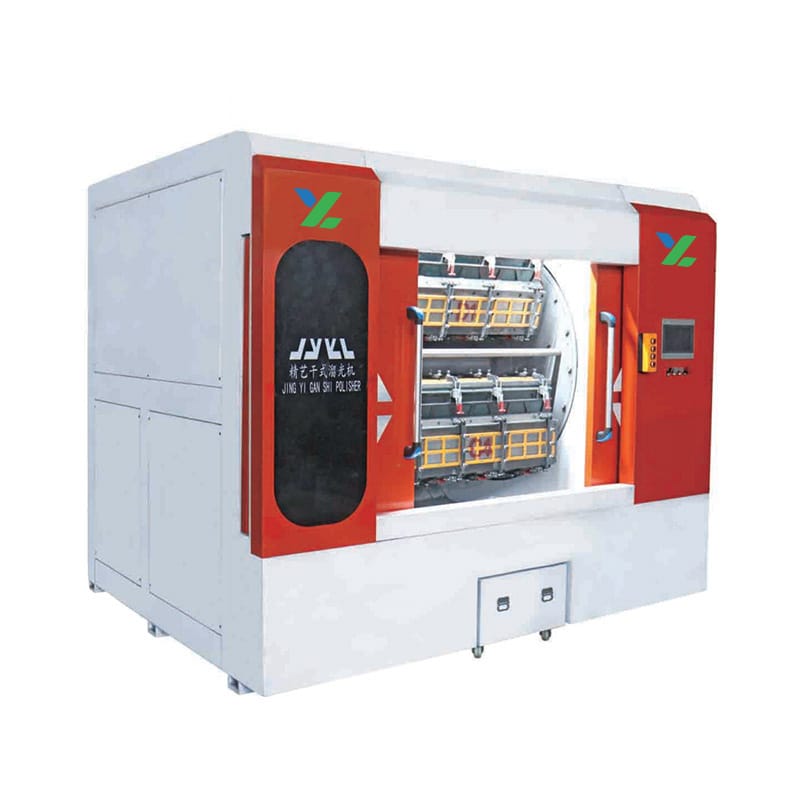
For polishing cost per part, the YLJY15KW-640 product page provides a starting reference. Yuanli presents this sixteen-bin dry polishing configuration as a balance of workpiece compatibility, batch capacity, and operating requirements. Confirm the delivered configuration and the actual sample result before treating it as an approved production solution.
| Published item | Product-page reference |
|---|---|
| External power supply | AC 380 V |
| Main motor power | 15 kW |
| Auxiliary motor power | 3.7 kW |
| Number of processing bins | 16 |
| Bin dimensions | 1,310 × 190 × 180 mm |
| Machine weight | Approx. 4,500 kg |
| Overall dimensions (L × W × H) | 2,800 × 2,100 × 2,350 mm |
The product page lists reference electrical and mechanical data. Estimated energy figures are omitted here because their cycle or time basis is not stated clearly enough for a dependable operating-cost calculation. Confirm workpiece loading and the delivered electrical configuration with Yuanli.
Polishing cost per part: prepare a technical enquiry
A useful polishing cost per part enquiry combines the workpiece drawing, material identification, incoming condition, expected order pattern, and the acceptance requirements. Add photographs that show the relevant geometry, with dimensions or an identified reference where needed. Include accepted-part denominator and consistent route comparison explicitly so the supplier can respond to the actual decision.
Compare the model above with the Yuanli polishing machine range. Ask which proposed conditions have already been demonstrated and which require samples. If the scope changes during discussion, update the enquiry and keep the revised requirements with the quotation.
For general consumable background, see the Rösler overview of polishing and drying media; a media catalogue is background reading, not approval of a particular Yuanli process recipe. For related Yuanli guidance, review the existing media-selection guide.
Ready to discuss polishing cost per part for your production line? Contact Yuanli with the application package above and request a configuration review, sample-trial scope, and quotation. Use the enquiry form below to describe the job and the result you need.
Frequently asked questions
What should be defined first for polishing cost per part?
Start with accepted-part denominator and complete labour involvement. Connect them to the actual drawing, workpiece condition, and required result. The relevant model can then be evaluated against a specific application instead of a general product description.
Which evidence is useful when reviewing polishing cost per part?
Request an identified sample or configuration record covering media and consumables and defined energy measurement. Preserve the method, observations, and any deviations. A selected photograph or a single nominal specification cannot replace the complete agreed verification.
Is YLJY15KW-640 automatically suitable for this application?
No. The YLJY15KW-640 page is a product reference for the polishing cost per part discussion. Suitability depends on the material, complete geometry, required output, supplied configuration, and the representative evidence accepted by the buyer and supplier.
Can polishing cost per part be approved from a catalogue alone?
A catalogue can support initial screening, but it does not establish every condition of the intended job. Resolve reject and rework rate and consistent route comparison before release. Use a representative trial whenever the required result or supporting method remains uncertain.
What should I send Yuanli about polishing cost per part?
Send the relevant drawing, material and incoming-condition details, expected quantities, and the acceptance criteria. Identify accepted-part denominator, media and consumables, and any unresolved constraint. Request a written response with the recommended configuration and any conditions requiring a sample trial.