Table of Contents
Polishing machine sample trial starts with a clearly defined application. The useful starting point is the production decision: what must the equipment deliver, how will the result be checked, and which supporting operations are required? This guide uses YLJY7.5KW-192 as a relevant Yuanli product reference and separates published specifications from application conditions that require confirmation.
Polishing machine sample trial: the decision to resolve
A useful finishing trial begins with the surface problem and the functional limits of the part. Send representative incoming parts, identify surfaces that matter, and define what must not change. A bright appearance alone does not establish acceptable edge radius, dimensions, cleanliness, or later assembly. Include enough parts to assess handling and separation as well as finishing. Ask the supplier to record the actual machine, media, load, cycle, and inspection conditions. Retain both untreated and accepted samples. When the production order starts, these paired references make it easier to distinguish an equipment issue from a change in incoming material or part manufacture.
Polishing machine sample trial: start with the complete part family
In a polishing machine sample trial review, describe the components that the finishing system will actually process. Include material, geometry, dimensions, mass, incoming surface condition, critical features, batch quantities, and the next production operation. Separate recurring families when their requirements differ. A single convenient sample may not represent the loading, movement, or separation behaviour of the normal production range.
For polishing machine sample trial, provide clear information about untreated reference parts and critical surfaces. Ask the supplier which conditions fit the proposed configuration and which need testing or a different route. Avoid deriving suitability from a broad material label or a machine's nominal capacity. The enquiry should connect a physical component with an acceptance requirement and a repeatable process.
Polishing machine sample trial: make the sample result measurable
In a polishing machine sample trial review, define the surfaces and functional characteristics that determine acceptance before running the trial. Visual appearance, measured texture, dimensional retention, edge condition, and cleanliness are different requirements. Select the relevant checks and establish a repeatable method for each. Keep untreated reference parts so later discussions can distinguish the starting condition from process effects.
For polishing machine sample trial, make recorded process recipe part of the trial record. Inspect more than a selected best-looking piece and preserve the agreed sample coverage. Record any reprocessing or manual correction required to reach acceptance. A photograph can support communication, but it should not replace the measurements or functional checks that the production part requires.
Polishing machine sample trial: record a recipe that another team can reproduce
In a polishing machine sample trial review, a finishing result belongs to a complete process recipe. Record the machine configuration, media identification and condition, part load, approved process settings, duration, separation, and any cleaning steps. Preserve the incoming-part condition and the inspection method with that recipe. A time setting alone is not enough to reproduce a batch.
The polishing machine sample trial handover should explain separation and cleaning in usable production terms. Ask the supplier which variations are permitted and which need another trial. Repeat a promising condition before releasing it as the standard, especially when the original test used a small or unusually favourable sample. Keep the released revision distinct from later experiments so a temporary adjustment does not silently become production practice.

Send paired samples and a marked part drawing
Provide untreated parts from the actual manufacturing route and retain comparable pieces for reference. On the drawing or photographs, mark appearance surfaces, functional features, and areas where edge or dimension changes are restricted. State the intended downstream operation.
Ask the supplier to return the processed samples with the recipe and inspection record. Review the complete set rather than only the best-looking part. Include the proposed method for separation, cleaning, and identification. If the trial succeeds only after manual correction, record that work as part of the route. The accepted reference then describes a repeatable process and a usable component, rather than an isolated surface effect produced under unclear conditions.
Polishing machine sample trial: application comparison checklist
Use this polishing machine sample trial checklist to compare a proposal with the required production condition. The rows are discussion and verification points; they are not universal machine settings or guaranteed acceptance limits.
| Review item | Question to resolve | Useful evidence |
|---|---|---|
| Untreated reference parts | Confirm untreated reference parts for the actual workpiece and order. | Annotated drawing, sample identification, or order-specific scope |
| Critical surfaces | Keep the requirement for critical surfaces identical across the options. | Supplier response with stated conditions and exclusions |
| Dimensions that must remain | Observe dimensions that must remain during the complete proposed work sequence. | Representative trial record, including supporting work |
| Recorded process recipe | Record recorded process recipe with an identified sample or configuration. | Repeatable inspection record or signed configuration detail |
| Separation and cleaning | Assign responsibility for separation and cleaning before release. | Named owner and agreed deliverable in the handover record |
| Accepted reference sample | Revisit accepted reference sample when the approved conditions change. | Updated application review with a documented decision |
Polishing machine sample trial: relevant Yuanli equipment
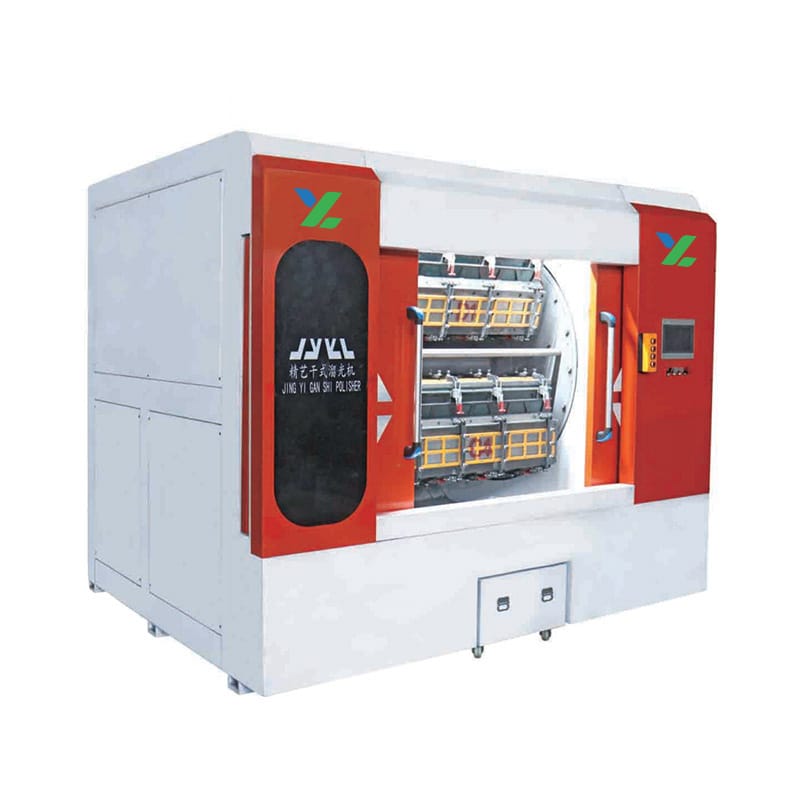
For polishing machine sample trial, the YLJY7.5KW-192 product page provides a starting reference. Yuanli presents this compact dry polishing configuration for small or specially sized workpieces, with four processing bins. Confirm the delivered configuration and the actual sample result before treating it as an approved production solution.
| Published item | Product-page reference |
|---|---|
| External power supply | AC 380 V |
| Main motor power | 7.5 kW |
| Auxiliary motor power | 2.2 kW |
| Number of processing bins | 4 |
| Bin dimensions | 672 × 200 × 200 mm; 700 × 200 × 120 mm |
| Machine weight | Approx. 1,800 kg |
| Overall dimensions (L × W × H) | 2,000 × 1,200 × 1,900 mm |
The product page lists reference electrical and mechanical data. Estimated energy figures are omitted here because their cycle or time basis is not stated clearly enough for a dependable operating-cost calculation. Confirm workpiece loading and the delivered electrical configuration with Yuanli.
Polishing machine sample trial: prepare a technical enquiry
A useful polishing machine sample trial enquiry combines the workpiece drawing, material identification, incoming condition, expected order pattern, and the acceptance requirements. Add photographs that show the relevant geometry, with dimensions or an identified reference where needed. Include untreated reference parts and accepted reference sample explicitly so the supplier can respond to the actual decision.
Compare the model above with the Yuanli polishing machine range. Ask which proposed conditions have already been demonstrated and which require samples. If the scope changes during discussion, update the enquiry and keep the revised requirements with the quotation.
For general consumable background, see the Rösler overview of polishing and drying media; a media catalogue is background reading, not approval of a particular Yuanli process recipe. For related Yuanli guidance, review the existing media-selection guide.
Ready to discuss polishing machine sample trial for your production line? Contact Yuanli with the application package above and request a configuration review, sample-trial scope, and quotation. Use the enquiry form below to describe the job and the result you need.
Frequently asked questions
What should be defined first for polishing machine sample trial?
Start with untreated reference parts and critical surfaces. Connect them to the actual drawing, workpiece condition, and required result. The relevant model can then be evaluated against a specific application instead of a general product description.
Which evidence is useful when reviewing polishing machine sample trial?
Request an identified sample or configuration record covering dimensions that must remain and recorded process recipe. Preserve the method, observations, and any deviations. A selected photograph or a single nominal specification cannot replace the complete agreed verification.
Is YLJY7.5KW-192 automatically suitable for this application?
No. The YLJY7.5KW-192 page is a product reference for the polishing machine sample trial discussion. Suitability depends on the material, complete geometry, required output, supplied configuration, and the representative evidence accepted by the buyer and supplier.
Can polishing machine sample trial be approved from a catalogue alone?
A catalogue can support initial screening, but it does not establish every condition of the intended job. Resolve separation and cleaning and accepted reference sample before release. Use a representative trial whenever the required result or supporting method remains uncertain.
What should I send Yuanli about polishing machine sample trial?
Send the relevant drawing, material and incoming-condition details, expected quantities, and the acceptance criteria. Identify untreated reference parts, dimensions that must remain, and any unresolved constraint. Request a written response with the recommended configuration and any conditions requiring a sample trial.